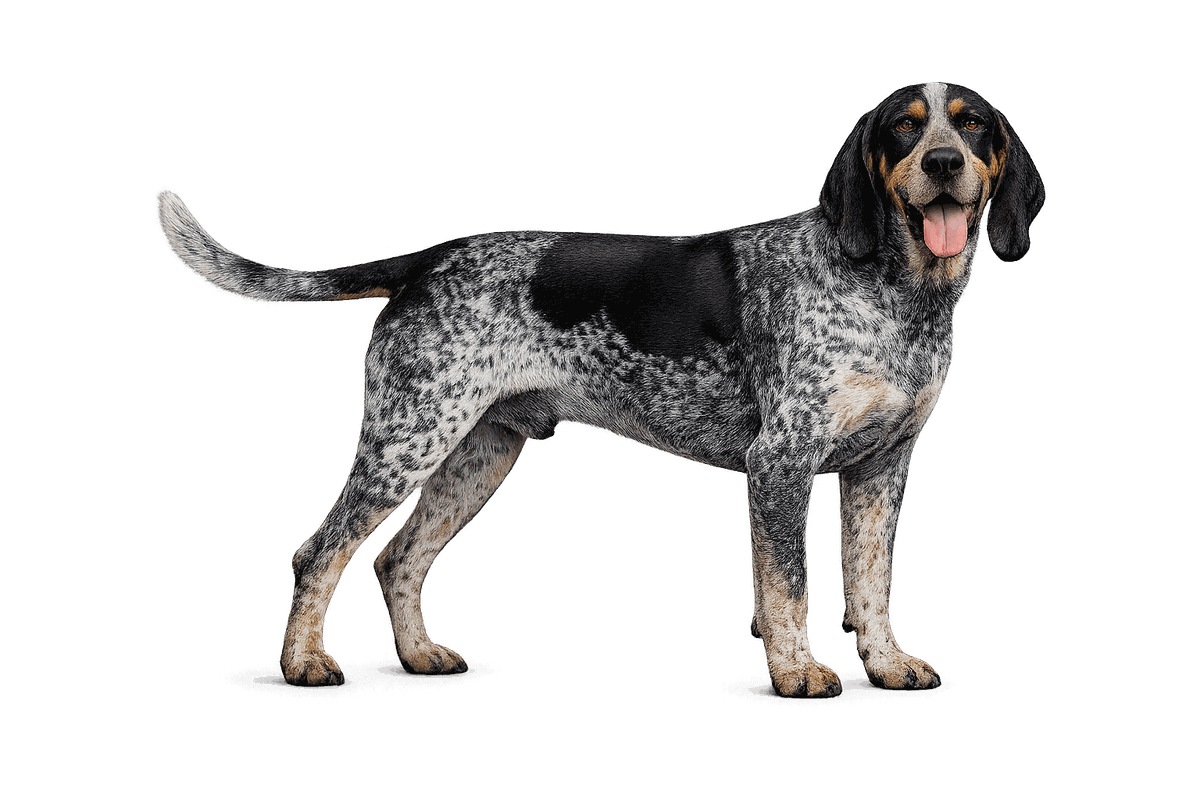
Apartment fit
Poor for most apartments. The voice and stamina of a foxhound are hard to fit into dense housing.
 United States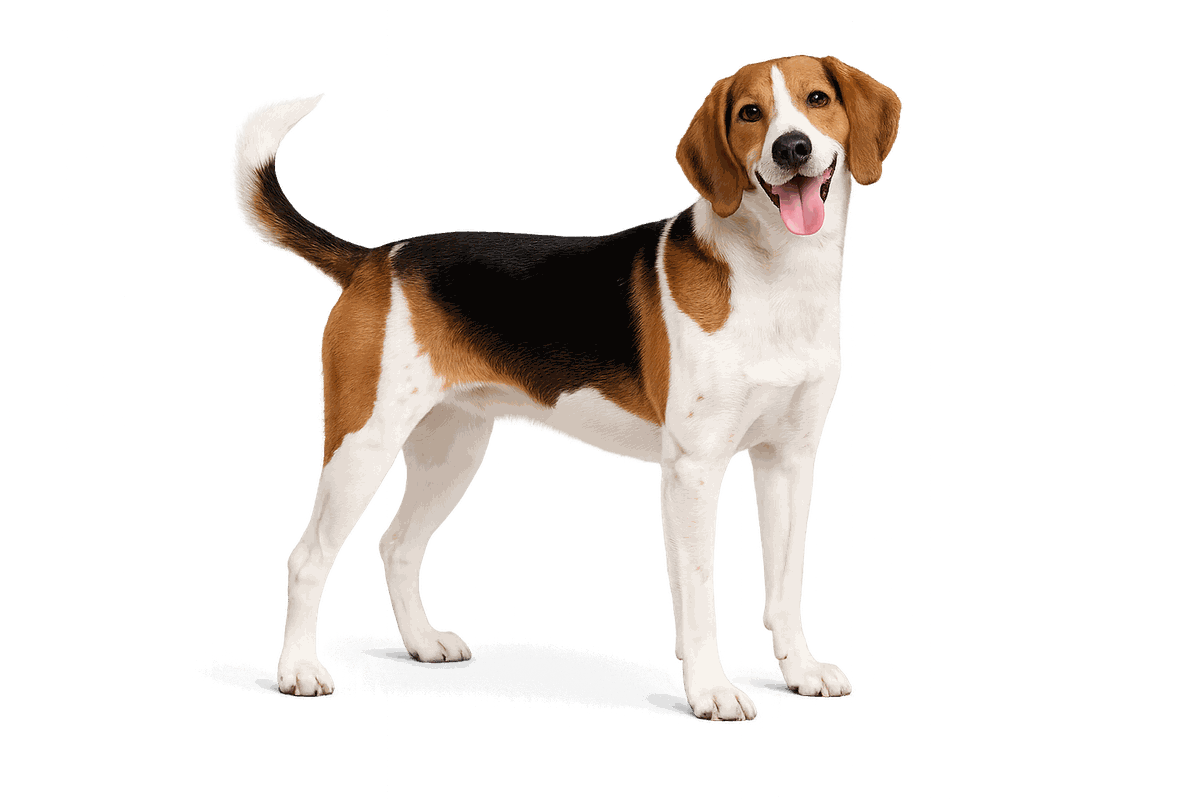
Weight
60-70 lb
Height
21-25 in
Lifespan
11-13 yrs
Coat
Smooth Short
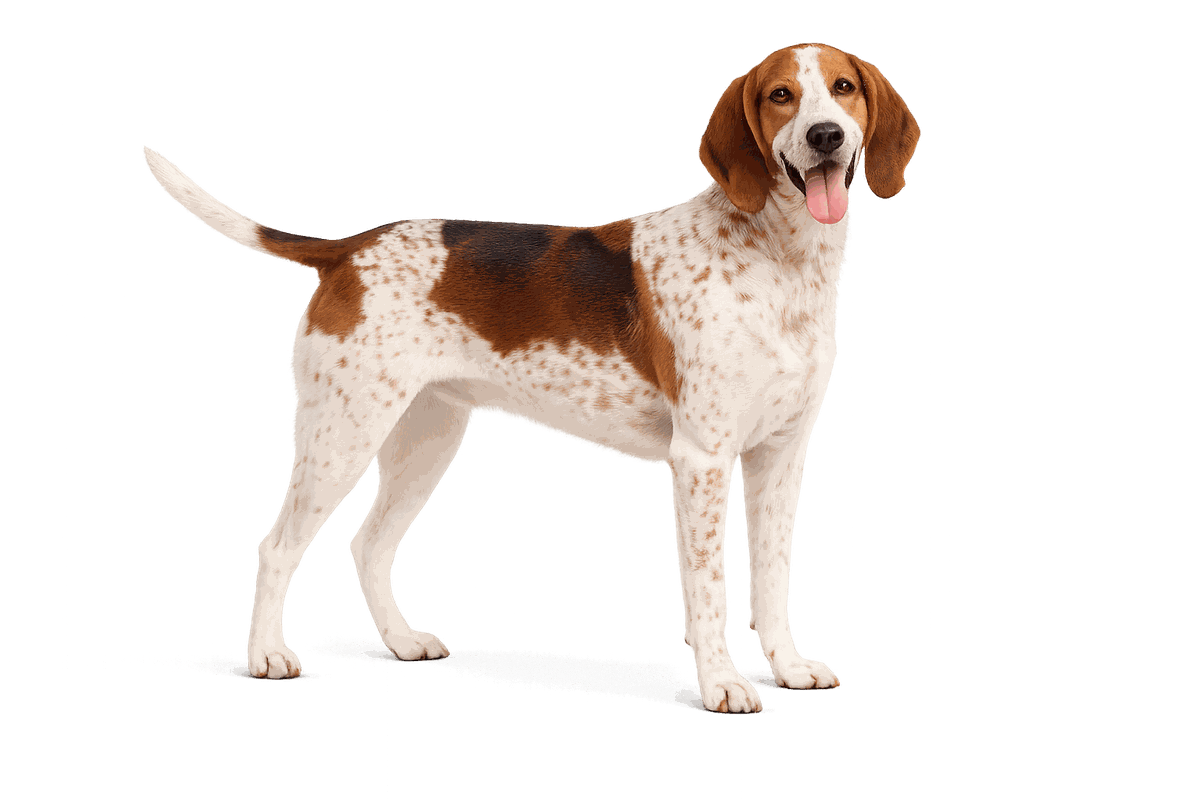
The American Foxhound is a large American scent hound bred for foxhunting, endurance, pack work, and a musical hound voice.
Official, native, and commonly used variants
No widely used alternate names are recorded for this breed.
Weight
60-70 lb
Height
21-25 in
Lifespan
11-13 yrs
Coat
Smooth Short
At A Glance
A quick read on energy, upkeep, and what day-to-day life with this breed usually feels like.
Energy
High
Barking
High
Drooling
Low
Shedding
Moderate
Grooming
1/5
First-time owner
No
The American Foxhound was built for sustained pack hunting rather than the stop-start rhythm of a typical pet walk. It is lighter and racier than many similarly sized hounds, with the aerobic capacity to keep moving and a musical voice designed to carry across distance.
Pack heritage helps explain why many American Foxhounds are socially comfortable with other dogs and relatively open with people. It does not make them easy household pets. Solitary boredom, insufficient mileage, and unrestricted access to wildlife scents can lead to baying, escape attempts, or hours of restless pacing.
A good companion setup combines secure fencing, long walks or runs appropriate to the individual, scent work, and company. Off-leash freedom in unfenced areas is a poor assumption even after training. The coat is uncomplicated; maintaining lean body condition, sound feet, clean ears, and gradual conditioning is the larger care commitment.
This breed tends to suit homes looking for a easygoing, athletic, independent companion, with daily rhythms shaped by high energy, high barking, and low drooling.
Coat type
Smooth
Coat length
Short
Shedding
Moderate
Colors
Tricolor, Red and White, Blue and White, Lemon and White
Poor for most apartments. The voice and stamina of a foxhound are hard to fit into dense housing.
Expect hound vocalization and scent-driven excitement. Management and exercise are essential.
Reward movement with the handler and use sniffing access strategically. Long-line recall and turn-away skills matter more than formal heelwork, and unfenced off-leash reliability should never be assumed around game.
The coat is easy, but ears, nails, feet, skin, and body condition need routine checks.
Most American Foxhounds need 90 minutes or more of daily movement, with long walks, running in secure spaces, and scent work. They were bred for stamina.
The short coat is low maintenance, but ears, nails, pads, and skin should be checked after field time or wet walks.
Use movement, access to sniffing, and food as rewards. Train recall on a long line, teach an automatic U-turn for wildlife encounters, and build a strong settle after exercise. Management remains necessary even when training is good.
Feed measured portions based on condition and activity. A working hound and a pet hound may need very different calorie plans.
Energy level
High
Barking level
High
Drooling level
Low
Watchdog ability
2/5
Guard dog ability
1/5
Climate tolerance
Common concerns to discuss with your vet and breeder.
This profile was researched from established breed and canine-care references. Breed tendencies describe typical patterns, not a guarantee for every individual dog.
Reviewed by the Dogs Index Editorial Team. For health or behavior concerns, consult a veterinarian or appropriately qualified professional.
Our Shop
Browse practical products for feeding, grooming, cleanup, enrichment, and smoother daily routines.