Apartment fit
Basenji can suit apartment life because it is compact and clean, but it still needs exercise, enrichment, and secure routines. Barkless does not mean silent, and frustration can bring yodeling or other vocalizations.
 Democratic Republic of the Congo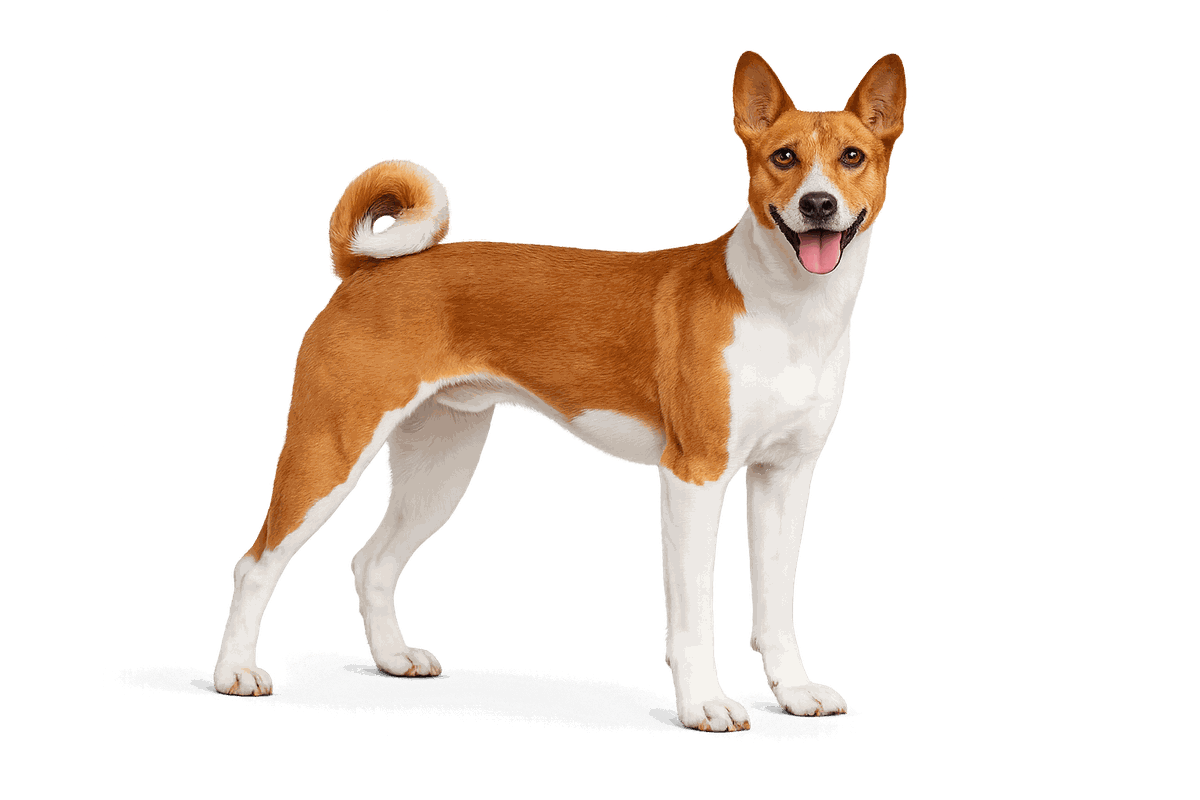
Weight
20-24 lb
Height
16-17 in
Lifespan
13-14 yrs
Coat
Smooth Short
The Basenji is a small Central African hound, famous for its barkless yodel, clean short coat, curled tail, and independent hunting-dog mind.
Official, native, and commonly used variants
Weight
20-24 lb
Height
16-17 in
Lifespan
13-14 yrs
Coat
Smooth Short
At A Glance
A quick read on energy, upkeep, and what day-to-day life with this breed usually feels like.
Energy
High
Barking
Low
Drooling
Low
Shedding
Low
Grooming
1/5
First-time owner
No
The Basenji developed as a hunting dog in Central Africa and is often associated with the Congo region. It is small, finely built, short-coated, and recognizable by its wrinkled forehead, tightly curled tail, and unusual vocalizations.
Basenjis are often called barkless, but that does not mean silent. They can yodel, chortle, scream, whine, and vocalize when excited or frustrated. Their temperament is independent, alert, curious, and reserved with strangers, closer to a primitive hunting dog than an eager-to-please obedience breed.
The Basenji can suit apartments because it is clean and compact, but secure containment, exercise, and enrichment are essential. Responsible breeders should discuss Fanconi syndrome, PRA, eye exams, hips, thyroid, and related health screening.
This breed tends to suit homes looking for a independent, alert, curious companion, with daily rhythms shaped by high energy, low barking, and low drooling.
Coat type
Smooth
Coat length
Short
Shedding
Low
Colors
Red and White, Black and White, Tricolor, Brindle and White
Basenji can suit apartment life because it is compact and clean, but it still needs exercise, enrichment, and secure routines. Barkless does not mean silent, and frustration can bring yodeling or other vocalizations.
Basenji usually does not bark in the normal way, but it can yodel, chortle, scream, whine, or howl. Owners should plan for vocal expression rather than expecting a silent dog.
Basenji training should be short, rewarding, and practical: recall foundations, leave-it, handling, crate comfort, and calm exposure to new places. This breed dislikes pointless repetition and needs management around doors, wildlife, and food.
The Basenji's short smooth coat is relatively simple to maintain, with low shedding. Routine brushing, nail trimming, ear checks, and skin checks still matter for the Basenji, especially after muddy walks or seasonal shedding changes.
Basenji needs about 60 to 90 minutes a day for many healthy adults, built from longer walks, active play, and regular training or scent games. For the Basenji, build activity into most days instead of relying on one big weekend outing, and mix in sniffing, training, or puzzle work so the dog has a mental outlet as well as physical movement.
The Basenji's short smooth coat is relatively simple to maintain, with low shedding. Routine brushing, nail trimming, ear checks, and skin checks still matter for the Basenji, especially after muddy walks or seasonal shedding changes.
Basenji training should be short, rewarding, and practical: recall foundations, leave-it, handling, crate comfort, and calm exposure to new places. This breed dislikes pointless repetition and needs management around doors, wildlife, and food.
Feed Basenji a measured diet appropriate for a small dog, its age, and its activity level. For the Basenji, keep body condition lean, adjust portions when exercise changes, and ask your veterinarian about diet details if weight, digestion, allergies, or joint stress are concerns.
Energy level
High
Barking level
Low
Drooling level
Low
Watchdog ability
3/5
Guard dog ability
1/5
Climate tolerance
Common concerns to discuss with your vet and breeder.
This profile was researched from established breed and canine-care references. Breed tendencies describe typical patterns, not a guarantee for every individual dog.
Reviewed by the Dogs Index Editorial Team. For health or behavior concerns, consult a veterinarian or appropriately qualified professional.
Our Shop
Browse practical products for feeding, grooming, cleanup, enrichment, and smoother daily routines.