Apartment fit
A spacious apartment can work for a calm adult Berner, but stairs, heat, elevator traffic, and grooming cleanup make dense housing harder. Ground-level access is a major advantage.
 Switzerland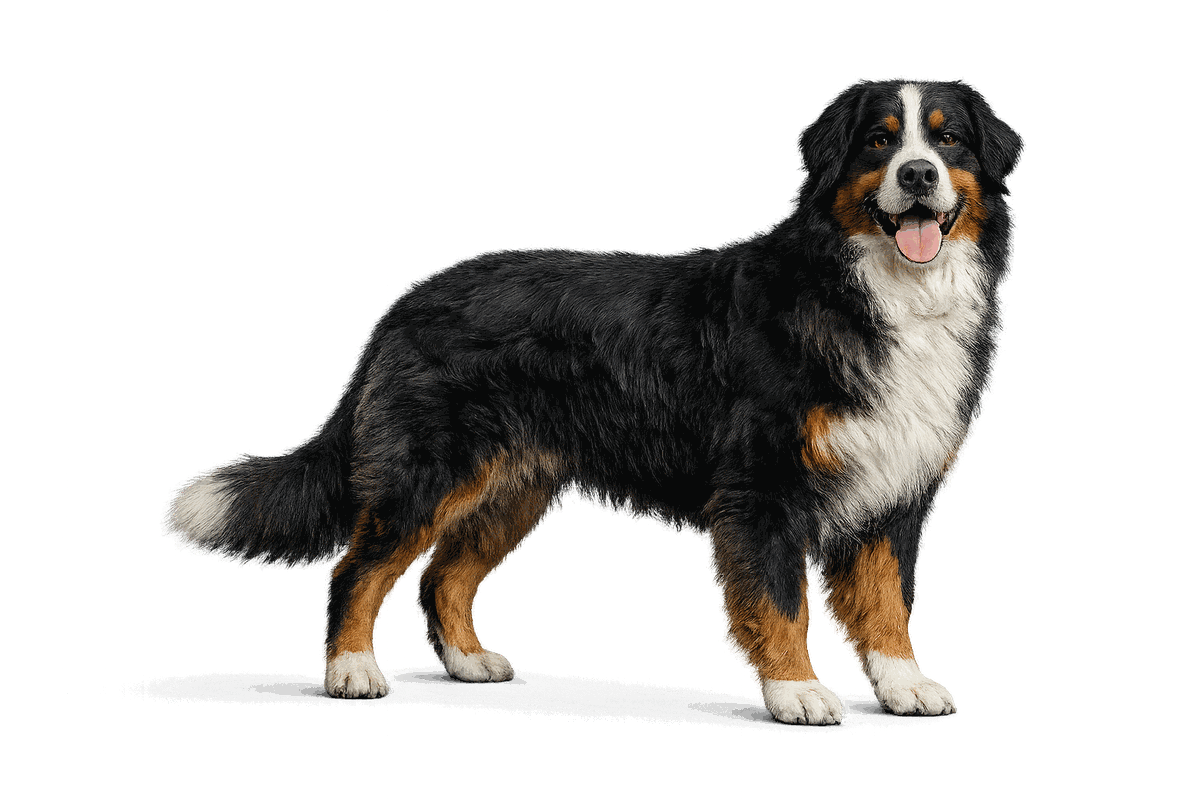
Weight
70-115 lb
Height
23-27.5 in
Lifespan
7-10 yrs
Coat
Double Long
The Bernese Mountain Dog is a large Swiss working breed with a tricolor double coat, gentle family temperament, strong carting heritage, and important health considerations.
Official, native, and commonly used variants
Weight
70-115 lb
Height
23-27.5 in
Lifespan
7-10 yrs
Coat
Double Long
At A Glance
A quick read on energy, upkeep, and what day-to-day life with this breed usually feels like.
Energy
Moderate
Barking
Low
Drooling
Moderate
Shedding
High
Grooming
3/5
First-time owner
Yes
The Bernese Mountain Dog is one of the Swiss Sennenhund breeds, developed around farms in the canton of Bern for draft work, droving, and general farm companionship. A correct Berner is large, sturdy, and unmistakably tricolored: jet black ground color with rich rust markings and clear white markings.
The breed is famous for a gentle, affectionate family temperament, but size changes everything. Berners need leash manners, careful puppy growth, and daily low-impact activity so a 70-to-115-pound dog remains manageable indoors and outdoors.
Prospective owners should take health seriously. Bernese Mountain Dogs have a shorter average lifespan than many breeds and responsible breeders screen for hip and elbow dysplasia, eye disease, and other inherited risks. Heat also needs caution because the thick double coat is built for cold mountain weather.
This breed tends to suit homes looking for a gentle, affectionate, calm companion, with daily rhythms shaped by moderate energy, low barking, and moderate drooling.
Coat type
Double
Coat length
Long
Shedding
High
Colors
Black Tricolor
A spacious apartment can work for a calm adult Berner, but stairs, heat, elevator traffic, and grooming cleanup make dense housing harder. Ground-level access is a major advantage.
Berners are usually steady rather than sharp, but they still need companionship and routine. Isolation, boredom, and outdoor triggers can increase barking.
Start early with leash skills, handling, greetings, and settling. A friendly puppy becomes a very large adult, so manners need to be installed before strength becomes the issue.
The long tricolor double coat sheds heavily. Brush several times a week during shedding periods, check feathering for mats, and keep nails and ears on schedule.
Most healthy adult Bernese Mountain Dogs do well with about 45 to 60 minutes of daily low-impact activity, such as walks, training, carting foundations, and relaxed play. Avoid forced high-impact exercise during growth and use extra care in heat.
The long double coat sheds heavily and needs regular brushing, especially during seasonal coat changes. Check ears, nails, feet, and feathering, and expect household hair to be part of Berner life.
Bernese Mountain Dog training should start early with leash manners, polite greetings, handling, and calm settling. Reward-based training works well because the breed is usually cooperative and people-oriented.
Feed a measured large-breed diet appropriate for age, growth stage, and body condition. Lean weight is especially important for hips, elbows, and long-term mobility.
Energy level
Moderate
Barking level
Low
Drooling level
Moderate
Watchdog ability
3/5
Guard dog ability
2/5
Climate tolerance
Common concerns to discuss with your vet and breeder.
This profile was researched from established breed and canine-care references. Breed tendencies describe typical patterns, not a guarantee for every individual dog.
Reviewed by the Dogs Index Editorial Team. For health or behavior concerns, consult a veterinarian or appropriately qualified professional.
Our Shop
Browse practical products for feeding, grooming, cleanup, enrichment, and smoother daily routines.