Apartment fit
Apartment life is usually a poor match because the breed needs space, work, and controlled outlets for intensity.
 United States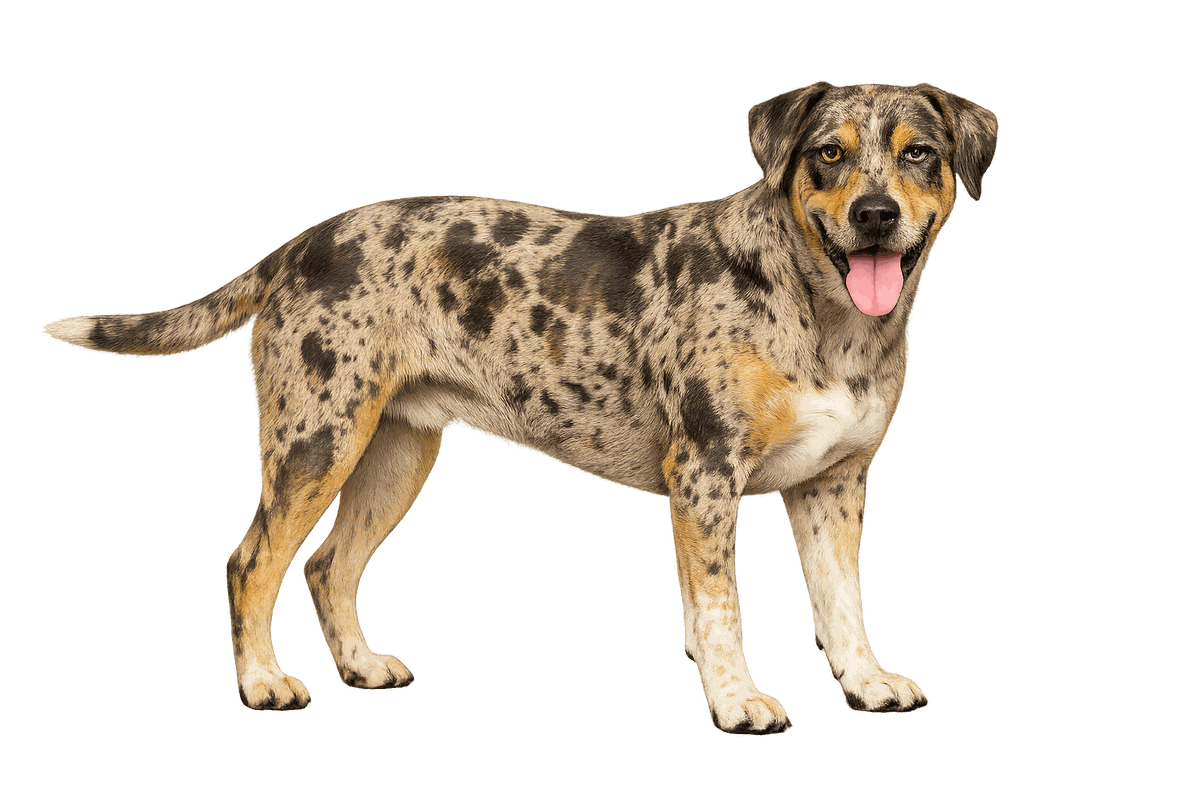
Weight
50-95 lb
Height
22-24 in
Lifespan
10-14 yrs
Coat
Smooth Short
The Catahoula Leopard Dog is Louisiana's powerful multipurpose working dog, known for varied coat and eye colors, independence, loyalty, and serious work drive.
Official, native, and commonly used variants
Weight
50-95 lb
Height
22-24 in
Lifespan
10-14 yrs
Coat
Smooth Short
At A Glance
A quick read on energy, upkeep, and what day-to-day life with this breed usually feels like.
Energy
High
Barking
Moderate
Drooling
Moderate
Shedding
Moderate
Grooming
2/5
First-time owner
No
The Catahoula Leopard Dog is a Louisiana working breed used for stock work, hunting, and rough-country jobs that require power, endurance, and independent judgment. It is serious while working and often playful with its own household.
Catahoulas are short-coated dogs with many accepted colors and patterns, including black, blue, red, chocolate, brindle, and merle or leopard patterns. Coat color alone should never be treated as proof of breed quality.
This breed needs work, space, training, and experienced handling. Many Catahoulas are protective and selective with unfamiliar dogs or people, so early socialization and controlled introductions matter.
This breed tends to suit homes looking for a loyal, confident, protective companion, with daily rhythms shaped by high energy, moderate barking, and moderate drooling.
Coat type
Smooth
Coat length
Short
Shedding
Moderate
Colors
Blue Merle, Red Merle, White Merle, Black, Blue, Red, Chocolate, Brindle, Yellow
Apartment life is usually a poor match because the breed needs space, work, and controlled outlets for intensity.
Catahoulas are watchful and serious when working. Manage guarding, reward calm check-ins, and provide a real outlet for drive.
Use clear reward-based training with recall management, leash control, impulse work, and jobs that use the dog's endurance and problem-solving.
The short coat is easy to maintain and sheds moderately. Check nails, ears, skin, and feet after rough work.
Most healthy adult Catahoulas need about 60 to 90 minutes or more of daily work, with stock-dog games, scent work, hiking, running, training, or other demanding outlets.
The short coat needs weekly brushing, nail care, ear checks, and skin checks. Inspect feet and pads after rough terrain or stock work.
Use reward-based training with clear rules, recall management, leash control, impulse work, and careful dog introductions. Catahoulas need a job and can be independent.
Feed a measured active large-dog diet matched to workload and body condition. Keep the dog lean to support joints and endurance.
Energy level
High
Barking level
Moderate
Drooling level
Moderate
Watchdog ability
5/5
Guard dog ability
4/5
Climate tolerance
Common concerns to discuss with your vet and breeder.
This profile was researched from established breed and canine-care references. Breed tendencies describe typical patterns, not a guarantee for every individual dog.
Reviewed by the Dogs Index Editorial Team. For health or behavior concerns, consult a veterinarian or appropriately qualified professional.
Our Shop
Browse practical products for feeding, grooming, cleanup, enrichment, and smoother daily routines.