Apartment fit
The Glen can be a good apartment terrier when exercise, grooming, and barking routines are managed.
 Ireland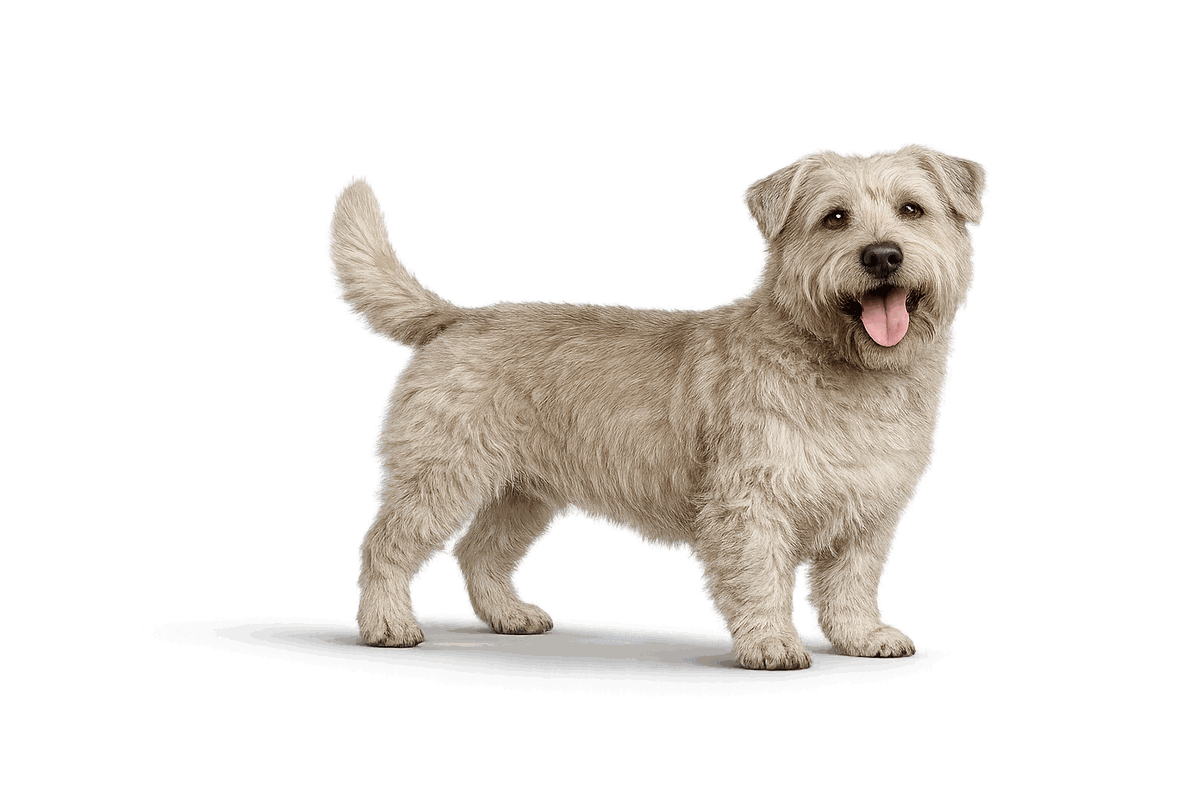
Weight
32-40 lb
Height
12.5-14 in
Lifespan
12-15 yrs
Coat
Double Medium
The Glen of Imaal Terrier is a low, sturdy Irish terrier from County Wicklow, calmer than many terriers but still game, strong, and independent.
Official, native, and commonly used variants
Weight
32-40 lb
Height
12.5-14 in
Lifespan
12-15 yrs
Coat
Double Medium
At A Glance
A quick read on energy, upkeep, and what day-to-day life with this breed usually feels like.
Energy
Moderate
Barking
Moderate
Drooling
Low
Shedding
Low
Grooming
3/5
First-time owner
Yes
The Glen of Imaal Terrier is one of Ireland's native terrier breeds, developed in the Glen of Imaal in County Wicklow. It is low to the ground, heavy for its height, and built for hard work such as vermin control and farm tasks. The breed is often quieter and less frantic than many terriers, but it is still a genuine working terrier with courage and prey drive.
The Glen has a harsh medium-length outer coat with a softer undercoat. Standard colors include wheaten, blue, and brindle. The rough, practical coat needs brushing and periodic stripping or tidying, but it should not look sculpted or overdone.
A Glen can suit a prepared home that wants a sturdy, affectionate terrier with a more deliberate style. Owners should protect the back and front assembly during growth, avoid high-impact jumping in puppies, and ask breeders about hip, elbow, and PRA crd3 testing.
This breed tends to suit homes looking for a game, spirited, gentle companion, with daily rhythms shaped by moderate energy, moderate barking, and low drooling.
Coat type
Double
Coat length
Medium
Shedding
Low
Colors
Wheaten, Blue, Brindle
The Glen can be a good apartment terrier when exercise, grooming, and barking routines are managed.
Glens may alert, dig, or chase. Give them legal outlets for sniffing and digging, and reward calm quiet behavior early.
Use patient rewards and practical household rules. The breed can be independent, so short useful sessions work better than pressure.
Brush weekly, strip or tidy periodically, and check beard, feet, and ears after outdoor activity.
Most Glens need steady daily walks, play, and terrier-style enrichment, but they usually do not need the frantic mileage of some lighter terriers. Avoid repeated high jumping, especially while young.
Brush the rough coat weekly and plan for periodic hand-stripping or coat tidying. Check beard, feet, ears, nails, and skin after muddy walks or digging.
Use patient, reward-based training with clear household rules. Recall, handling, polite greetings, and management around small animals should start early.
Feed measured portions and keep the dog lean. Extra weight is hard on a low, heavy-bodied terrier.
Energy level
Moderate
Barking level
Moderate
Drooling level
Low
Watchdog ability
4/5
Guard dog ability
1/5
Climate tolerance
Common concerns to discuss with your vet and breeder.
This profile was researched from established breed and canine-care references. Breed tendencies describe typical patterns, not a guarantee for every individual dog.
Reviewed by the Dogs Index Editorial Team. For health or behavior concerns, consult a veterinarian or appropriately qualified professional.
Our Shop
Browse practical products for feeding, grooming, cleanup, enrichment, and smoother daily routines.