Apartment fit
The Norwich Terrier can fit apartment life well when walks, enrichment, and barking management are consistent.
Weight
11-12 lb
Height
9-10 in
Lifespan
12-15 yrs
Coat
Wiry Medium
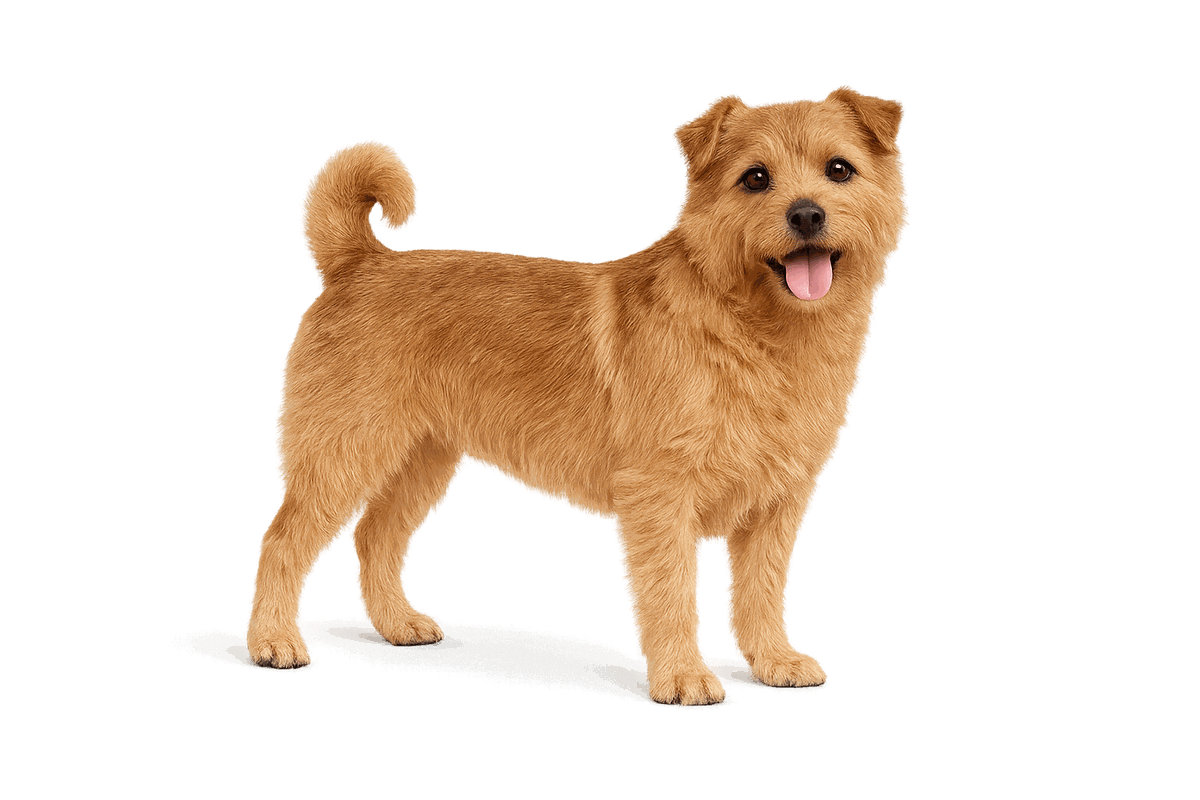
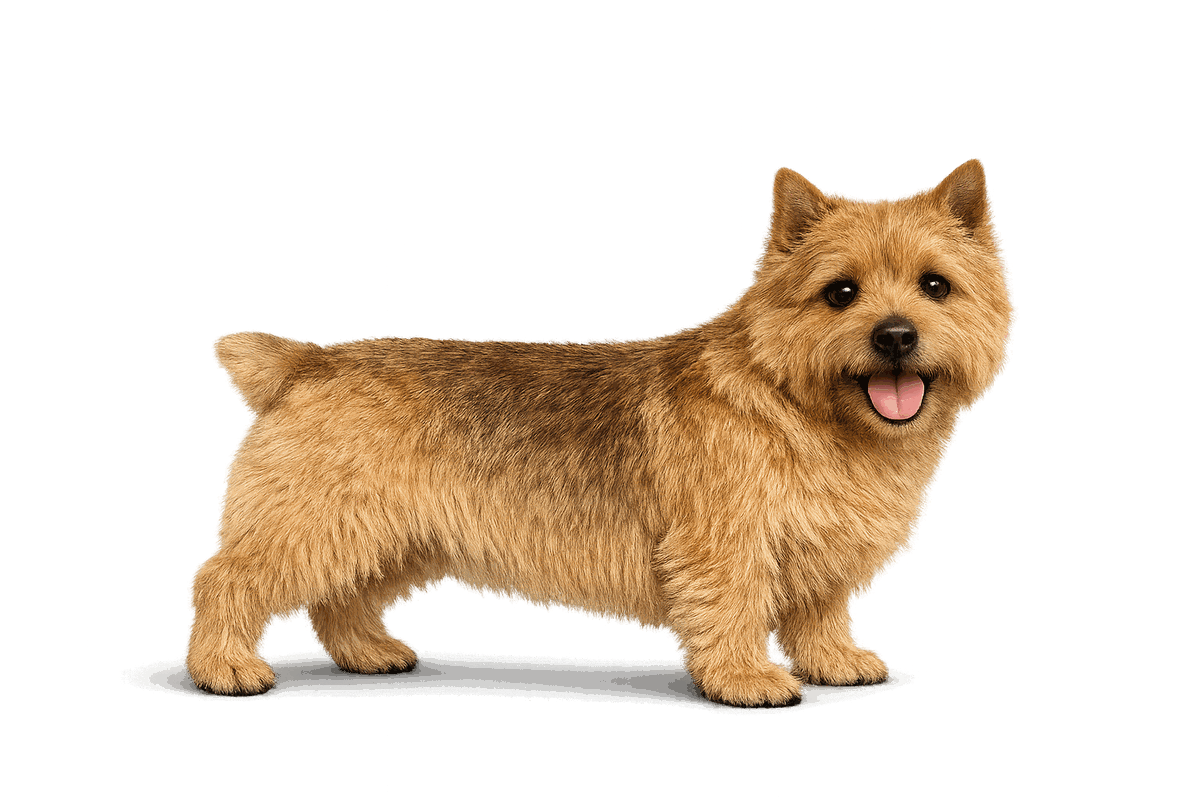
The Norwich Terrier is a small British terrier with prick ears, a wiry weather-resistant coat, and a bold, affectionate temperament.
Official, native, and commonly used variants
Weight
11-12 lb
Height
9-10 in
Lifespan
12-15 yrs
Coat
Wiry Medium
At A Glance
A quick read on energy, upkeep, and what day-to-day life with this breed usually feels like.
Energy
Moderate
Barking
Moderate
Drooling
Low
Shedding
Low
Grooming
3/5
First-time owner
Yes
The Norwich Terrier is a small British working terrier bred for vermin control and companionship. It is closely related to the Norfolk Terrier, but the Norwich has upright prick ears while the Norfolk has folded drop ears.
Adults are small, usually about 10 inches at the shoulder and around 12 pounds. The coat is hard, wiry, straight, and weather-resistant, with standard colors including red, wheaten, black and tan, and grizzle. Correct coat care often involves hand-stripping rather than simple clipping.
Norwich Terriers are cheerful, game, and affectionate, but they still carry terrier instincts. They can live in apartments when exercised and trained, yet owners should manage digging, chasing, barking, and confident behavior around larger dogs. This is a small dog with a serious working-dog attitude.
This breed tends to suit homes looking for a affectionate, game, alert companion, with daily rhythms shaped by moderate energy, moderate barking, and low drooling.
Coat type
Wiry
Coat length
Medium
Shedding
Low
Colors
Red, Wheaten, Black and Tan, Grizzle
The Norwich Terrier can fit apartment life well when walks, enrichment, and barking management are consistent.
Expect alert terrier behavior. Reward quiet check-ins and give appropriate outlets for digging and chasing games.
Keep training short, fun, and clear. Terriers respond best when rewards are meaningful and rules do not change every day.
The coat sheds little but needs brushing and periodic stripping or skilled grooming to keep its hard texture.
Most Norwich Terriers need 45 to 60 minutes of daily walking, play, and terrier enrichment. Digging boxes, scent games, and training help keep them settled.
Brush weekly and plan hand-stripping or skilled grooming to maintain the wiry coat. Keep nails, teeth, and ears on a regular schedule.
Use upbeat rewards, short sessions, and consistent rules. Prioritize recall, leave-it, quiet cues, and calm behavior around larger dogs.
Feed measured small-dog meals and keep the Norwich lean; extra weight makes a small frame work harder.
Energy level
Moderate
Barking level
Moderate
Drooling level
Low
Watchdog ability
4/5
Guard dog ability
1/5
Climate tolerance
Common concerns to discuss with your vet and breeder.
This profile was researched from established breed and canine-care references. Breed tendencies describe typical patterns, not a guarantee for every individual dog.
Reviewed by the Dogs Index Editorial Team. For health or behavior concerns, consult a veterinarian or appropriately qualified professional.
Our Shop
Browse practical products for feeding, grooming, cleanup, enrichment, and smoother daily routines.