Apartment fit
A Saluki may be calm enough indoors for apartment life, but only if the owner provides long walks and secure places to run. Elevators and crowded dog areas should be managed calmly.
Weight
40-65 lb
Height
23-28 in
Lifespan
10-17 yrs
Coat
Smooth or feathered Varies
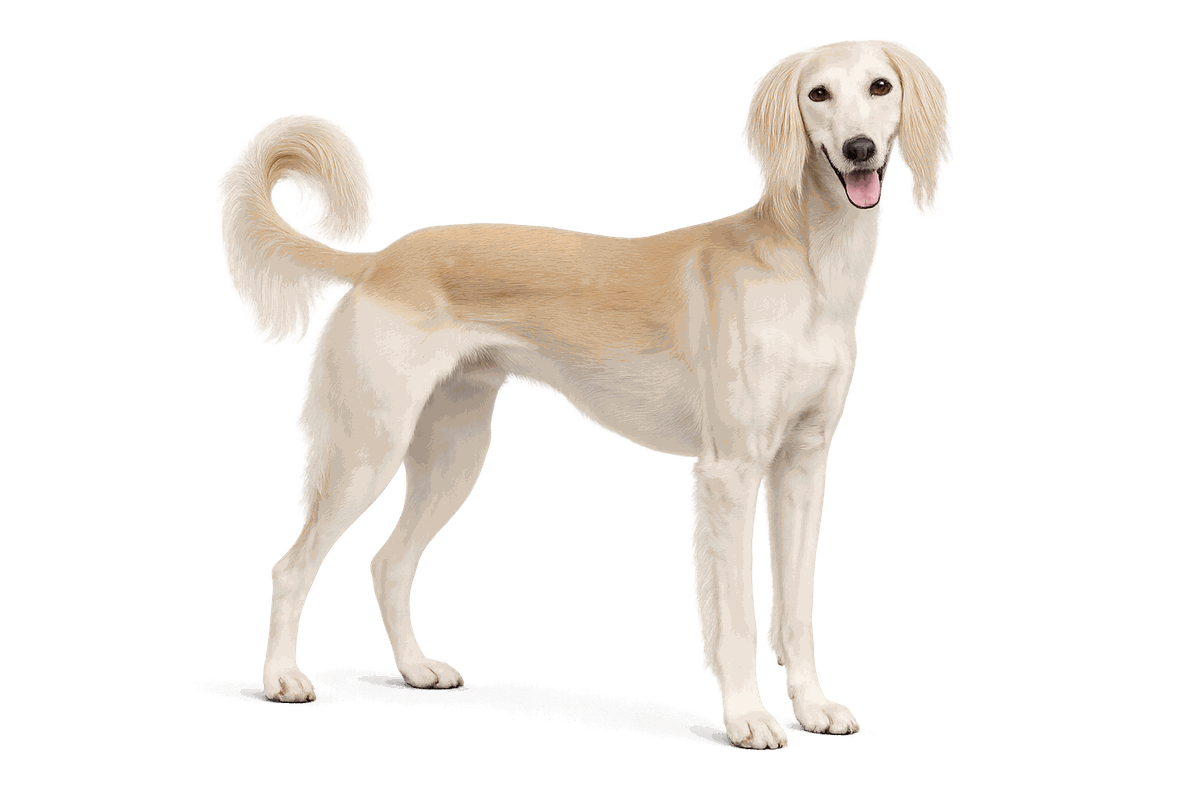
The Saluki is an ancient Middle Eastern sighthound, elegant, fast, independent, and gentle, with smooth or feathered coat varieties.
Official, native, and commonly used variants
No widely used alternate names are recorded for this breed.
Weight
40-65 lb
Height
23-28 in
Lifespan
10-17 yrs
Coat
Smooth or feathered Varies
At A Glance
A quick read on energy, upkeep, and what day-to-day life with this breed usually feels like.
Energy
High
Barking
Low
Drooling
Low
Shedding
Low
Grooming
1/5
First-time owner
No
The Saluki is one of the classic Middle Eastern sighthounds, bred to hunt by sight across open country. It is tall, lean, deep-chested, and built for speed and endurance rather than bulk. The breed appears in smooth and feathered varieties, and the standard accepts many colors and markings.
A Saluki is usually quiet and gentle indoors once mature, but it is not a casual off-leash dog. Strong prey drive, speed, and independent judgment mean secure fencing and careful recall management are essential. Many Salukis are reserved with strangers and affectionate without being clingy.
Daily care should include safe sprint opportunities, long walks, and soft bedding to protect a lean frame. Grooming is simple, especially in smooth dogs, but feathered ears, legs, and tails need combing. Health planning should include cardiac evaluation, eye care, bloat awareness, thyroid discussion, and safe anesthesia conversations with a sighthound-aware veterinarian.
This breed tends to suit homes looking for a gentle, dignified, independent companion, with daily rhythms shaped by high energy, low barking, and low drooling.
Coat type
Smooth or feathered
Coat length
Varies
Shedding
Low
Colors
White, Cream, Fawn, Golden, Red, Grizzle and tan, Black and tan, Tricolor
A Saluki may be calm enough indoors for apartment life, but only if the owner provides long walks and secure places to run. Elevators and crowded dog areas should be managed calmly.
Salukis are usually quiet, sensitive, and reserved. Behavior issues often come from unsafe freedom, boredom, or pressure-heavy training rather than constant barking.
Use quiet, patient, reward-based training. Recall, leash manners, handling, and calm exposure to strangers matter, but owners should not expect the repetitive obedience style of a handler-focused working breed.
Smooth Salukis need quick brushing, while feathered dogs need combing through ears, legs, and tail. Keep nails short, check thin skin for scrapes, and provide soft bedding for elbows and joints.
Most Salukis need long daily walks plus regular safe chances to run in a securely fenced area. They are sprinters and hunters by sight, so off-leash freedom in open unsecured areas is risky.
Smooth Salukis need quick brushing, while feathered dogs need combing through ears, legs, and tail. Keep nails short, check thin skin for scrapes, and provide soft bedding for elbows and joints.
Use quiet, patient, reward-based training. Recall, leash manners, handling, and calm exposure to strangers matter, but owners should not expect the repetitive obedience style of a handler-focused working breed.
Feed a lean sighthound body condition rather than trying to make the dog look heavy. Discuss bloat risk, cardiac screening, and anesthesia considerations with a veterinarian familiar with sighthounds.
Energy level
High
Barking level
Low
Drooling level
Low
Watchdog ability
2/5
Guard dog ability
1/5
Climate tolerance
Common concerns to discuss with your vet and breeder.
This profile was researched from established breed and canine-care references. Breed tendencies describe typical patterns, not a guarantee for every individual dog.
Reviewed by the Dogs Index Editorial Team. For health or behavior concerns, consult a veterinarian or appropriately qualified professional.
Our Shop
Browse practical products for feeding, grooming, cleanup, enrichment, and smoother daily routines.