Apartment fit
Apartment life is challenging because activity and alone-time needs are high.
 Germany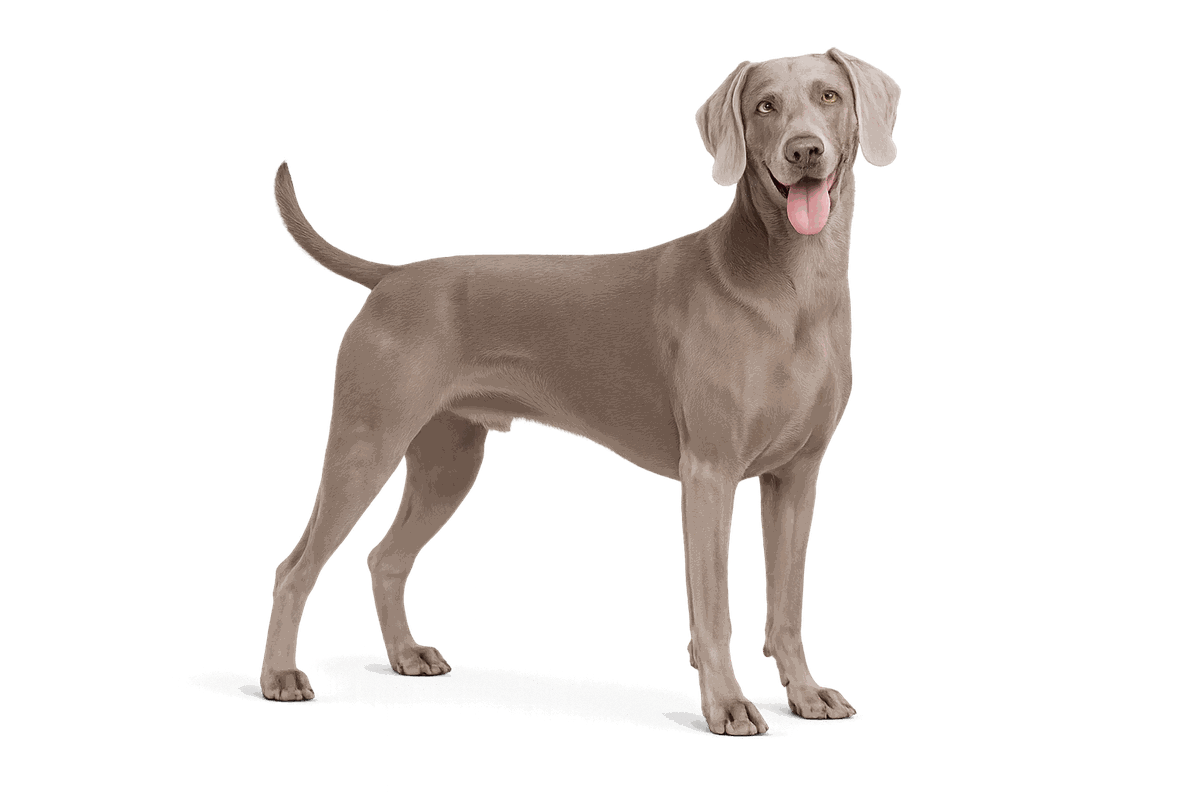
Weight
55-90 lb
Height
23-27 in
Lifespan
10-13 yrs
Coat
Smooth Short
The Weimaraner is a large German gundog with a short silver-gray coat, strong hunting drive, and intense need for exercise and structure.
Official, native, and commonly used variants
Weight
55-90 lb
Height
23-27 in
Lifespan
10-13 yrs
Coat
Smooth Short
At A Glance
A quick read on energy, upkeep, and what day-to-day life with this breed usually feels like.
Energy
Very High
Barking
Moderate
Drooling
Low
Shedding
Moderate
Grooming
1/5
First-time owner
No
The Weimaraner was developed in Germany as a versatile hunting dog for large game and later bird work. It is athletic, intelligent, people-focused, and often demanding, with more drive than many casual owners expect.
The breed's hallmark is its short, sleek gray coat, ranging from silver-gray to mouse-gray. Grooming is simple, but mental and physical work are not optional. Underworked Weimaraners can become anxious, destructive, noisy, or hard to handle.
Weimaraners suit active owners who want a training partner, hunting dog, running companion, or dog-sport prospect. They are usually a poor fit for homes that leave dogs alone for long hours without exercise, training, and companionship.
This breed tends to suit homes looking for a energetic, intelligent, loyal companion, with daily rhythms shaped by very high energy, moderate barking, and low drooling.
Coat type
Smooth
Coat length
Short
Shedding
Moderate
Colors
Silver gray, Gray, Mouse gray
Apartment life is challenging because activity and alone-time needs are high.
Barking often comes from boredom, alertness, or frustration. Work and settling skills help.
Use consistent reward-based training, plenty of exercise, and practical impulse-control work.
The short coat is simple to brush and sheds moderately. Ear and nail care matter.
Most Weimaraners need 90 minutes or more of daily exercise plus training, running, retrieving, scent work, or hunting-style outlets.
The short coat needs weekly brushing, nail care, ear checks, and skin checks. The coat offers limited insulation in cold weather.
Use reward-based training with structure, consistency, and impulse-control work. Teach recall, loose-leash walking, calm greetings, and alone-time skills early.
Feed measured meals for a large active dog. Discuss bloat risk, meal timing around exercise, and joint health with a veterinarian.
Energy level
Very High
Barking level
Moderate
Drooling level
Low
Watchdog ability
4/5
Guard dog ability
2/5
Climate tolerance
Common concerns to discuss with your vet and breeder.
This profile was researched from established breed and canine-care references. Breed tendencies describe typical patterns, not a guarantee for every individual dog.
Reviewed by the Dogs Index Editorial Team. For health or behavior concerns, consult a veterinarian or appropriately qualified professional.
Our Shop
Browse practical products for feeding, grooming, cleanup, enrichment, and smoother daily routines.