If your dog explodes when a bicycle passes, the walk can feel peaceful one second and out of control the next.
Maybe your dog barks as soon as they see a cyclist. Maybe they crouch, stare, and launch forward. Maybe they are fine with walkers but lose it when wheels move fast.
The clear answer: your dog needs more distance from bikes before they can learn. You are not trying to make them "be nice" close up. You are trying to keep them under threshold long enough to notice the bike, stay connected to you, and get rewarded. If your dog reacts to several triggers, start with the broader reactive dog training plan too.
Bike reactions are common because bikes are fast, quiet, and unpredictable. The plan is not to punish the reaction. The plan is to stop rehearsing it.
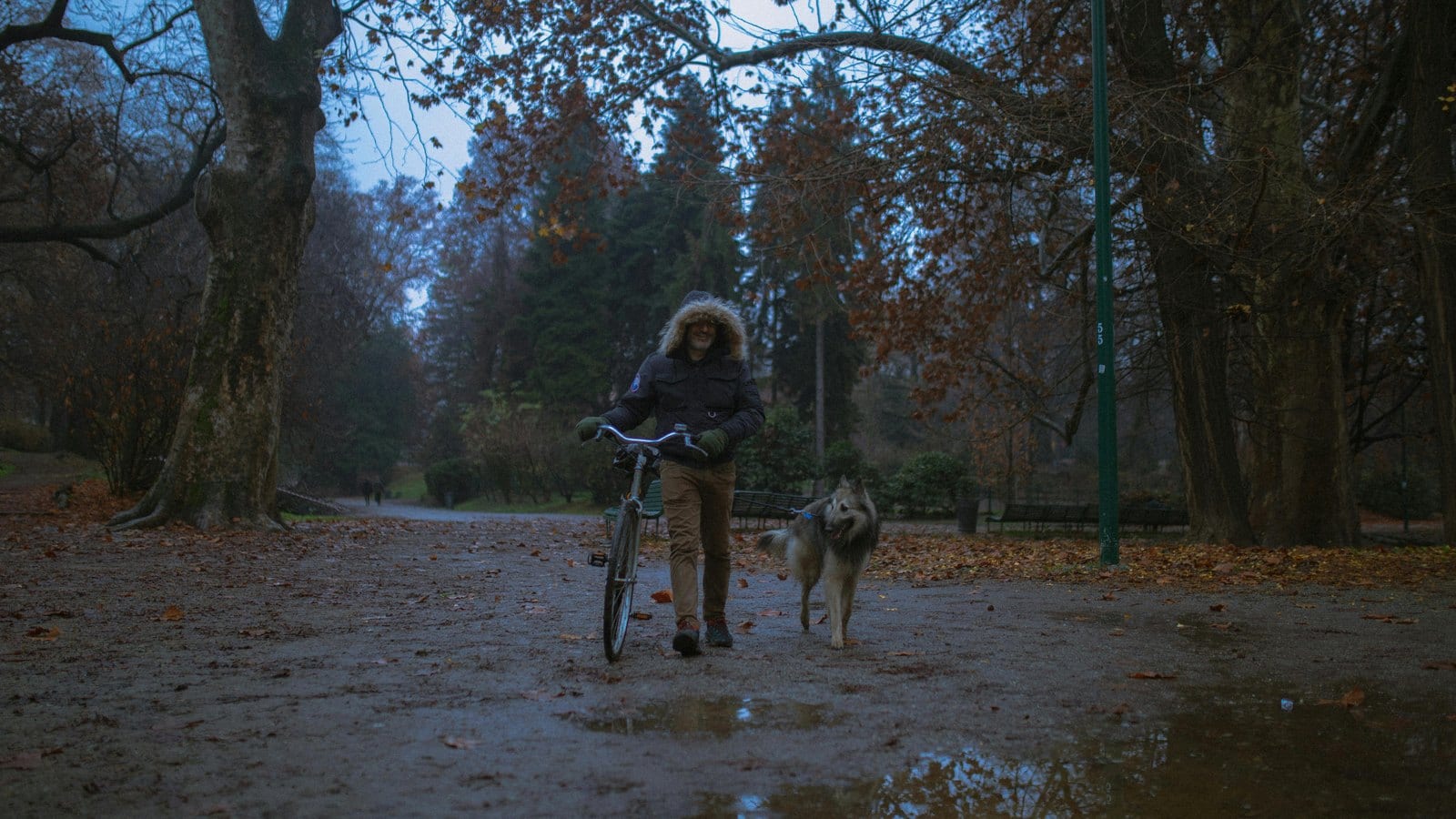
A quiet path with space is much easier for bike-reactive dogs than a narrow sidewalk where cyclists appear suddenly.
Why Dogs React to Bikes on Walks
A bike is not just "a person going by." To a dog, it can be a strange mix of movement, sound, speed, and surprise.
Your dog may react because:
- the fast motion triggers chase
- the bike startles them from behind
- they feel trapped by the leash
- they are frustrated because they want to follow
- they have practiced barking and lunging before
- the path is too narrow for them to feel safe
- they are already overstimulated before the bike appears
The AKC explains reactivity as behavior that is out of proportion to a normal trigger. Your dog reacting to bikes does not automatically mean they are aggressive. It means the bike is creating more arousal than your dog can handle in that moment.
Some dogs look scared. Some look excited. Some look like they are hunting the motion. The training starts the same way: create enough distance that your dog can think again.
What "Under Threshold" Looks Like Around Bikes
Your dog's threshold is the point where they can still notice the bike without tipping into barking, lunging, chasing, or freezing.
Under threshold might look like:
- ears move toward the bike, then back to you
- your dog can eat a treat
- your dog can sniff again after noticing the bike
- the leash stays loose or only lightly tense
- your dog can turn away with you
- their body stays soft enough to move
Over threshold looks different:
- hard staring
- closed mouth and stiff body
- low stalking posture
- sudden pulling toward the bike
- barking, spinning, or jumping
- ignoring food they normally love
- redirecting onto the leash or your sleeve
If your dog cannot take food, respond to their name, or move away without a struggle, you are in a management moment. The bike was too close, too fast, too sudden, or your dog was already too charged up.
The First Fix Is Distance, Not Obedience
Many owners try asking for a sit.
That can work for some dogs at a comfortable distance. But if your dog is already locked onto the cyclist, a sit can make things worse by keeping them stationary and staring while the bike comes closer. The same timing problem shows up when a dog is lunging on leash.
Instead, think in terms of space.
Useful distance tools include:
- crossing the street early
- stepping into a driveway
- moving behind a parked car
- turning onto a side path
- using a grass strip as a buffer
- waiting behind a tree, bench, or wide corner
- choosing quieter streets instead of multi-use paths
You are not avoiding training. You are making training possible. AKC's article on dogs chasing cars discusses staying below threshold and using counterconditioning around movement triggers. Bikes are different from cars, but the principle is similar.
A Simple Training Plan for Bike-Reactive Dogs
Use this plan on quiet days first. Do not start on a crowded bike path at peak traffic time.
1. Choose the Right Practice Spot
Pick a place where bikes are visible but not suddenly close.
Good practice spots:
- a park with a wide open field beside a path
- a quiet street where you can cross early
- a parking lot edge near a bike lane
- a school or office area outside busy hours
- a trail entrance where you can stand far back
The goal is not to test your dog. The goal is to set up a win.
2. Find the Bike Distance Your Dog Can Handle
Stand far enough away that your dog notices a bike but does not explode.
For one dog, that might be 15 feet. For another, it might be across a soccer field.
Watch for:
- Can they glance at the bike and look back?
- Can they eat?
- Can their feet move?
- Can they sniff after the bike passes?
If yes, you have a workable distance. If no, move farther away next time.
3. Mark the First Calm Look
When your dog sees a bike and stays quiet, mark it.
Use a short word like:
- "yes"
- "good"
- "nice"
Then feed a treat.
Do not wait for a perfect sit or a long stare. Reward the first tiny moment of calm noticing.
Timing matters. You are teaching:
"Bike appears, food happens, and I do not need to chase it."
4. Feed Where You Want Your Dog's Head
If your dog swings forward toward bikes, feed slightly behind your leg or beside your foot. This encourages a small turn back toward you.
You can also scatter a few treats in the grass after the bike passes. Sniffing helps many dogs come down from the spike of arousal, and it is more useful than holding your dog in a rigid position.
5. Leave While Things Are Still Going Well
If your dog calmly watches three bikes, that is a good session. Leave. A short successful session builds confidence faster than a long session that ends in barking.
Pattern Games That Help Around Bikes
Pattern games give your dog something familiar to do when the environment feels busy.
You can use:
Find It
Say "find it" and drop a treat on the ground. This is useful after a cyclist passes or when you need your dog to lower their head and sniff.
One-Two-Three Treat
Count out loud: "one, two, three," then feed on three. Practice at home first, then use it when a bike is visible at a safe distance.
U-Turn
Say a cheerful cue like "this way," turn around, and feed as your dog follows. Practice when nothing is happening so the cue does not only predict stress.
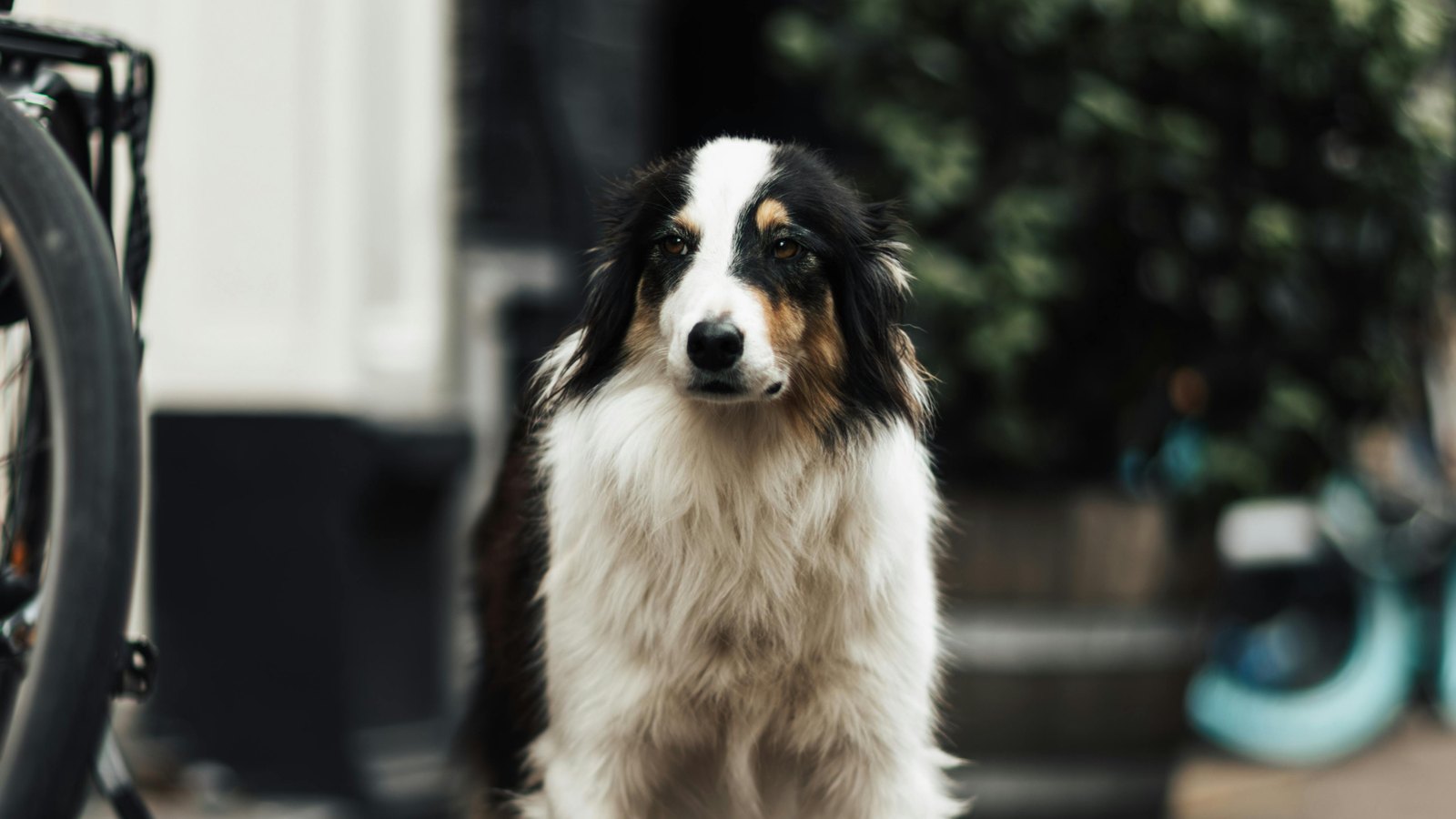
Start with still or distant bikes if moving bikes are too exciting. A parked bike can be an easier first step for some dogs.
What to Do When a Bike Surprises You
Even with good planning, a bike will sometimes appear too close.
In that moment, do not worry about training. Get safe.
Try this:
- shorten the leash enough for control, but avoid choking up tightly
- step off the path if possible
- turn your body and guide your dog away
- use a happy U-turn cue if your dog can respond
- toss treats away from the bike if your dog can still eat
- put a parked car, tree, or bench between your dog and the cyclist
If your dog barks, do not stand there apologizing while the cyclist keeps coming. Move, then give your dog a minute to sniff or take a quieter route home.
Common Mistakes That Make Bike Reactivity Worse
Waiting Too Long to Move
If your dog is already stiff, staring, and loading forward, the choice window is closing. Move before the bark or lunge.
Practicing on Busy Bike Paths
Busy paths are advanced work. If your dog reacts every two minutes, they are rehearsing the behavior more than they are learning.
Tightening the Leash Every Time a Bike Appears
Use enough leash control for safety, then create distance. If the leash tightens every time a bike appears, your dog may start to feel trapped or braced.
Correcting the Bark After It Happens
Once your dog is barking and lunging, their body is already flooded with arousal. Reward earlier, move earlier, and train at a distance where your dog can still succeed.
Letting Your Dog Chase Bikes "For Exercise"
If your dog is already bike-reactive, letting them chase moving bikes can strengthen the exact behavior you are trying to reduce.
Running beside a bicycle is a separate activity for carefully conditioned dogs. It is not a fix for a dog who lunges at cyclists.
Apartment and Neighborhood Notes
Bike reactions can be harder in apartment complexes because bikes often appear in tight spaces:
- garage exits
- elevators
- courtyard paths
- lobby doors
- narrow sidewalks
- bike storage areas
If you live in an apartment, build a route plan: use the quietest exit, pause before blind corners, avoid bike storage areas at busy times, and walk at lower-traffic times while your dog is learning.
For tighter building setups, use the detailed guide on walking a reactive dog in an apartment complex.
Apartment dogs often need more management, not more pressure.
Breed-Specific Notes
Any breed can react to bikes, but the reason may look different.
Herding breeds such as Border Collies, Australian Shepherds, and Corgis may be highly sensitive to movement. Terriers may lock onto fast motion with intensity. Hounds may be less interested in the bike itself but still become overstimulated by busy paths, scents, and motion.
Large working breeds can be harder to manage physically if they lunge. Toy and small breeds may be easier to pick up, but they still deserve training that helps them feel safe. Breed tendencies are clues, not destiny.
When to Call a Professional Trainer or Behavior Consultant
Get help sooner if your dog has pulled you over, redirects onto the leash or your hand, has bitten or nearly bitten, reacts from very far away, cannot recover after bikes pass, or makes you feel unsafe on walks.
Look for a qualified professional who uses reward-based methods and understands reactivity, desensitization, counterconditioning, and safety planning. ASPCA notes that desensitization and counterconditioning can be tricky and may need guidance from an experienced professional, especially when fear is involved.
The right trainer should help you create more safety, not force your dog closer to bikes to "get over it."
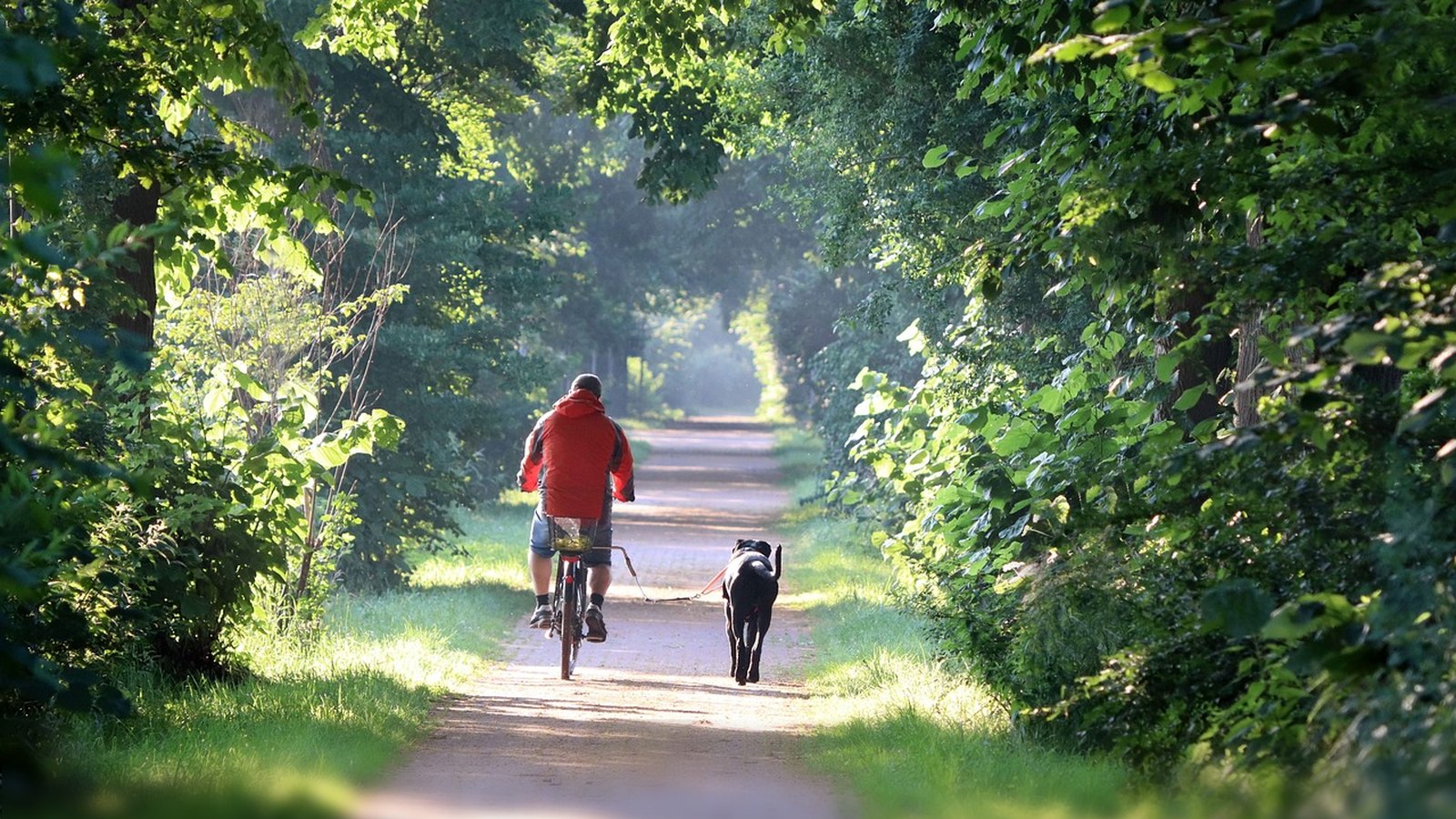
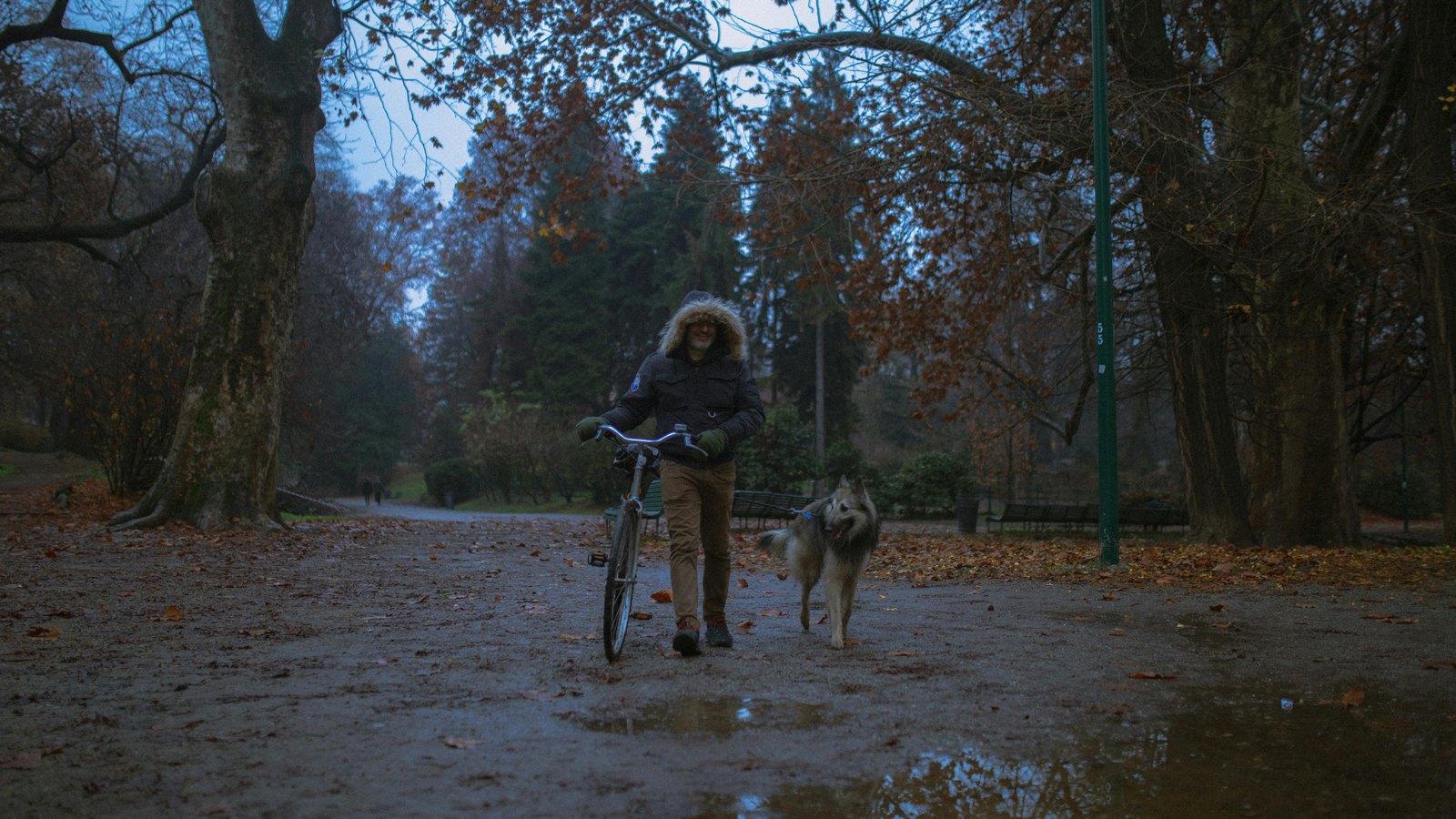
Wide paths and predictable sight lines give you time to reward calm noticing or move away before your dog reacts.
A Calm Bike-Pass Routine You Can Practice
Use this only when the bike is far enough away that your dog can still think.
- See the bike before your dog explodes.
- Move to the side and create space.
- Mark the calm look with "yes."
- Feed near your leg.
- Scatter two or three treats after the bike passes.
- Walk away before the next bike arrives.
You are not asking for perfection. You are building a new habit: bike appears, my person helps me, food happens, and I do not need to chase.
FAQ
Why does my dog react to bikes but not walkers?
Bikes are faster, quieter, and more sudden than people walking. The speed can trigger chase, fear, or frustration before your dog has time to process what is happening.
Is my dog aggressive if they lunge at cyclists?
Not necessarily. Lunging can come from fear, chase drive, frustration, or overarousal. It can still be unsafe, so treat it seriously even if your dog is not trying to bite.
Should I make my dog sit when bikes pass?
Only if your dog can sit calmly and stay loose. Many bike-reactive dogs do better with movement, distance, treat delivery, and U-turns because sitting still can increase staring.
What treats work best for bike training?
Use small, soft, high-value treats your dog can eat quickly. Chicken, cheese, training treats, or another favorite food may work. If your dog cannot eat, you are probably too close.
Can I train this without a helper on a bike?
Yes. You can start by working far from a quiet bike path or around parked bikes. A helper can make the setup easier later, but real-world distance and timing matter more than perfect setups.
How long does it take to stop bike reactions?
It depends on your dog, your routes, and how often they rehearse the reaction. Many dogs improve when owners consistently create distance and reward calm noticing, but some need months of careful management and professional help.
What should I do if a cyclist comes up behind us?
Move off the path if you can, turn your dog away, and feed after the bike passes if your dog can eat. For future walks, avoid wearing headphones and practice scanning behind you in bike-heavy areas.