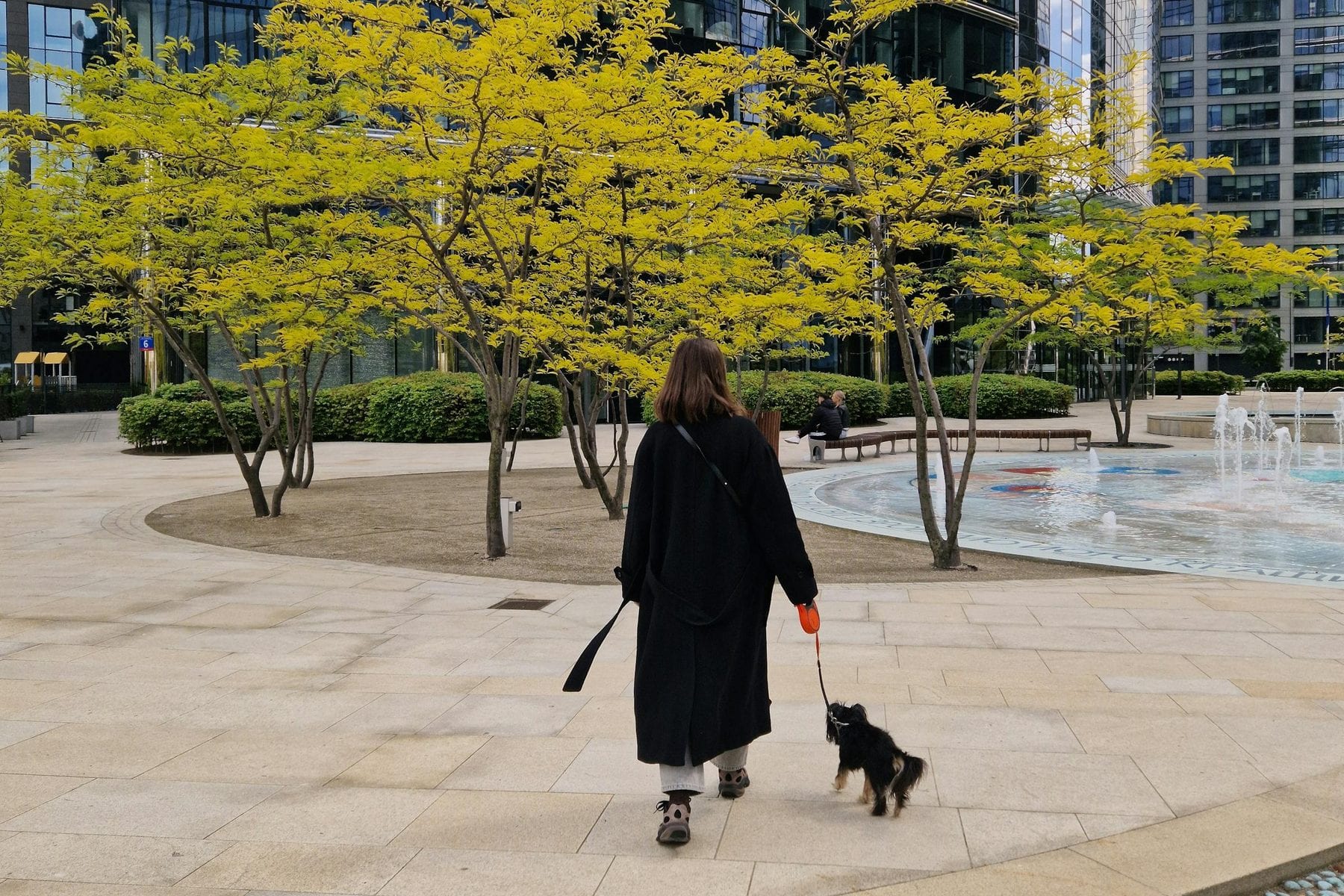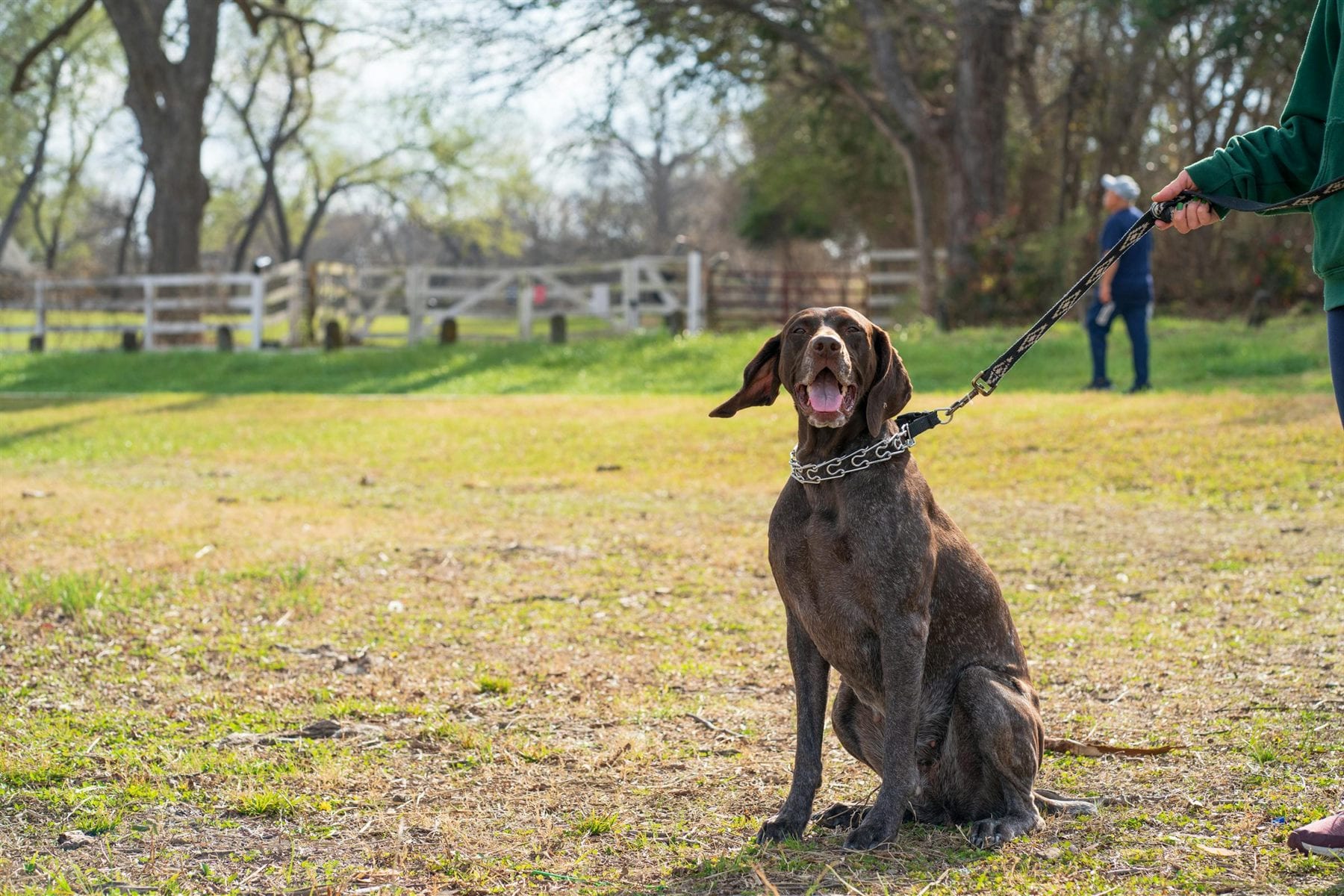
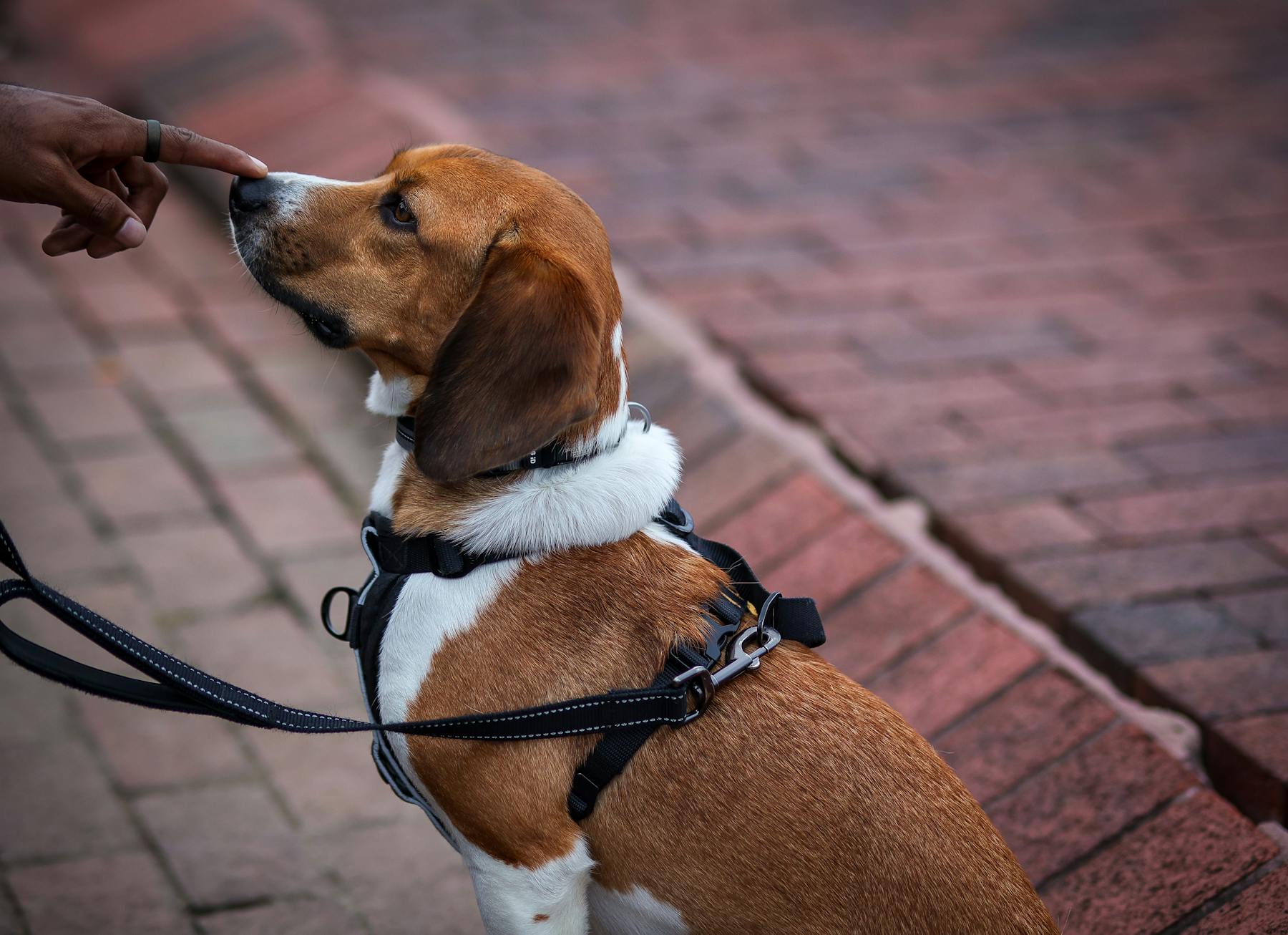
Walking your dog should feel relaxing. But if your dog pulls constantly, it quickly turns into a frustrating experience.
Leash pulling is one of the most common problems dog owners face. The good news is that it is not about your dog being stubborn. It usually comes down to habit, excitement, and lack of clear training.
With the right approach, you can teach your dog to walk calmly without pulling.
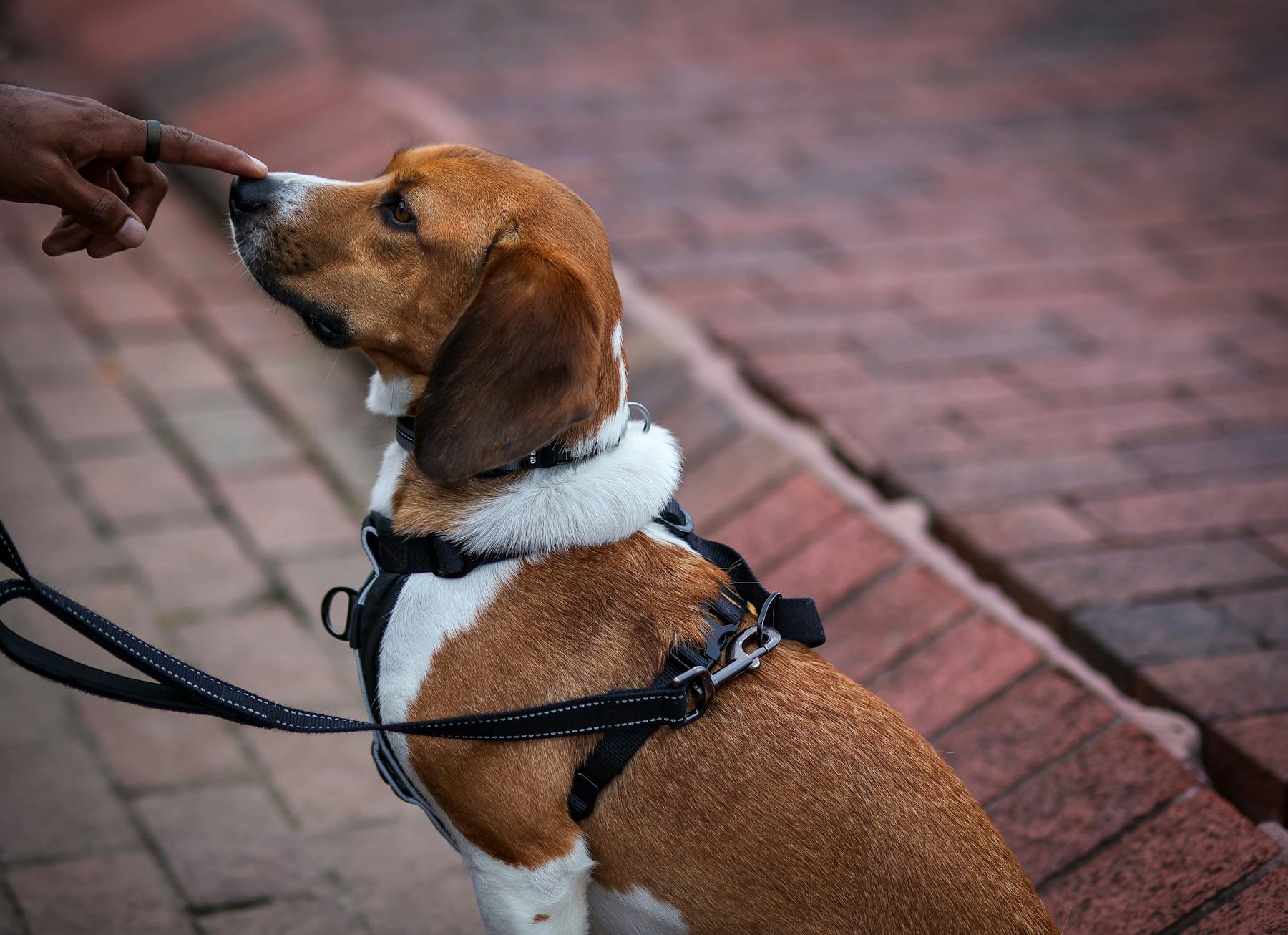
The first step in learning how to stop dog pulling on leash is noticing when the leash tightens and changing what happens next.
Key takeaways
- Dogs pull because it works, not because they are disobedient.
- Consistency matters more than perfect technique.
- Short training sessions are more effective than long walks.
- Stopping movement is one of the most powerful tools.
- The goal is calm walking, not strict obedience.
Why dogs pull on the leash
Dogs naturally walk faster than humans. Add excitement, smells, and distractions, and pulling becomes their default behavior.
Common reasons include:
- excitement to explore
- habit from previous walks
- lack of structured training
- too much freedom too early
- inconsistent rules
The key insight:
If pulling gets your dog where they want to go, they will keep doing it.
That is why learning how to stop dog pulling on leash starts with changing the outcome. The leash does not need to become a battle. It needs to become information your dog can understand: a loose leash moves forward, a tight leash pauses the walk.
If you remember one phrase, make it this: how to stop dog pulling on leash comes down to making pulling less useful and calm walking more rewarding.
AKC leash training guidance explains the same basic pattern: wait for a loose leash before continuing so the dog learns that pulling stops progress and polite walking keeps the walk moving.
The biggest mistake dog owners make
Most owners keep walking while the dog pulls.
This teaches the dog:
pulling = moving forward
Even small pulling reinforces the behavior.
If you fix only one thing, fix this.
Step-by-step: how to stop leash pulling
Step 1: Stop moving when your dog pulls
The moment your dog pulls:
- stop walking immediately
- stand still
- wait
Do not pull back. Do not drag your dog.
Your dog will eventually:
- look back
- release tension
- step toward you
Then continue walking.
This teaches:
pulling = walk stops
loose leash = walk continues
Step 2: Reward the right position
When your dog walks beside you calmly:
- mark it (
yesorgood) - reward with a treat
Do this often at the beginning.
You are teaching your dog:
staying close = reward
Step 3: Change direction randomly
Instead of always walking straight:
- turn left
- turn right
- change pace
Your dog learns to pay attention to you instead of pulling forward.
Step 4: Use short training walks
Do not expect perfect behavior on long walks immediately.
Start with:
- 5 to 10 minute sessions
- low-distraction environments
Build success first, then increase difficulty.
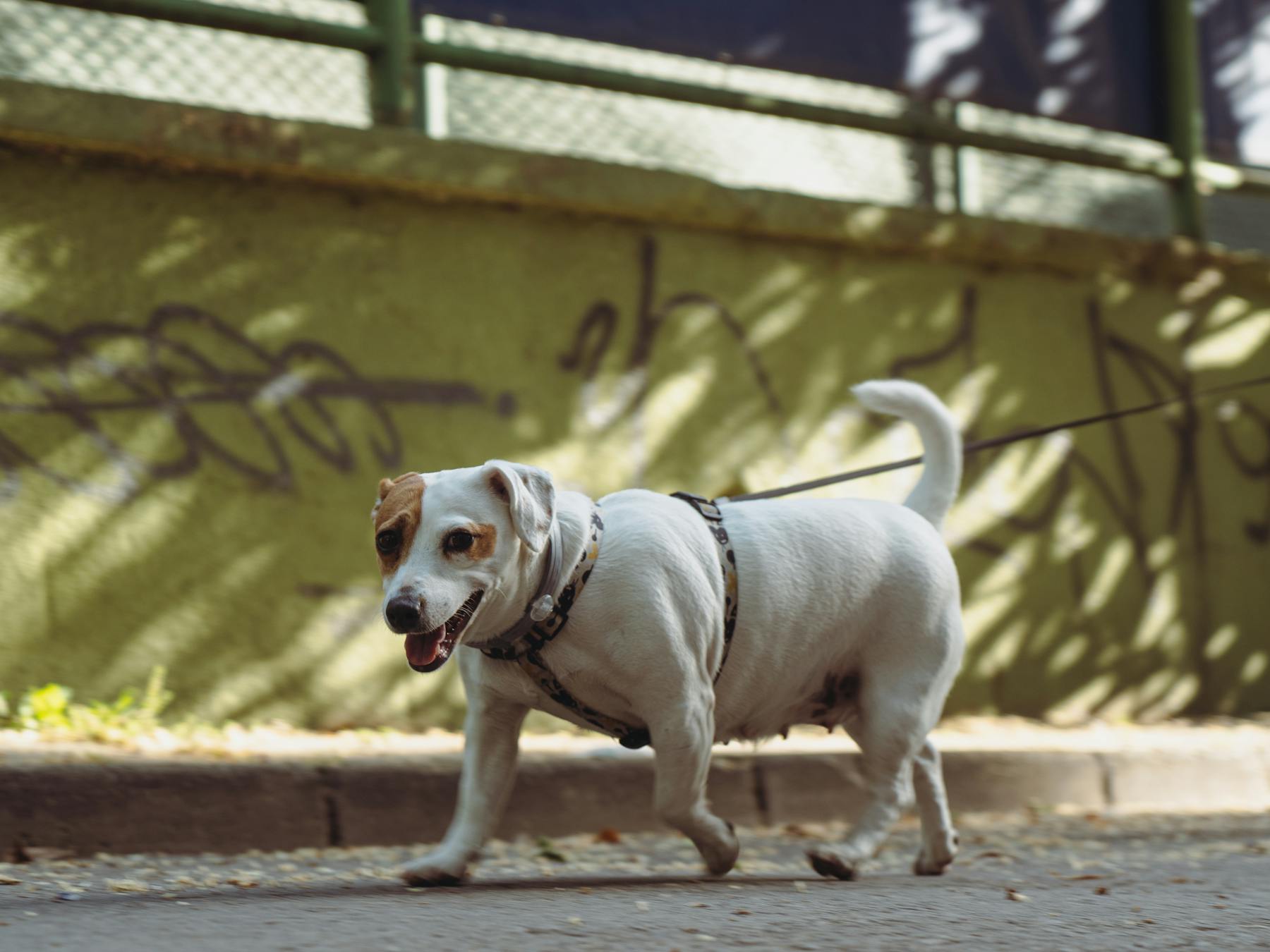
Short, low-distraction leash sessions make it much easier for dogs to learn what calm walking feels like.
Step 5: Practice before real walks
Before leaving the house:
- practice inside
- practice in your yard
- practice in quiet areas
If your dog starts the walk already excited, pulling becomes much harder to control.
Best tools to help (optional but useful)
Training matters more than tools, but the right equipment helps.
Useful options:
- well-fitted harness
- standard leash (not retractable)
- treat pouch for quick rewards
Avoid relying only on tools without training.
Why harnesses do not fix pulling by themselves
A harness can make walks safer and more comfortable, especially for dogs who hit the end of the leash hard. But a harness does not automatically teach loose leash walking.
If your dog pulls in a harness and still gets to move forward, the same habit remains:
tight leash = progress
Use equipment as support, not as the whole plan. The training still has to show your dog which behavior opens the path.
What to do before the walk starts
Many dogs begin pulling before they even leave the house. They rush the door, bounce while the leash is clipped, and blast through the first ten steps already overexcited.
Slow that part down.
Try this:
- Pick up the leash calmly.
- Wait for four paws on the floor.
- Clip the leash only when your dog is still enough to manage.
- Open the door a little.
- If your dog surges, close the door and reset.
- Step outside only when the leash is loose enough to begin well.
This is not about making the doorway strict. It is about preventing the walk from starting at maximum intensity.
If those doorway problems happen in hallways, elevators, or shared entrances, use the apartment-specific plan for walking a reactive dog in an apartment complex.
What if your dog pulls toward smells?
Sniffing is one of the best parts of a walk for most dogs, so do not turn every smell into a fight. Instead, use sniffing as a reward.
When your dog walks with a loose leash for a few steps, release them to sniff:
go sniff
Now the environment becomes part of the training. Your dog learns that calm walking does not take fun away. It earns access to it.
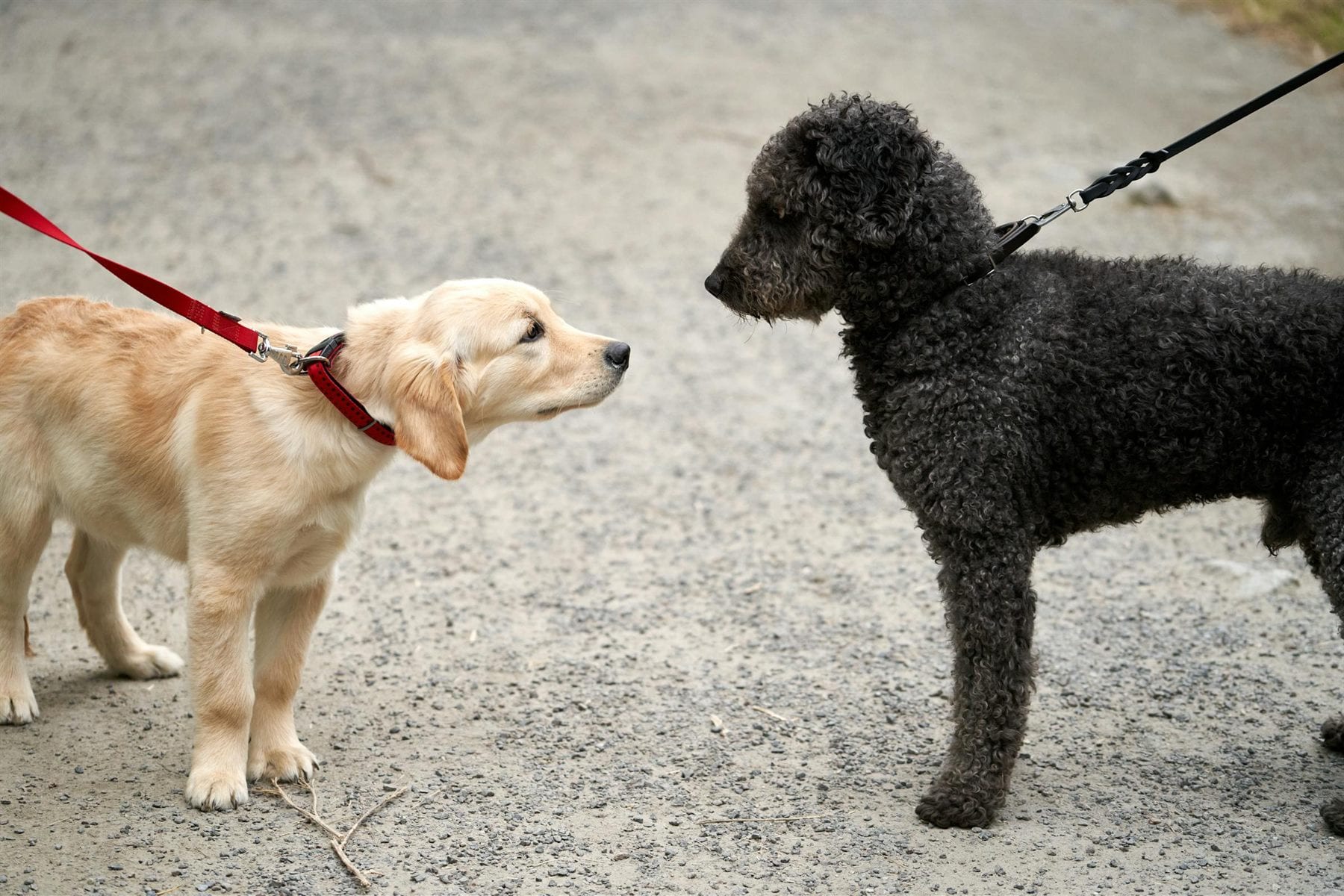
What if your dog pulls toward other dogs?
Pulling toward other dogs is a different problem from casual leash pulling. If your dog barks, lunges, freezes, or cannot take food when another dog appears, read this guide on why dogs bark at other dogs on walks before pushing closer.
For those dogs, distance matters more than perfect leash technique. Practice loose leash walking away from triggers first, then slowly add harder environments.
If the pulling turns into a sudden launch, use the dog lunging on leash guide. For the full topic map, start with the reactive dog walking guides hub.
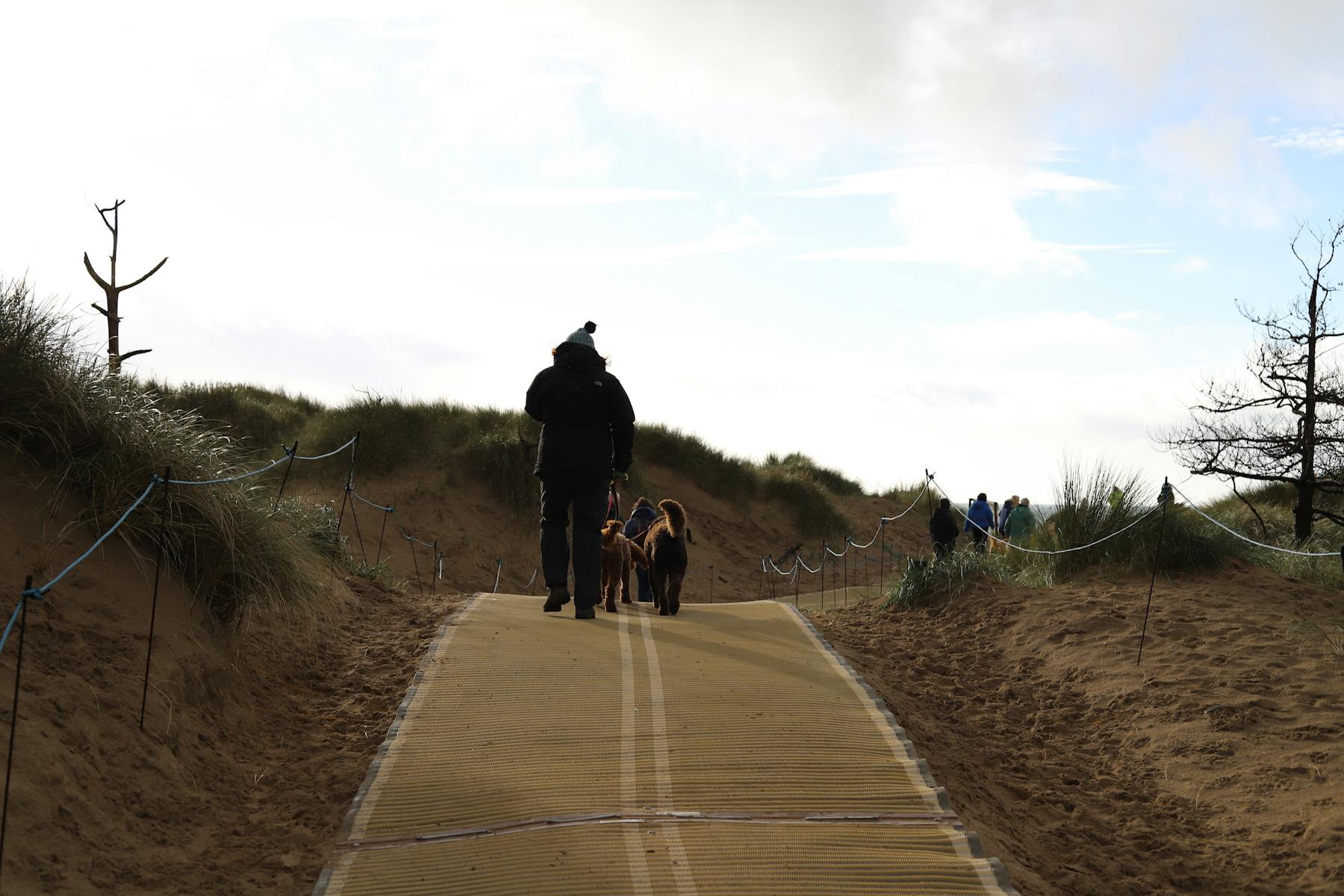
Loose leash walking improves fastest when the route is easy enough for your dog to succeed.
How long does it take to fix leash pulling?
It depends on:
- your consistency
- your dog's habits
- training frequency
Typical timeline:
- noticeable improvement: 1 to 2 weeks
- solid behavior: 3 to 6 weeks
The biggest factor is consistency, not time.
Common mistakes to avoid
Being inconsistent
If you sometimes allow pulling, training becomes confusing.
Training only during long walks
Most learning happens in short, controlled sessions.
Getting frustrated
Dogs learn best with calm repetition, not pressure.
Expecting immediate perfection
Leash training is a process, not a one-day fix.
A useful bonus on non-walk days
If your dog gets overexcited outdoors, add calm brain work at home too. A few minutes of scatter feeding, food puzzles, or sniffing practice can help take the edge off without turning every outing into a training battle.
A 10-minute loose leash practice plan
Use this on a quiet street, driveway, hallway, or yard.
Minute 1: Warm up with attention
Say your dog's name, mark when they look at you, and reward. Keep it easy.
Minutes 2 to 4: Walk short lines
Walk five to ten steps. Reward when the leash stays loose. Stop when it tightens.
Minutes 5 to 7: Add turns
Turn before your dog reaches the end of the leash. Reward them for following your movement.
Minutes 8 to 9: Add sniff rewards
Ask for a few loose leash steps, then release your dog to sniff a safe spot.
Minute 10: End on an easy win
Do one simple loose leash stretch and stop before either of you gets frustrated.
This kind of short practice is usually more useful than trying to train for the entire walk.
When to call a professional trainer or behavior consultant
Get help if pulling feels unsafe, your dog drags you toward traffic, your dog redirects onto you, or pulling turns into barking, lunging, growling, or freezing around triggers.
Start with your veterinarian if the pulling changed suddenly or your dog seems stiff, sore, unusually irritable, or reluctant to walk. Pain can make normal leash pressure feel much harder.
For training help, look for a qualified reward-based trainer or behavior consultant who can coach leash handling, route choice, treat timing, and safe distance work without relying on force or intimidation.
FAQ
Why does my dog pull so much?
Because it works. If pulling gets your dog forward, they will repeat it.
Should I use a harness or collar?
A harness is usually more comfortable and safer, especially for dogs that pull.
Can older dogs learn this?
Yes. Training works at any age with consistency.
What if my dog pulls only sometimes?
That usually means inconsistent rules. Apply the same method every time.
What if my dog pulls toward other dogs?
Increase distance and treat it as a trigger problem, not just a leash manners problem. Practice calm walking away from dogs first, then reward calm noticing at a distance.
Should I use leash corrections to stop pulling?
No. Clear rules, reward timing, sniff rewards, and easier setups are safer starting points. Harsh corrections can add stress and still do not teach your dog where to walk.
Conclusion
Learning how to stop a dog from pulling on the leash is not about controlling your dog. It is about teaching clear rules through consistent actions.
Stop when they pull. Move when they relax. Reward calm behavior.
Keep sessions short, stay consistent, and focus on progress, not perfection.
With time, your walks will feel completely different.