Apartment fit
Greyhounds can be surprisingly good apartment dogs when given walks, soft resting places, and safe sprint outlets. Elevators and stairs may need patient introduction.
Weight
60-70 lb
Height
27-30 in
Lifespan
10-13 yrs
Coat
Smooth Short
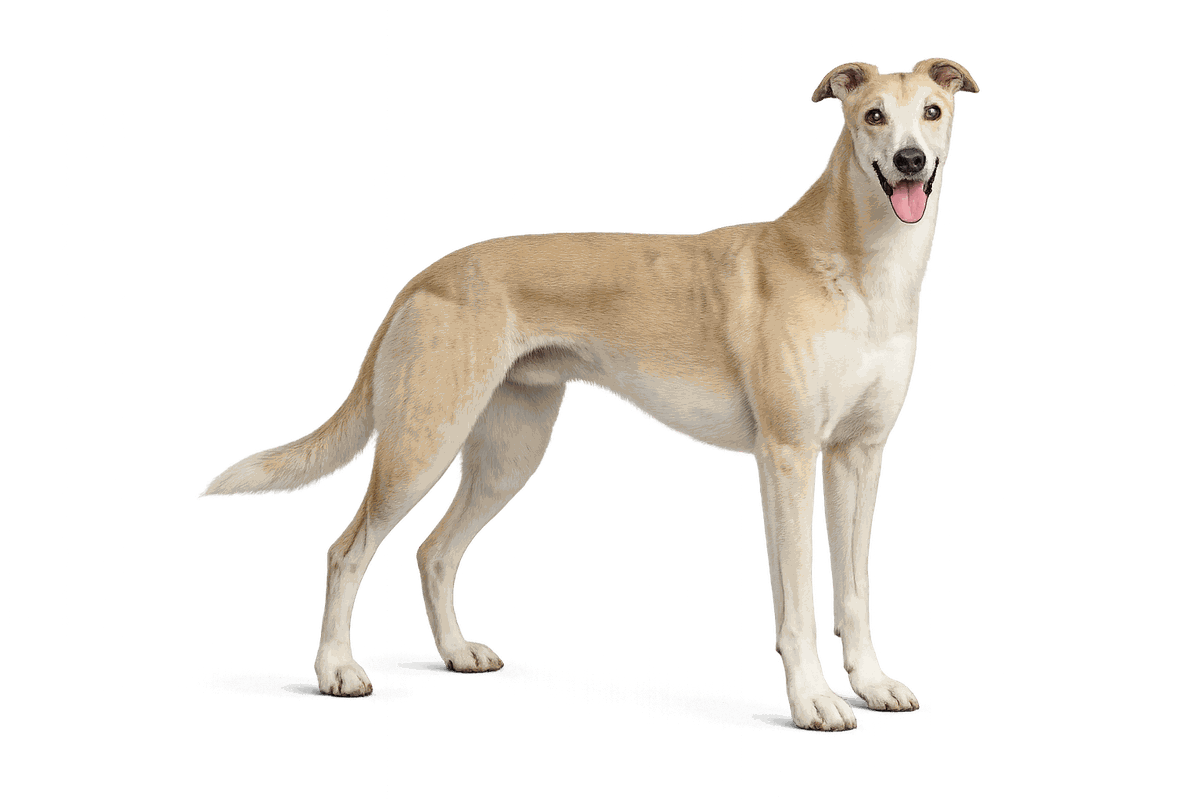
The Greyhound is a large British sighthound built for speed, with a short coat, gentle house manners, and strong chase instincts.
Official, native, and commonly used variants
No widely used alternate names are recorded for this breed.
Weight
60-70 lb
Height
27-30 in
Lifespan
10-13 yrs
Coat
Smooth Short
At A Glance
A quick read on energy, upkeep, and what day-to-day life with this breed usually feels like.
Energy
Moderate
Barking
Low
Drooling
Low
Shedding
Low
Grooming
1/5
First-time owner
Yes
The Greyhound is one of the classic sighthounds, shaped for speed, coursing, and racing rather than endurance trotting. Its long legs, deep chest, narrow body, and flexible spine make it a sprint specialist. The breed standard treats color as immaterial, so Greyhounds appear in many solid, brindle, and parti-color patterns.
Despite their athletic build, many adult Greyhounds are calm indoors when given safe chances to stretch their legs. They are often gentle, sensitive, and quiet, but the chase instinct is real. Secure fencing, careful leash handling, and caution around small animals are essential, especially for retired racers or dogs with strong prey drive.
The short coat is easy to groom but offers little protection from cold, heat, or rough surfaces. Health and care should account for bloat risk, dental disease, corns and foot issues, osteosarcoma, racing or sprint injuries, and Greyhound-specific anesthesia considerations that veterinarians should understand.
This breed tends to suit homes looking for a gentle, noble, sweet-tempered companion, with daily rhythms shaped by moderate energy, low barking, and low drooling.
Coat type
Smooth
Coat length
Short
Shedding
Low
Colors
Black, Blue, Fawn, Red, White, Brindle, Parti-Color, Any Color
Greyhounds can be surprisingly good apartment dogs when given walks, soft resting places, and safe sprint outlets. Elevators and stairs may need patient introduction.
Most are not heavy barkers. Behavior management should focus more on prey drive, safe leashing, and calm transitions than noise.
Use gentle, reward-based training with short sessions. Build confidence around household surfaces, recall cues, handling, and calm responses to small fast-moving animals.
The coat is simple, but thin skin and low body fat mean the dog needs weather protection and soft bedding.
Most adult Greyhounds need daily walks plus safe enclosed chances to sprint. They are fast sprinters, not off-leash park dogs, so unfenced exercise is risky.
The short coat needs simple brushing and occasional bathing. Protect thin skin from scrapes, provide a warm coat in cold weather, and keep nails and teeth maintained.
Use gentle reward-based training. Focus on recall foundations, leash safety, settling, stairs, slippery floors, and small-animal management rather than expecting instant obedience under chase triggers.
Feed a measured diet and keep the dog lean but not underweight. Ask a veterinarian familiar with sighthounds about dental care, bloat risk, and any anesthesia needs.
Energy level
Moderate
Barking level
Low
Drooling level
Low
Watchdog ability
2/5
Guard dog ability
1/5
Climate tolerance
Common concerns to discuss with your vet and breeder.
This profile was researched from established breed and canine-care references. Breed tendencies describe typical patterns, not a guarantee for every individual dog.
Reviewed by the Dogs Index Editorial Team. For health or behavior concerns, consult a veterinarian or appropriately qualified professional.
Our Shop
Browse practical products for feeding, grooming, cleanup, enrichment, and smoother daily routines.