Apartment fit
The Pointer is usually a poor apartment fit unless the owner can provide serious daily running, training, and quiet recovery time.
 United Kingdom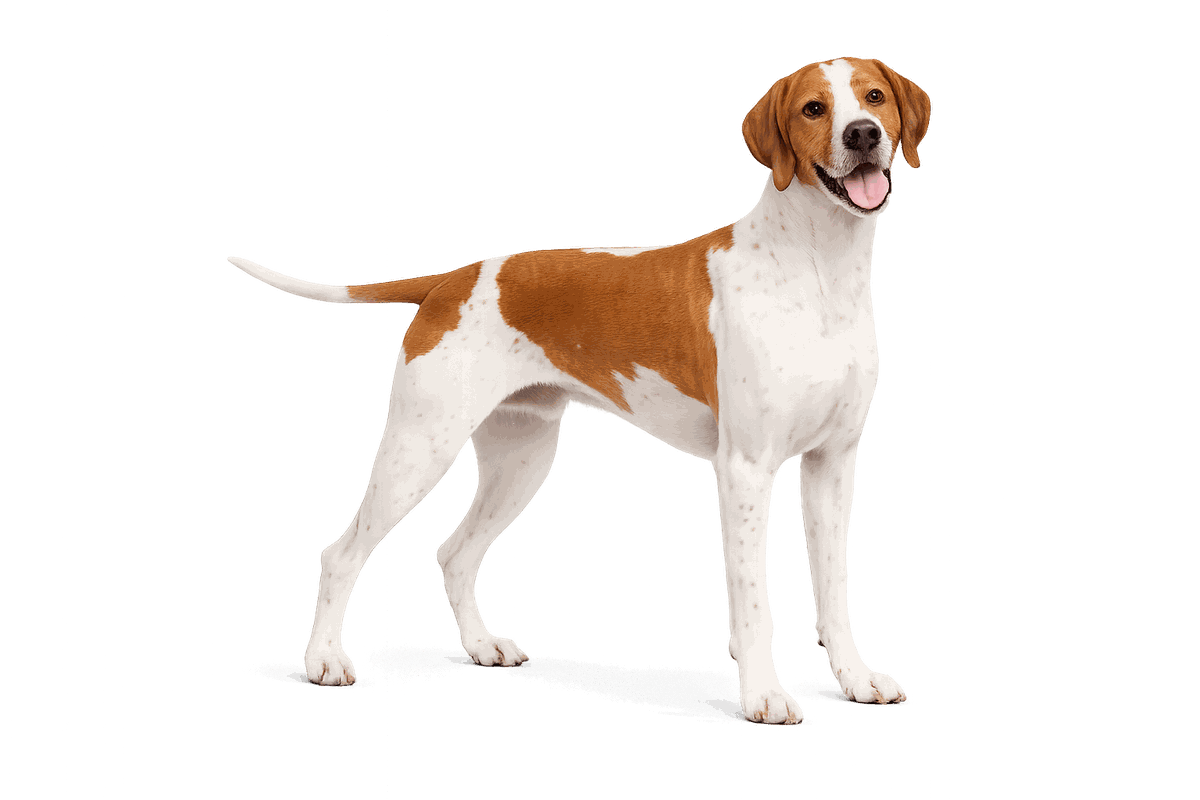
Weight
45-75 lb
Height
23-28 in
Lifespan
12-15 yrs
Coat
Smooth Short
The Pointer, often called the English Pointer, is a high-energy British pointing dog bred to locate game birds with speed, style, endurance, and a steady point.
Official, native, and commonly used variants
Weight
45-75 lb
Height
23-28 in
Lifespan
12-15 yrs
Coat
Smooth Short
At A Glance
A quick read on energy, upkeep, and what day-to-day life with this breed usually feels like.
Energy
Very High
Barking
Moderate
Drooling
Low
Shedding
Moderate
Grooming
1/5
First-time owner
No
The Pointer is a classic British gundog developed to find game birds and indicate their location by standing on point. Its build is athletic and balanced, with enough speed and stamina for long days in the field and enough steadiness to work closely with a handler.
This is a large, short-coated sporting breed, not a casual house dog that can thrive on minimal exercise. Pointers are usually friendly and even-tempered indoors when their needs are met, but they can be restless, distracted, or difficult on leash without daily movement and training.
The coat is smooth and comes in liver, lemon, black, orange, and combinations with white. Grooming is simple, but exercise, recall, leash manners, and safe outlets for bird interest are the real ownership priorities.
This breed tends to suit homes looking for a even-tempered, hardworking, friendly companion, with daily rhythms shaped by very high energy, moderate barking, and low drooling.
Coat type
Smooth
Coat length
Short
Shedding
Moderate
Colors
Liver, Lemon, Black, Orange, White With Liver, White With Lemon, White With Black, White With Orange
The Pointer is usually a poor apartment fit unless the owner can provide serious daily running, training, and quiet recovery time.
Pointers are not usually selected for constant barking, but frustration and under-exercise can create noise. Exercise before long quiet periods and reward calm indoor behavior.
Use active, reward-based sessions with clear criteria. Field-style games, recall, steadiness, and leash skills fit the breed's instincts.
Grooming is simple: brush weekly, trim nails, clean ears as needed, and inspect the body after brush or field work.
Most Pointers need 90 minutes or more of daily exercise, ideally including running, field-style training, retrieving, or long hikes. Leash walks alone often do not satisfy a young or working-line Pointer.
The short smooth coat is easy to maintain with weekly brushing or a grooming mitt. Check ears, nails, paw pads, and skin after field work, tall grass, or rough cover.
Pointers usually respond well to clear, reward-based training, especially when lessons involve movement and purpose. Recall, loose-leash walking, steadiness around birds, and calm indoor settling should start early.
Feed a measured diet for an active large sporting dog. Keep the dog lean, adjust food around heavy work or quieter periods, and avoid hard exercise immediately around large meals.
Energy level
Very High
Barking level
Moderate
Drooling level
Low
Watchdog ability
2/5
Guard dog ability
1/5
Climate tolerance
Common concerns to discuss with your vet and breeder.
This profile was researched from established breed and canine-care references. Breed tendencies describe typical patterns, not a guarantee for every individual dog.
Reviewed by the Dogs Index Editorial Team. For health or behavior concerns, consult a veterinarian or appropriately qualified professional.
Our Shop
Browse practical products for feeding, grooming, cleanup, enrichment, and smoother daily routines.