Apartment fit
Scottish Terriers can be good apartment dogs when owners provide walks, quiet training, and grooming. Their small size helps, but their watchdog brain still needs management.
 Scotland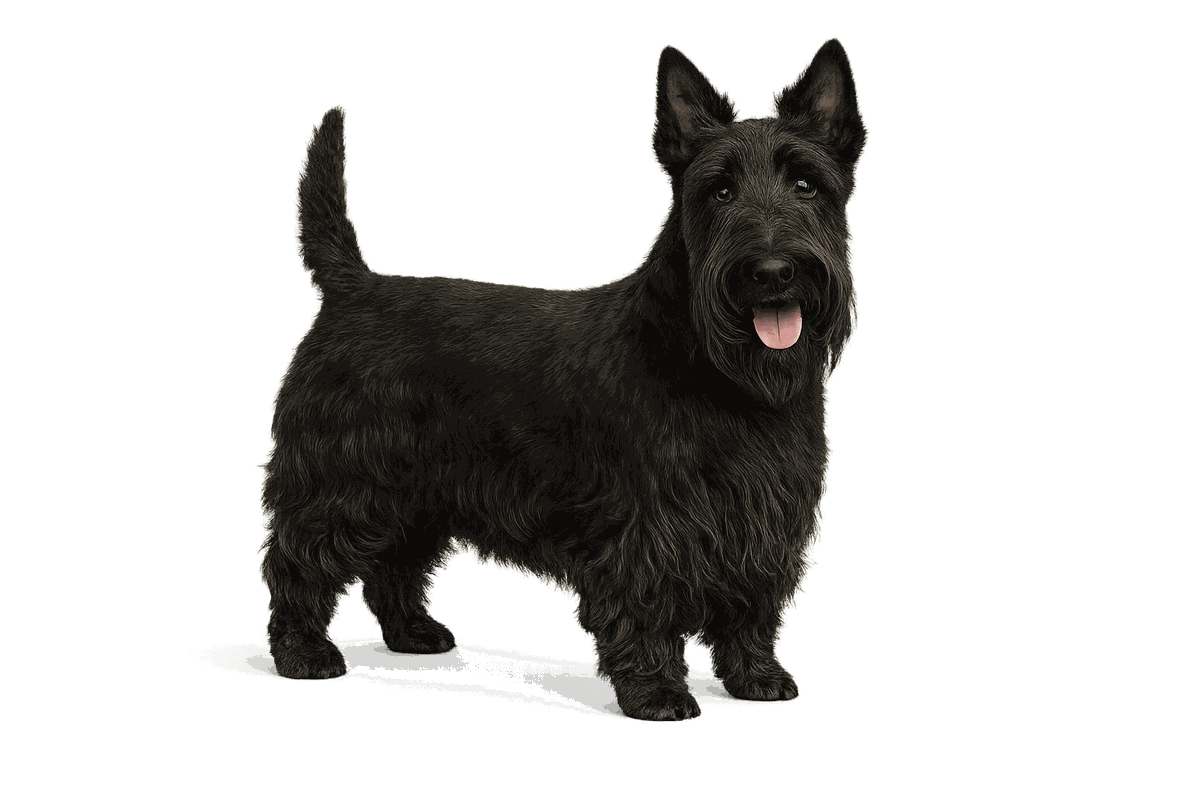
Weight
18-22 lb
Height
10-10 in
Lifespan
12-15 yrs
Coat
Wiry double Medium
The Scottish Terrier is a compact, bold Scottish terrier with a hard wiry coat, strong watchdog instinct, and independent character.
Official, native, and commonly used variants
Weight
18-22 lb
Height
10-10 in
Lifespan
12-15 yrs
Coat
Wiry double Medium
At A Glance
A quick read on energy, upkeep, and what day-to-day life with this breed usually feels like.
Energy
Moderate
Barking
Moderate
Drooling
Low
Shedding
Low
Grooming
4/5
First-time owner
No
The Scottish Terrier, often called the Scottie, is a short-legged but strongly built terrier from Scotland. Breed standards emphasize a compact dog with a hard, wiry outer coat, soft undercoat, powerful head, and a confident, dignified expression. Standard colors include black, wheaten, and brindle.
Scotties are bold, independent, and often reserved with strangers. They can be devoted family dogs, but they are not soft pushovers and may be opinionated with other dogs, small pets, and handling they dislike. Their terrier background means digging, alert barking, and prey interest need management.
The coat needs more than casual brushing if the correct texture is maintained. Pet Scotties are often clipped, while show coats are hand-stripped. Responsible ownership also includes weight control, dental care, skin monitoring, bladder and cancer awareness, and screening conversations around von Willebrand disease and craniomandibular osteopathy.
This breed tends to suit homes looking for a bold, independent, dignified companion, with daily rhythms shaped by moderate energy, moderate barking, and low drooling.
Coat type
Wiry double
Coat length
Medium
Shedding
Low
Colors
Black, Brindle, Wheaten
Scottish Terriers can be good apartment dogs when owners provide walks, quiet training, and grooming. Their small size helps, but their watchdog brain still needs management.
Scotties are bold and alert. They are often reserved with strangers and may challenge other dogs, so early socialization should build neutrality rather than forced friendliness.
Use calm, firm, reward-based training with clear rules. Work early on recall, leave-it, handling, polite dog greetings, and quiet cues because Scotties are independent and quick to make their own decisions.
Brush and comb furnishings several times a week. The hard coat needs hand-stripping to preserve texture or regular clipping for easier pet care, plus beard cleaning, nail trimming, and skin checks.
Most Scottish Terriers need 45 to 60 minutes of daily activity through walks, play, digging outlets, and scent games. Avoid letting the short legs and sturdy body fool you; this is a working terrier with opinions.
Brush and comb furnishings several times a week. The hard coat needs hand-stripping to preserve texture or regular clipping for easier pet care, plus beard cleaning, nail trimming, and skin checks.
Use calm, firm, reward-based training with clear rules. Work early on recall, leave-it, handling, polite dog greetings, and quiet cues because Scotties are independent and quick to make their own decisions.
Feed measured small-breed portions and keep the dog lean. Discuss skin, bladder, dental, bleeding-disorder, and cancer risks with your veterinarian and breeder.
Energy level
Moderate
Barking level
Moderate
Drooling level
Low
Watchdog ability
5/5
Guard dog ability
1/5
Climate tolerance
Common concerns to discuss with your vet and breeder.
This profile was researched from established breed and canine-care references. Breed tendencies describe typical patterns, not a guarantee for every individual dog.
Reviewed by the Dogs Index Editorial Team. For health or behavior concerns, consult a veterinarian or appropriately qualified professional.
Our Shop
Browse practical products for feeding, grooming, cleanup, enrichment, and smoother daily routines.