Apartment fit
Skye Terriers can fit apartments when they get walks, grooming, and quiet training. Their low height helps, but the long coat and watchdog instincts need routines.
 Scotland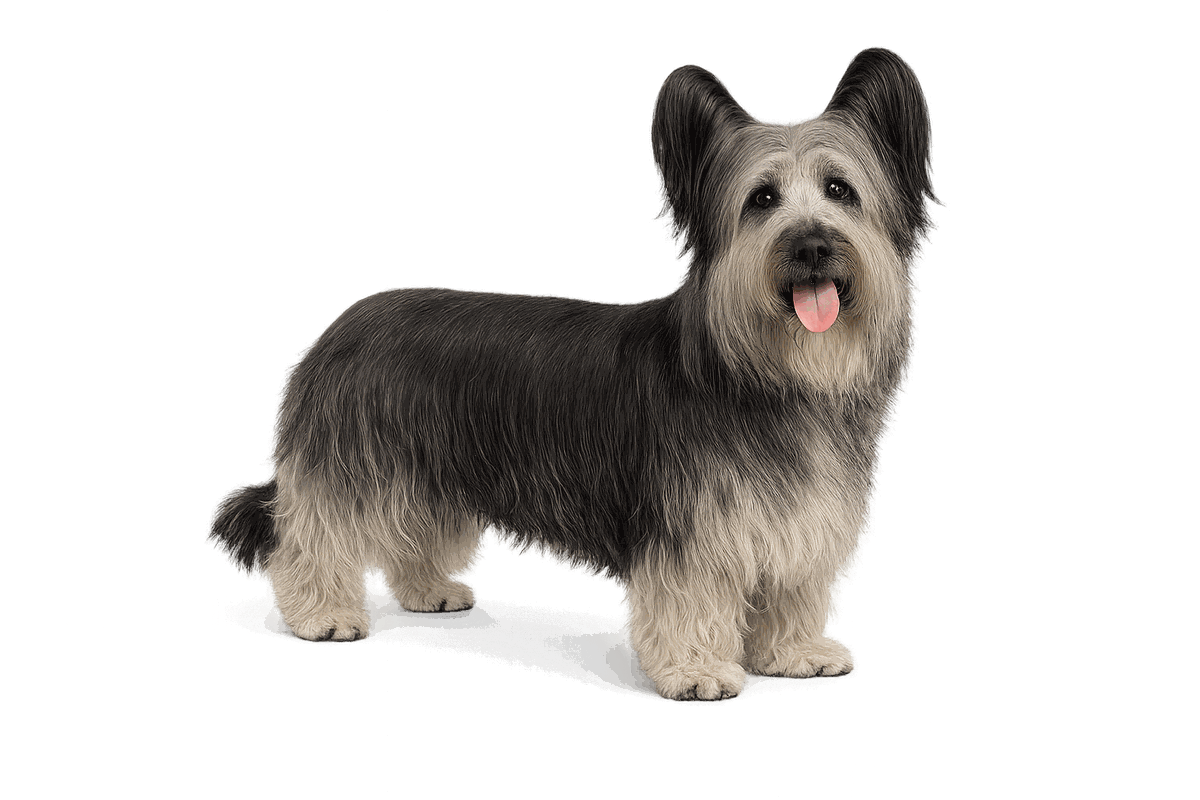
Weight
18-28 lb
Height
9.5-10 in
Lifespan
12-14 yrs
Coat
Straight double Long
The Skye Terrier is a long, low Scottish terrier with a flowing coat, deep loyalty, and a dignified but determined temperament.
Official, native, and commonly used variants
Weight
18-28 lb
Height
9.5-10 in
Lifespan
12-14 yrs
Coat
Straight double Long
At A Glance
A quick read on energy, upkeep, and what day-to-day life with this breed usually feels like.
Energy
Moderate
Barking
Moderate
Drooling
Low
Shedding
Moderate
Grooming
4/5
First-time owner
No
The Skye Terrier is a Scottish terrier from the Isle of Skye, famous for its long, low outline and dramatic straight coat. Breed standards emphasize a body about twice as long as it is high, with strength, dignity, and either pricked or drop ears depending on variety.
This is a small-to-medium terrier by height, not a large dog. It can be intensely loyal to its family and reserved with strangers, with the alertness and persistence expected from a terrier. Skye Terriers need early socialization, polite handling, and boundaries around barking, digging, and dog interactions.
The coat is a major responsibility. It should fall straight and hard-textured over a softer undercoat, and regular brushing prevents mats. Because the breed is long-backed and low, owners should also manage weight, jumping, stairs, and orthopedic strain, especially during puppy growth.
This breed tends to suit homes looking for a loyal, dignified, reserved companion, with daily rhythms shaped by moderate energy, moderate barking, and low drooling.
Coat type
Straight double
Coat length
Long
Shedding
Moderate
Colors
Black, Blue, Dark gray, Light gray, Fawn, Cream
Skye Terriers can fit apartments when they get walks, grooming, and quiet training. Their low height helps, but the long coat and watchdog instincts need routines.
Skye Terriers are loyal and can be wary of strangers. Socialization should build calm confidence while respecting that the breed is not naturally everyone’s friend.
Use patient reward-based training with clear boundaries. Build trust around handling, teach quiet cues, and manage terrier prey drive and dog selectivity calmly.
Brush and comb the long coat several times a week from the skin outward. Check behind ears, under the body, and around legs, and keep the coat clean enough that it does not drag debris into the skin.
Most Skye Terriers need 45 to 60 minutes of daily walks and play. Keep exercise steady rather than jump-heavy, especially while puppies are growing.
Brush and comb the long coat several times a week from the skin outward. Check behind ears, under the body, and around legs, and keep the coat clean enough that it does not drag debris into the skin.
Use patient reward-based training with clear boundaries. Build trust around handling, teach quiet cues, and manage terrier prey drive and dog selectivity calmly.
Feed measured portions and keep the dog lean to protect the long back and short legs. Discuss orthopedic comfort, skin, eyes, dental care, and age-appropriate exercise with your veterinarian.
Energy level
Moderate
Barking level
Moderate
Drooling level
Low
Watchdog ability
4/5
Guard dog ability
1/5
Climate tolerance
Common concerns to discuss with your vet and breeder.
This profile was researched from established breed and canine-care references. Breed tendencies describe typical patterns, not a guarantee for every individual dog.
Reviewed by the Dogs Index Editorial Team. For health or behavior concerns, consult a veterinarian or appropriately qualified professional.
Our Shop
Browse practical products for feeding, grooming, cleanup, enrichment, and smoother daily routines.