Apartment walks can feel unfair when you live with a reactive dog.
You open the door and there is a neighbor in the hallway. You make it to the elevator and another dog steps out. You finally reach the sidewalk and a delivery cart, scooter, barking dog, or group of people appears before your dog has even had a chance to pee.
The clear answer: treat the apartment complex like part of the training environment. Your goal is to reduce surprise, create distance early, and help your dog leave without rehearsing barking, lunging, freezing, or frantic pulling. If barking at dogs is the main issue, start with the same foundation used for dogs who bark at other dogs on walks.
You are not trying to make your dog "behave" by holding them there. You are giving them enough room and predictability to stay under threshold.
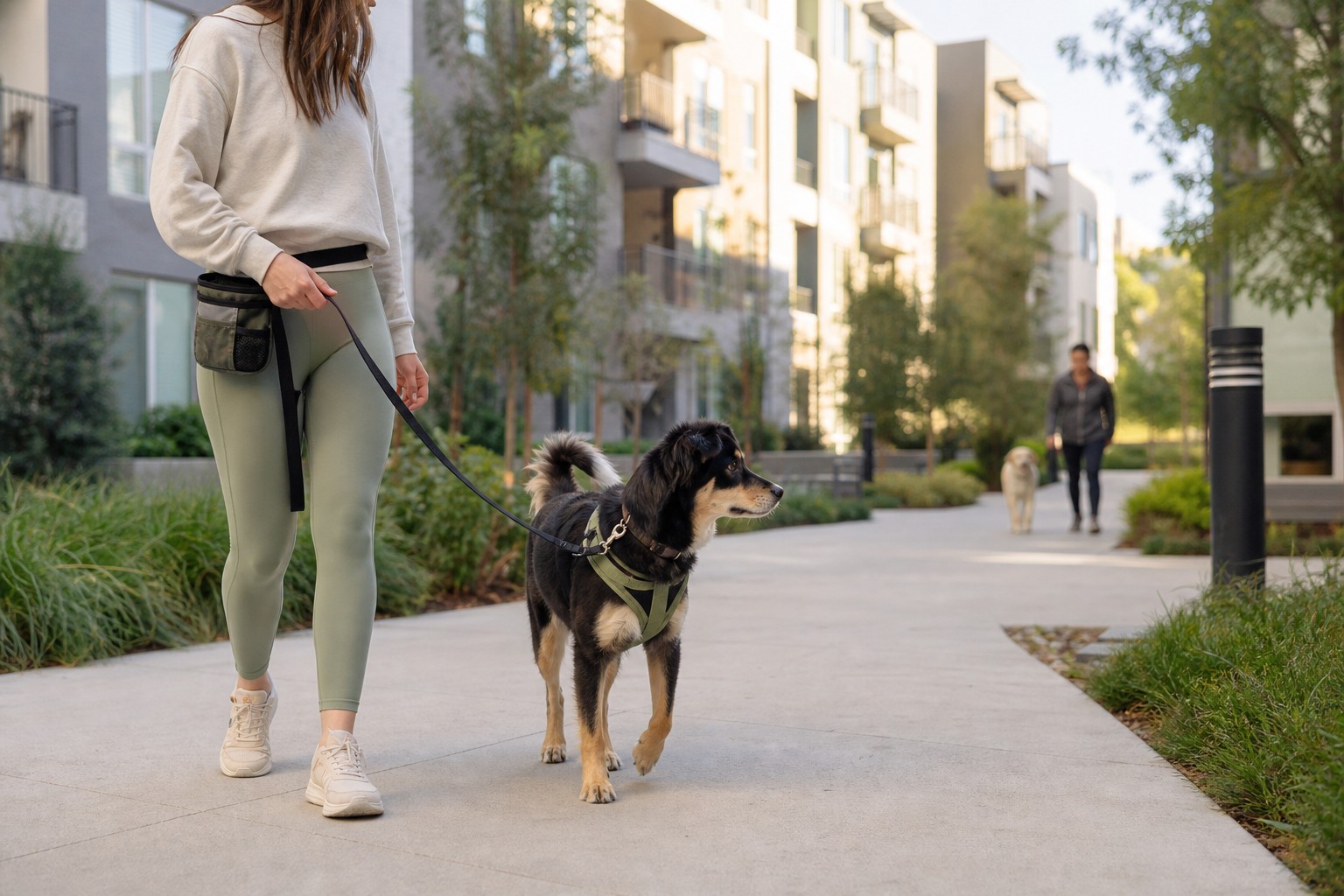
Apartment complexes are harder for reactive dogs because triggers appear close, fast, and often without warning.
Why Apartment Complexes Are So Hard for Reactive Dogs
Apartment complexes remove many options that make reactive dog walks easier. You may not be able to cross the street, step into a driveway, or turn around in time.
Your dog may have to pass through:
- narrow hallways
- stairwells with blind turns
- elevators that open suddenly
- lobbies with people waiting
- shared courtyards
- busy parking lots
- small potty areas used by many dogs
- doors where dogs and people appear at close range
The AKC describes reactivity as behavior that is out of proportion to the situation, such as intense barking, lunging, cowering, or pulling. In an apartment, those reactions often happen because the dog has no comfortable escape route. For a broader training foundation, read the Dogs Index guide to reactive dog training.
Your dog is not bad. The setup is too hard.
The Apartment Walk Plan in One Sentence
Get out quietly, create space before your dog needs it, reward the first calm look, and end the outing before the building has drained your dog's coping skills.
That may sound simple, but it changes the whole walk.
Instead of waiting for your dog to explode and then trying to fix it, you start acting when your dog first notices something.
That early moment matters. A dog who can still eat, sniff, look back, or move with you can learn. A dog who is barking, spinning, lunging, or frozen is mostly surviving.
Step 1: Build a Better Exit Routine
For many apartment dogs, the walk goes wrong before they reach the sidewalk.
Start with the door.
Before you bring your dog out, check what you can:
- listen at the door
- look through the peephole
- check hallway mirrors if your building has them
- open the door a crack before stepping out
- wait if you hear another dog, rolling cart, or loud voices
If your dog is already whining, pulling toward the door, or bouncing off the leash, pause. Scatter a few treats on the floor inside your apartment and let them sniff. This lowers the starting temperature of the walk.
For dogs who react in hallways, practice "door open, treat, door closed" when the hallway is quiet. Your dog can learn that the door opening does not always mean rushing into a stressful space.
Step 2: Avoid the Elevator Trap When You Can
Elevators are difficult because they create surprise at close range: small space, no exit, sudden doors, direct face-to-face pressure.
If stairs are safe and your dog can handle them physically, stairs may be easier. Stairs have blind corners too, so pause before turns and landings.
If you must use an elevator:
- Stand back from the doors instead of directly in front.
- Feed a treat scatter while waiting.
- Let other people exit first.
- Skip the elevator if a dog is already inside.
- If someone tries to enter with a dog, calmly say, "We'll take the next one."
You do not need to apologize for managing space.
Step 3: Use Treats Before the Bark, Not After
Treat timing is one of the biggest differences between a smoother walk and a chaotic one.
Do not wait for the bark.
Reward when your dog first notices the trigger and still has a loose enough body to think.
That might look like:
- ears turn toward a dog
- head lifts toward a neighbor
- body pauses near a doorway
- eyes find a bike across the lot
- tail stiffens slightly but your dog can still eat
Mark that moment with a simple word like "yes," then feed.
If your dog cannot take the treat, you are probably too close, too surprised, or too late. Move away first.
The ASPCA's leash-reactivity guidance for dogs emphasizes preventing repeated close-range reactions and changing how the dog feels around triggers. That is much easier before the explosion, not during it.
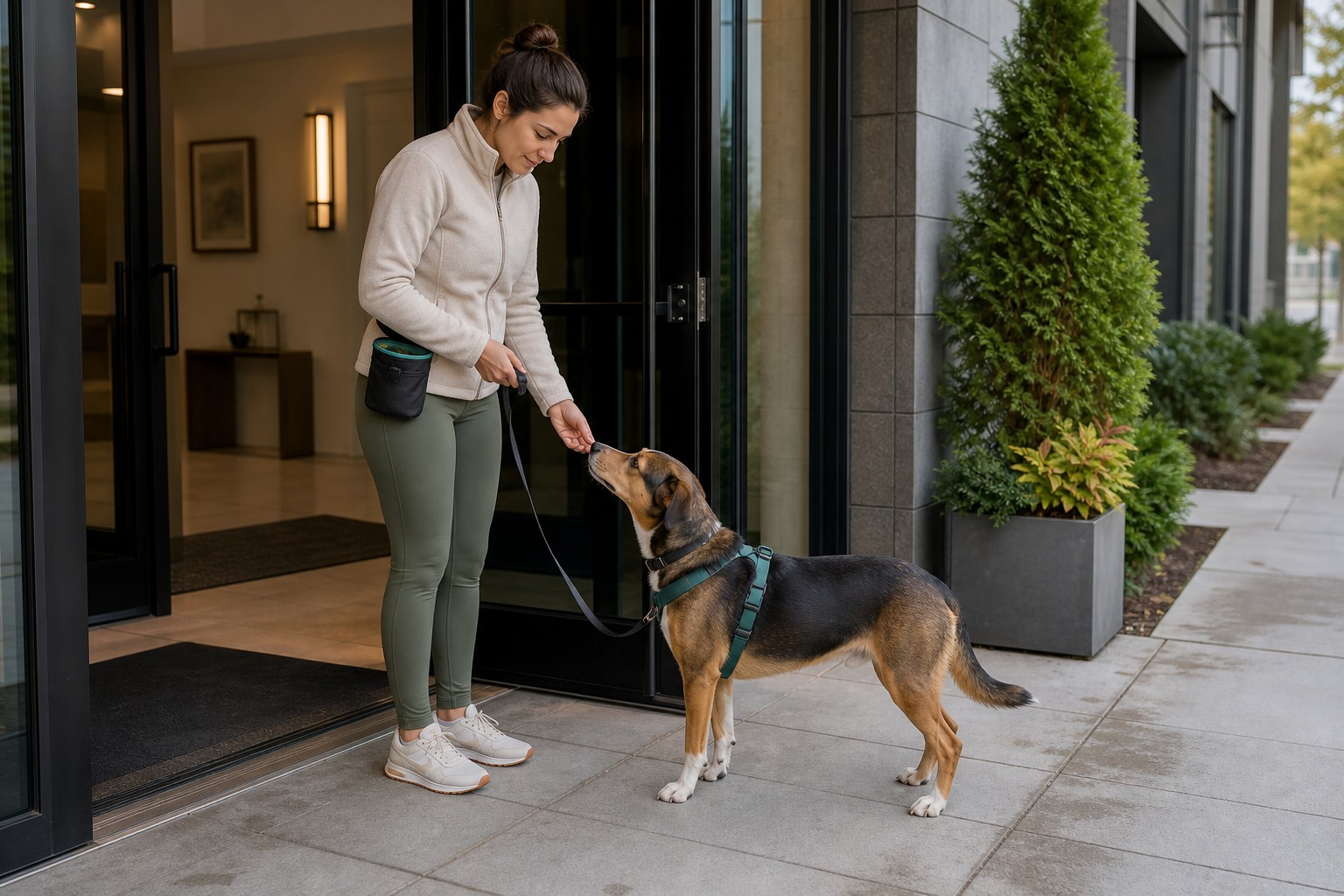
Tight entrances, lobbies, and sidewalks leave reactive dogs less room to recover, so treat timing needs to happen early.
Step 4: Create Distance in Tiny Spaces
Apartment complexes rarely give you perfect distance, so use small bits of space well.
Good emergency distance can look like:
- stepping behind a parked car
- turning into a side path
- moving behind a column
- waiting inside the lobby
- returning to your apartment
- using landscaping as a visual screen
- crossing to the far edge of a courtyard
- turning your dog away before they lock on
Distance is not failure. Distance is how you keep your dog able to learn.
If another dog appears at the end of the hallway, do not ask your dog to sit and stare. Turn around, drop a few treats in front of your dog's nose if needed, and move with purpose but not panic.
If your dog launches forward before you can turn, the leash work in dog lunging on leash will fit this same plan.
Step 5: Make Potty Trips Different From Training Walks
Apartment dogs often need quick potty access, which can make you push through bad setups.
Separate potty trips from training walks when possible.
A potty trip can be short, boring, and strategic. Go to the closest low-traffic spot, give your dog time, then return inside. If the courtyard is busy, wait five minutes or try another exit.
A training walk is different. Choose a route that gives you room, bring high-value treats, and expect to turn around early if needed.
Reactive dogs often do better with fewer chaotic "must complete the walk" outings and more carefully chosen short successes.
Step 6: Add Decompression After Hard Exits
If your dog has to pass through a stressful lobby or busy parking lot, do not make the next part of the walk more demanding. Head toward a quieter sniffing route if you have one.
Let your dog sniff grass. Move slowly. Avoid asking for constant heel position. A relaxed sniffing walk can lower the pressure after a hard apartment exit.
If your area has a safe open space, a long leash can help your dog move naturally and decompress. Use long leashes only where it is legal, safe, and not crowded.
If fast movement is part of the problem around your building, the article on dogs who react to bikes on walks covers bikes, scooters, and chase-style reactions in more detail.
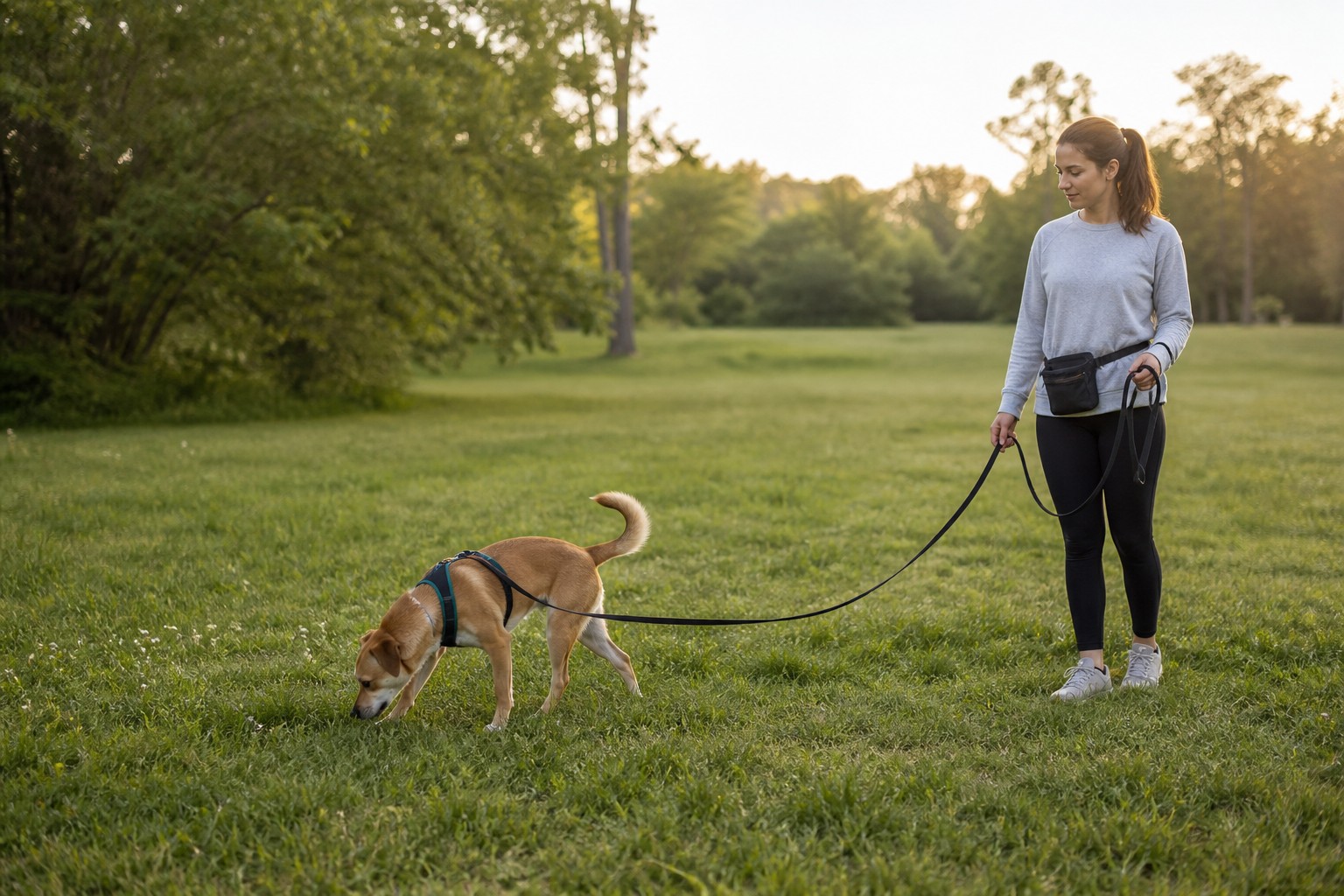
Apartment thresholds, windows, and hallways can all become trigger points, so practice calm observation before stepping into busier shared spaces.
What to Do When a Neighbor or Dog Surprises You
You will not avoid every trigger. Apartment life is unpredictable.
When a surprise happens, keep the plan simple:
- Shorten the leash enough for safety, but do not crank your dog tight.
- Turn your body away from the trigger.
- Say your exit cue once, such as "this way."
- Move behind the nearest barrier or back the way you came.
- Feed after your dog can move or look away.
If your dog barks, do not stand there explaining to the neighbor. Leave first. Repair later. A simple phrase is enough: "He needs space, thanks."
Common Mistakes That Make Apartment Reactivity Worse
The most common mistake is trying to "get through it" because the lobby, hallway, or courtyard is only a short distance. Short distance does not mean easy distance.
Other mistakes include:
- letting your dog rush out the apartment door already overexcited
- waiting directly in front of elevator doors
- forcing greetings with neighbor dogs
- asking for a sit while the trigger keeps approaching
- using leash pops, yelling, or physical corrections
- walking at the busiest dog-potty times every day
- using the same route even when it creates repeated reactions
- saving the best treats for after the meltdown instead of before it
Punishment may suppress behavior in the moment, but it can also add stress to an already stressful trigger. The IAABC Standards of Practice oppose intentional use of aversive methods involving pain, fear, or intimidation. For apartment reactivity, that matters because your dog already feels trapped enough.
Breed-Specific Notes: Who Struggles Most?
Any dog can become reactive in an apartment complex.
Still, some breed traits can make apartment triggers feel bigger.
Herding breeds and mixes may react strongly to bikes, scooters, running children, rolling carts, and dogs moving across a courtyard. Terriers may notice fast motion and become loud quickly. Guardian breeds may find hallway sounds, strangers, and people approaching the door especially intense. Small dogs are often forced into close passes because people underestimate their need for space.
Use breed traits as clues, not excuses. The plan is still distance, predictability, reinforcement, and recovery.
Helpful Gear, Without Turning the Walk Into a Product Hunt
Gear will not train your dog for you, but it can make apartment walks safer.
Useful basics include:
- a comfortable, well-fitted harness
- a standard leash for hallways and parking lots
- a treat pouch you can open with one hand
- soft high-value treats your dog can eat quickly
- a long leash for safe decompression spaces
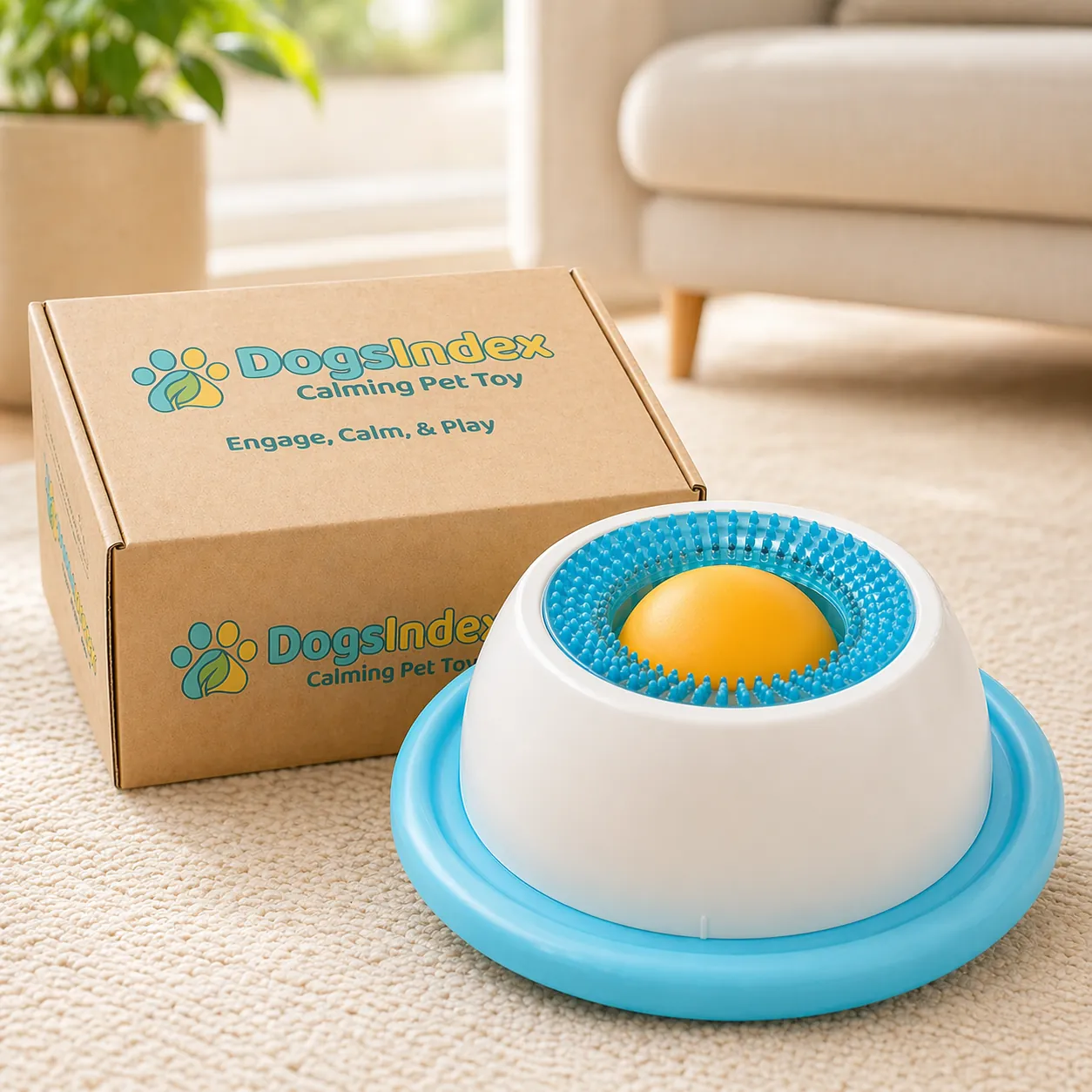
- an enrichment toy before walks if your dog exits the apartment too wired
Avoid gear that relies on pain, startle, or intimidation. Long leashes are for open, safe areas, not elevators or parking lots.
For dogs who leave the apartment already pulling hard, pair this plan with the calmer leash mechanics in stop dog pulling on leash.
When to Call a Professional Trainer or Behavior Consultant
Call a qualified professional if:
- your dog has bitten or nearly bitten a person or dog
- your dog redirects onto the leash, your clothes, or your body
- you feel physically unsafe walking them
- your dog reacts in every exit route
- your dog cannot recover after a trigger passes
- your dog freezes and refuses to move outside
- your building has unavoidable close dog traffic
- your dog has sudden behavior changes or new sensitivity
Look for a trainer or behavior consultant who uses humane, reward-based methods and has experience with leash reactivity. For severe fear, panic, or aggression concerns, ask your veterinarian about a referral to a veterinary behaviorist or qualified behavior professional.
FAQ
How do I walk a reactive dog in an apartment complex?
Use the quietest exit, check blind spots before stepping out, keep treats ready, reward early trigger sightings, and create distance before your dog reacts. Keep some outings short. A calm three-minute potty trip is better than a twenty-minute walk full of barking and lunging.
What if another dog appears in the hallway?
Turn away if you can. Step back into your apartment, move behind a corner, or create any safe distance available. Do not force your dog to sit and watch the other dog pass if they are already tense.
Should I tell neighbors not to approach my dog?
Yes, if your dog needs space. Keep it short and calm: "Please give us space" or "He's training, thanks." You do not need to explain your dog's full history in the hallway.
Can my reactive dog use the apartment dog park?
Be careful. Many apartment dog parks are small, busy, and unpredictable. If your dog reacts to dogs on leash, that does not automatically mean they cannot have dog friends, but crowded shared dog areas can be risky. Ask a qualified trainer for help assessing safe options.
Is it bad to turn around every time my dog sees a trigger?
No. Turning around is often smart management. Over time, you can practice calm looking from easier distances. Right now, preventing repeated blowups matters more than proving your dog can stay close.
What treats work best for apartment reactivity?
Use soft, small, high-value treats your dog can swallow quickly. Many dogs work better for chicken, cheese, or soft training treats than dry biscuits in stressful environments. If your dog stops eating, increase distance.
Can a reactive dog live happily in an apartment?
Yes. Many reactive dogs can live well in apartments when their people manage exits, avoid unnecessary close passes, provide decompression, and work with humane training methods. The key is building routines around the dog you have, not the dog you wish could ignore everything tomorrow.