Apartment fit
A Flat-Coat can live in an apartment only with major daily exercise and training. Most do better with easy access to outdoor space.
Weight
60-70 lb
Height
22-24.5 in
Lifespan
8-10 yrs
Coat
Flat Medium
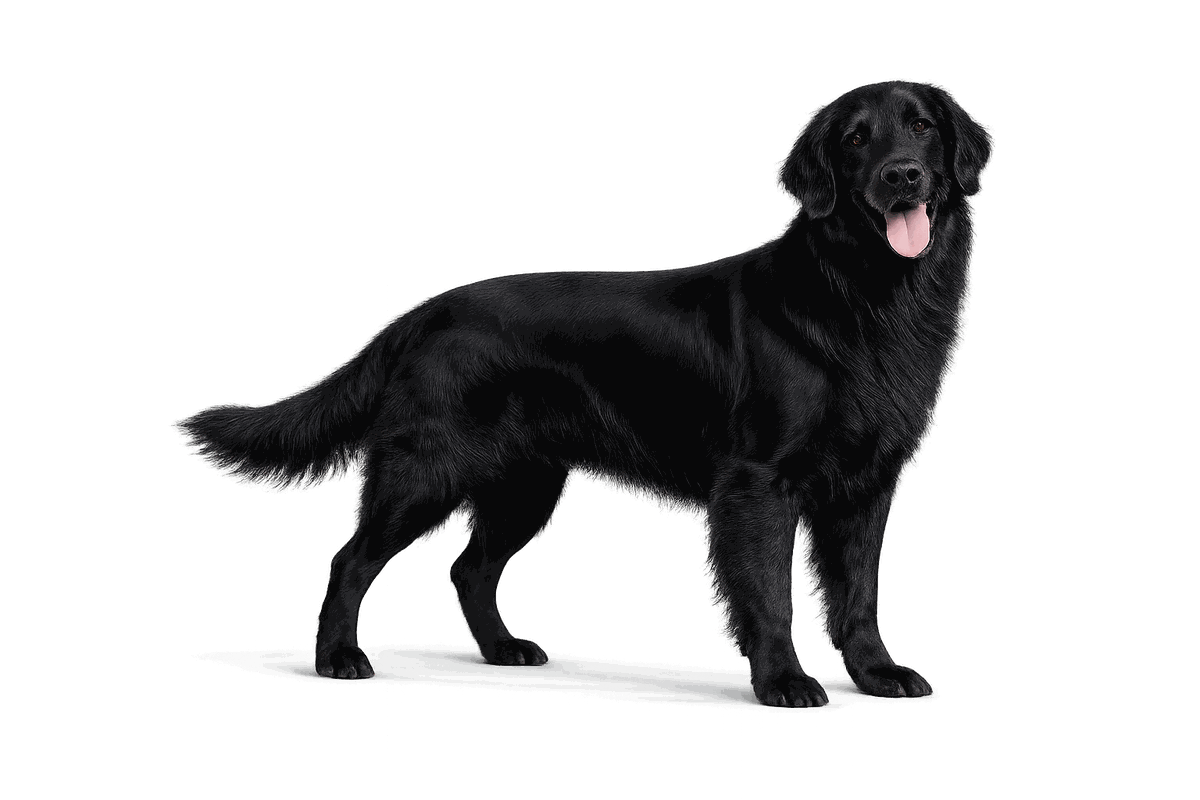
The Flat Coated Retriever is a large British gundog, cheerful and active, with a flat black or liver coat and a strong retrieving instinct.
Official, native, and commonly used variants
Weight
60-70 lb
Height
22-24.5 in
Lifespan
8-10 yrs
Coat
Flat Medium
At A Glance
A quick read on energy, upkeep, and what day-to-day life with this breed usually feels like.
Energy
High
Barking
Moderate
Drooling
Low
Shedding
Moderate
Grooming
3/5
First-time owner
Yes
The Flat Coated Retriever is a British retrieving gundog developed for field work on land and in water. It is a long-headed, athletic retriever with a famously upbeat temperament. Flat-Coats are often described as playful and slow to mature, so owners should expect a large dog with puppyish enthusiasm well into adulthood.
The breed's coat is moderate in length, flat-lying, and protective, with feathering on the legs, tail, chest, and underside. Standard colors are solid black or solid liver. Regular brushing, ear checks, and drying after swimming help keep the coat and skin comfortable.
A Flat-Coat suits active homes that enjoy training, retrieving, hiking, swimming, and close companionship. Health planning matters because the breed has a notable cancer burden, especially soft tissue sarcomas such as histiocytic sarcoma and hemangiosarcoma, along with orthopedic and eye concerns.
This breed tends to suit homes looking for a cheerful, friendly, optimistic companion, with daily rhythms shaped by high energy, moderate barking, and low drooling.
Coat type
Flat
Coat length
Medium
Shedding
Moderate
Colors
Black, Liver
A Flat-Coat can live in an apartment only with major daily exercise and training. Most do better with easy access to outdoor space.
Flat-Coats are often friendly rather than suspicious, but excitement, boredom, or visitor arrivals can trigger barking. Train calm greetings early.
Use rewards, play, retrieving, and short practical sessions. The breed usually loves people, but impulse control has to be taught patiently.
Brush several times weekly, dry the coat after swimming, and check ears, nails, teeth, and feathering for debris.
Most Flat Coated Retrievers need 60 to 90 minutes or more of daily activity. Retrieving, swimming, hiking, field training, scent games, and obedience work suit the breed better than short leash walks alone.
Brush the flat feathered coat several times a week, especially behind the ears, on the tail, and around the legs. Check ears after swimming and keep nails short for an athletic gait.
Use cheerful reward-based training and channel the breed's enthusiasm into retrieval, recall, calm greetings, and impulse control. Many Flat-Coats remain playful and adolescent in attitude for a long time.
Feed measured portions for an active large retriever and keep the dog lean. Discuss growth rate, joint support, and cancer-aware preventive care with a veterinarian.
Energy level
High
Barking level
Moderate
Drooling level
Low
Watchdog ability
2/5
Guard dog ability
1/5
Climate tolerance
Common concerns to discuss with your vet and breeder.
This profile was researched from established breed and canine-care references. Breed tendencies describe typical patterns, not a guarantee for every individual dog.
Reviewed by the Dogs Index Editorial Team. For health or behavior concerns, consult a veterinarian or appropriately qualified professional.
Our Shop
Browse practical products for feeding, grooming, cleanup, enrichment, and smoother daily routines.