Apartment fit
The Landseer is a poor apartment fit for most people because of size, coat, drool, and the need for easy outdoor access.
Weight
100-150 lb
Height
26.4-31.5 in
Lifespan
8-10 yrs
Coat
Double Medium
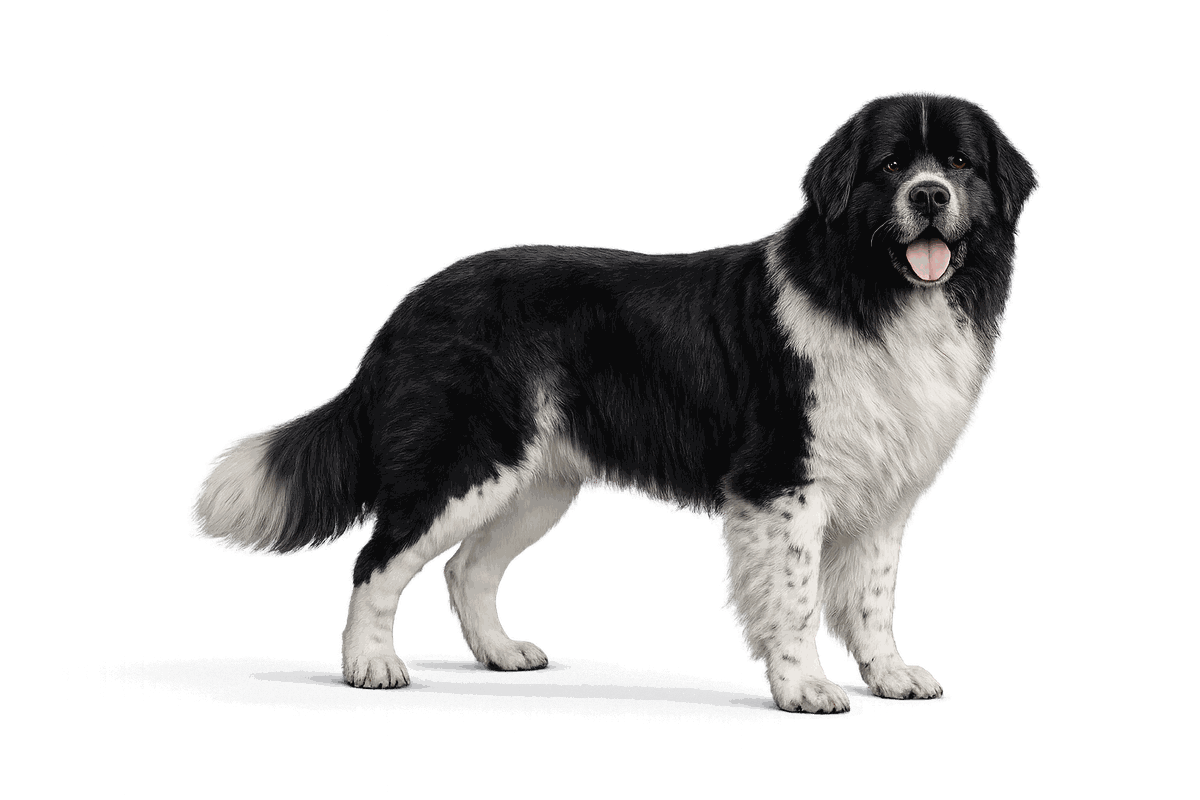
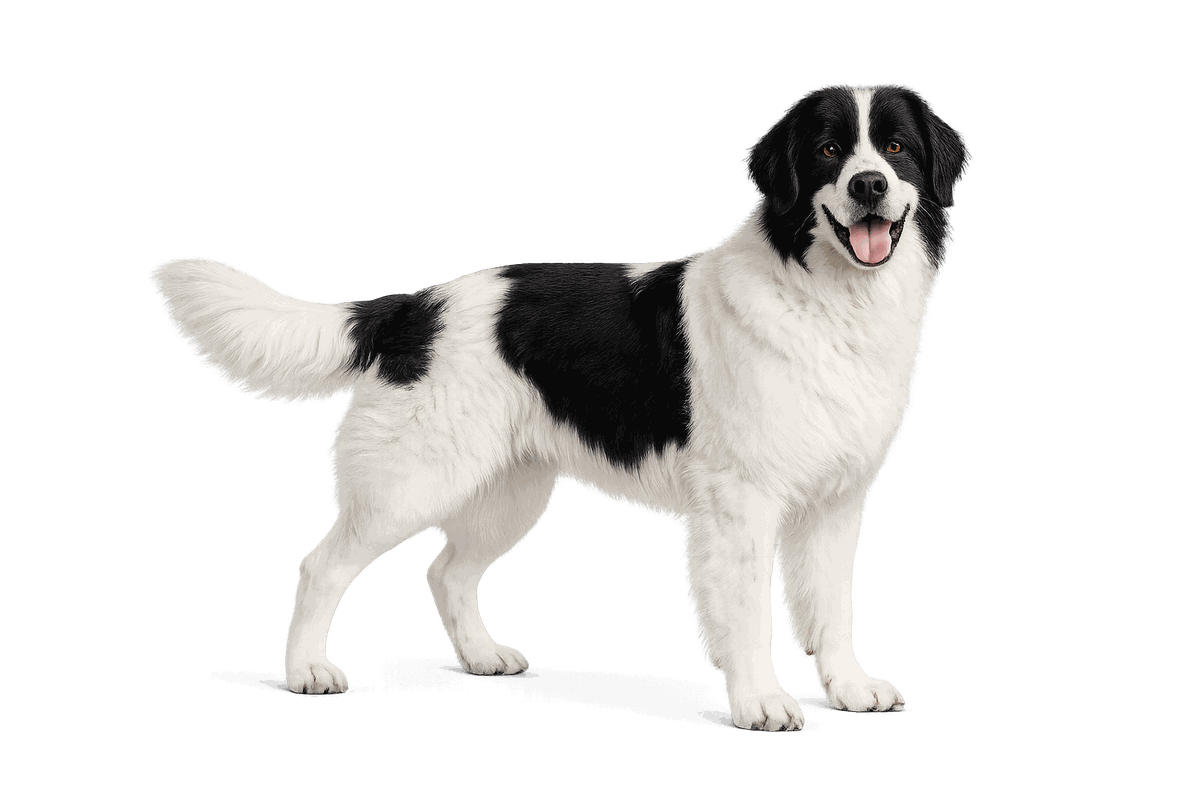
The Landseer European Continental Type is a giant black-and-white water-rescue companion from continental Europe, closely related to but distinct from the Newfoundland in FCI countries.
Official, native, and commonly used variants
Weight
100-150 lb
Height
26.4-31.5 in
Lifespan
8-10 yrs
Coat
Double Medium
At A Glance
A quick read on energy, upkeep, and what day-to-day life with this breed usually feels like.
Energy
Moderate
Barking
Moderate
Drooling
High
Shedding
High
Grooming
4/5
First-time owner
No
The Landseer European Continental Type is recognized by FCI as a separate breed from the Newfoundland. It is a very large, tall, elegant black-and-white dog associated with water rescue, companionship, and heavy outdoor work. The standard calls for a white base coat with distinct black patches on the body and a black head with white muzzle markings.
This is a giant breed, so care is about more than moderate walks. Owners need space, controlled growth, joint-safe exercise, water safety, coat care, and serious nutrition management. The Landseer is usually gentle and sociable, but its size, drool, shedding, and strength require planning.
The breed best suits homes prepared for a giant companion and water-loving working heritage. Responsible breeders should discuss hips, elbows, heart health, cystinuria where relevant, eyes, bloat risk, and longevity.
This breed tends to suit homes looking for a gentle, sociable, watchful companion, with daily rhythms shaped by moderate energy, moderate barking, and high drooling.
Coat type
Double
Coat length
Medium
Shedding
High
Colors
White with black patches, Black and white
The Landseer is a poor apartment fit for most people because of size, coat, drool, and the need for easy outdoor access.
The breed is usually not sharp, but it is watchful and powerful. Calm greetings and leash manners should start early.
Train gently but consistently while the dog is still manageable. Prioritize leash control, handling, recall, and polite greetings.
Brush deeply several times weekly, dry the coat after water, clean ears, and expect seasonal shedding.
Adult Landseers need steady daily walks, swimming where safe, and low-impact conditioning. Puppies and adolescents need controlled exercise to protect growing joints.
Brush the dense coat several times weekly and more during shedding. Dry the coat thoroughly after swimming, check ears, and expect drool and wet-dog cleanup.
Train early for leash manners, calm greetings, recall, handling, and water safety. A giant friendly dog still needs control before it is fully grown.
Use a giant-breed growth and adult feeding plan with measured meals. Discuss joint support, bloat prevention, and weight control with a veterinarian.
Energy level
Moderate
Barking level
Moderate
Drooling level
High
Watchdog ability
3/5
Guard dog ability
1/5
Climate tolerance
Common concerns to discuss with your vet and breeder.
This profile was researched from established breed and canine-care references. Breed tendencies describe typical patterns, not a guarantee for every individual dog.
Reviewed by the Dogs Index Editorial Team. For health or behavior concerns, consult a veterinarian or appropriately qualified professional.
Our Shop
Browse practical products for feeding, grooming, cleanup, enrichment, and smoother daily routines.