Apartment fit
A Saint Bernard is usually a poor apartment fit because of giant size, drool, stairs, heat sensitivity, and practical handling. Ground-floor space and easy outdoor access make life much easier.
 Switzerland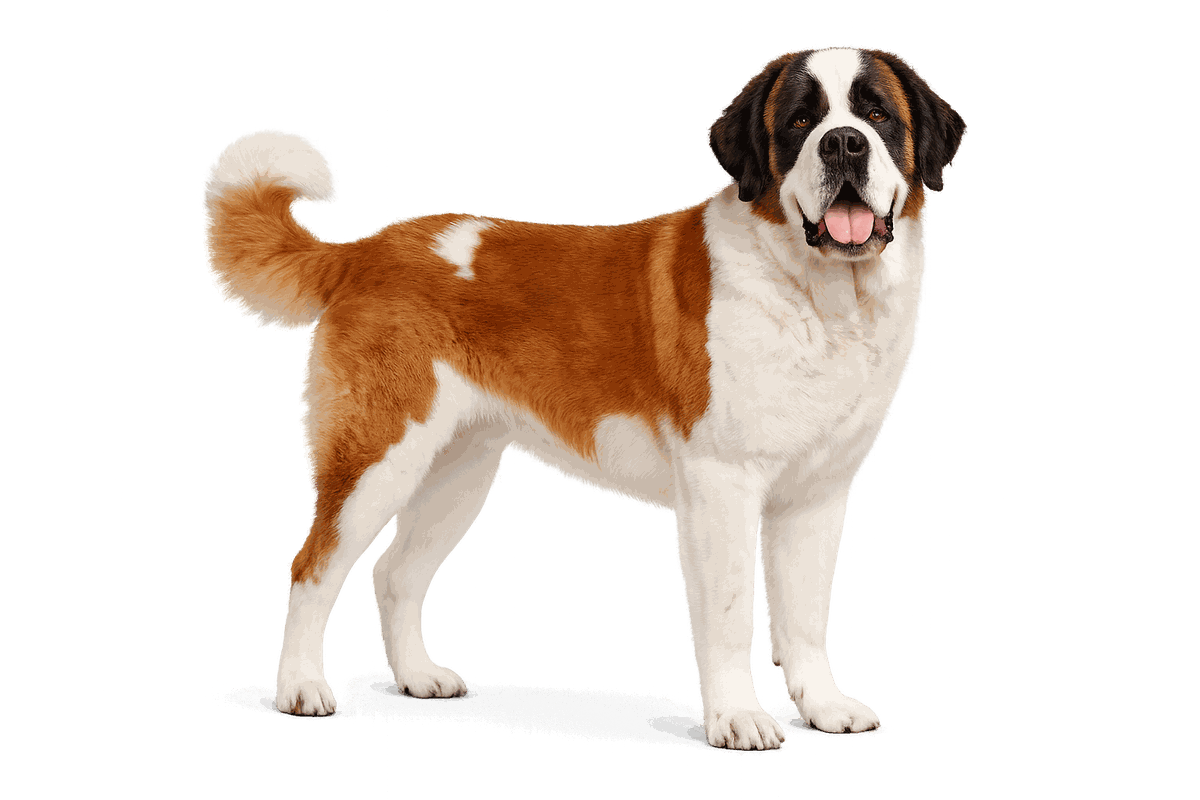
Weight
120-180 lb
Height
26-30 in
Lifespan
8-10 yrs
Coat
Smooth or rough double Varies
The Saint Bernard is a giant Swiss working dog, famous for Alpine rescue history, a gentle family nature, heavy shedding, and serious drool.
Official, native, and commonly used variants
Weight
120-180 lb
Height
26-30 in
Lifespan
8-10 yrs
Coat
Smooth or rough double Varies
At A Glance
A quick read on energy, upkeep, and what day-to-day life with this breed usually feels like.
Energy
Moderate
Barking
Moderate
Drooling
High
Shedding
Heavy
Grooming
3/5
First-time owner
No
The Saint Bernard is a giant working breed from Switzerland, associated with the hospice of the Great Saint Bernard Pass and Alpine rescue work. Modern Saints are still massive, powerful dogs, but the ideal temperament is friendly, patient, watchful, and steady rather than sharp or high-strung.
Saint Bernards come in short-haired and long-haired coat varieties. Standard colors are white with red or red with white, often with required white markings and darker shading around the face. They are usually calm indoors when mature, but their size changes everything: stairs, cars, veterinary care, heat, drool, food costs, and training all need planning before the puppy becomes a 120-plus-pound adult.
This breed can be excellent with families that have space and realistic expectations. It needs early leash and greeting manners, careful growth management, moderate daily exercise, and protection from heat. Responsible breeders should screen hips, elbows, eyes, and cardiac health, and owners should understand bloat risk and giant-breed orthopedic care.
This breed tends to suit homes looking for a gentle, patient, friendly companion, with daily rhythms shaped by moderate energy, moderate barking, and high drooling.
Coat type
Smooth or rough double
Coat length
Varies
Shedding
Heavy
Colors
White and red, Red and white, Brindle and white, Brown-yellow and white
A Saint Bernard is usually a poor apartment fit because of giant size, drool, stairs, heat sensitivity, and practical handling. Ground-floor space and easy outdoor access make life much easier.
Saint Bernards are watchful but usually not sharp. Their main behavior risks come from size, poor leash manners, jumping, and overheating rather than constant barking.
Start leash manners, calm greetings, cooperative handling, and settle cues early. A Saint Bernard puppy may seem easygoing, but an untrained adult is too large to manage by strength.
Brush several times a week and more during seasonal shedding. Long-haired Saints need extra combing behind the ears, on the tail, and around feathering; both coat types need drool cleanup, nail trimming, and skin checks.
Most adult Saint Bernards need moderate daily exercise, usually 45 to 60 minutes split between steady walks and gentle play. Puppies need careful, low-impact activity because rapid growth and excess weight can damage developing joints.
Brush several times a week and more during seasonal shedding. Long-haired Saints need extra combing behind the ears, on the tail, and around feathering; both coat types need drool cleanup, nail trimming, and skin checks.
Start leash manners, calm greetings, cooperative handling, and settle cues early. A Saint Bernard puppy may seem easygoing, but an untrained adult is too large to manage by strength.
Feed a giant-breed diet measured for slow, steady growth and lean adult body condition. Discuss bloat prevention, joint support, and ideal weight with your veterinarian.
Energy level
Moderate
Barking level
Moderate
Drooling level
High
Watchdog ability
4/5
Guard dog ability
2/5
Climate tolerance
Common concerns to discuss with your vet and breeder.
This profile was researched from established breed and canine-care references. Breed tendencies describe typical patterns, not a guarantee for every individual dog.
Reviewed by the Dogs Index Editorial Team. For health or behavior concerns, consult a veterinarian or appropriately qualified professional.
Our Shop
Browse practical products for feeding, grooming, cleanup, enrichment, and smoother daily routines.