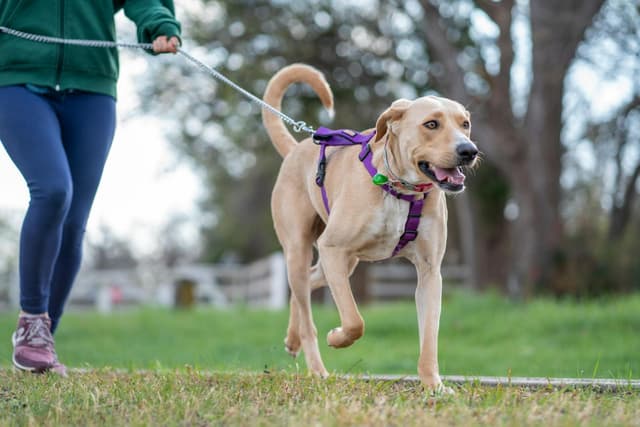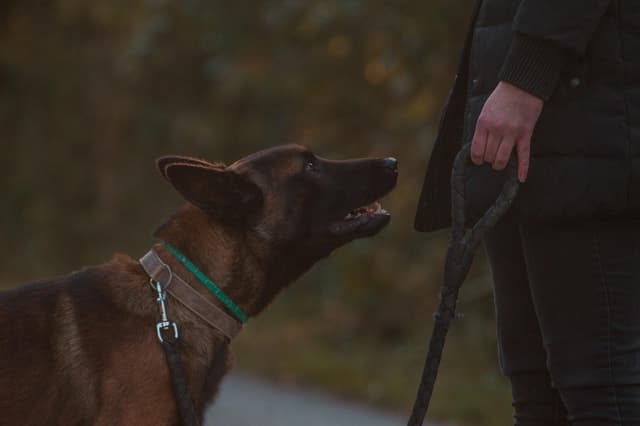
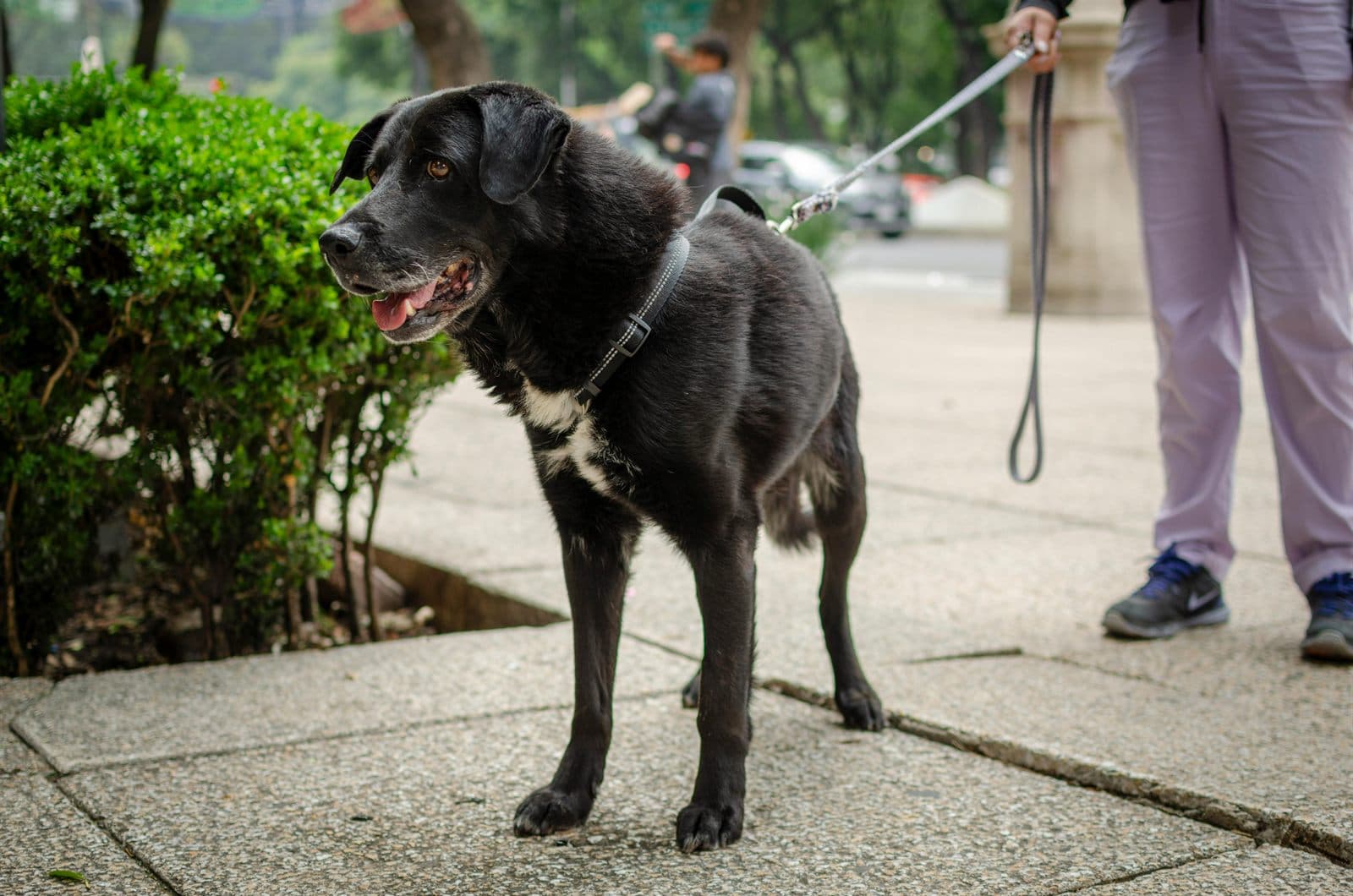
Dog lunging on leash is one of those behaviors that can change the whole mood of a walk in half a second.
One moment your dog is beside you. The next, they are at the end of the leash, body forward, feet digging in, barking or growling or straining so hard your shoulder feels it.
It is scary. It is embarrassing. And if your dog is strong, it can become a real safety problem.
But lunging is not a single behavior with one simple cause. A dog can lunge because they are afraid. Another dog can lunge because they are excited. Another can lunge because the leash is blocking access to something they desperately want.
The first goal is not to label your dog as "bad." The first goal is to make the walk safe enough that learning can happen.
Key takeaways
- Dog lunging on leash is often caused by fear, frustration, excitement, prey drive, pain, or leash reactivity.
- Lunging is not automatically aggression, but it can still become dangerous.
- The useful training window is before your dog launches, not after.
- Distance is the first tool. If your dog is already lunging, the trigger is too close.
- Safer walks come from management, reward-based practice, and predictable escape routes.
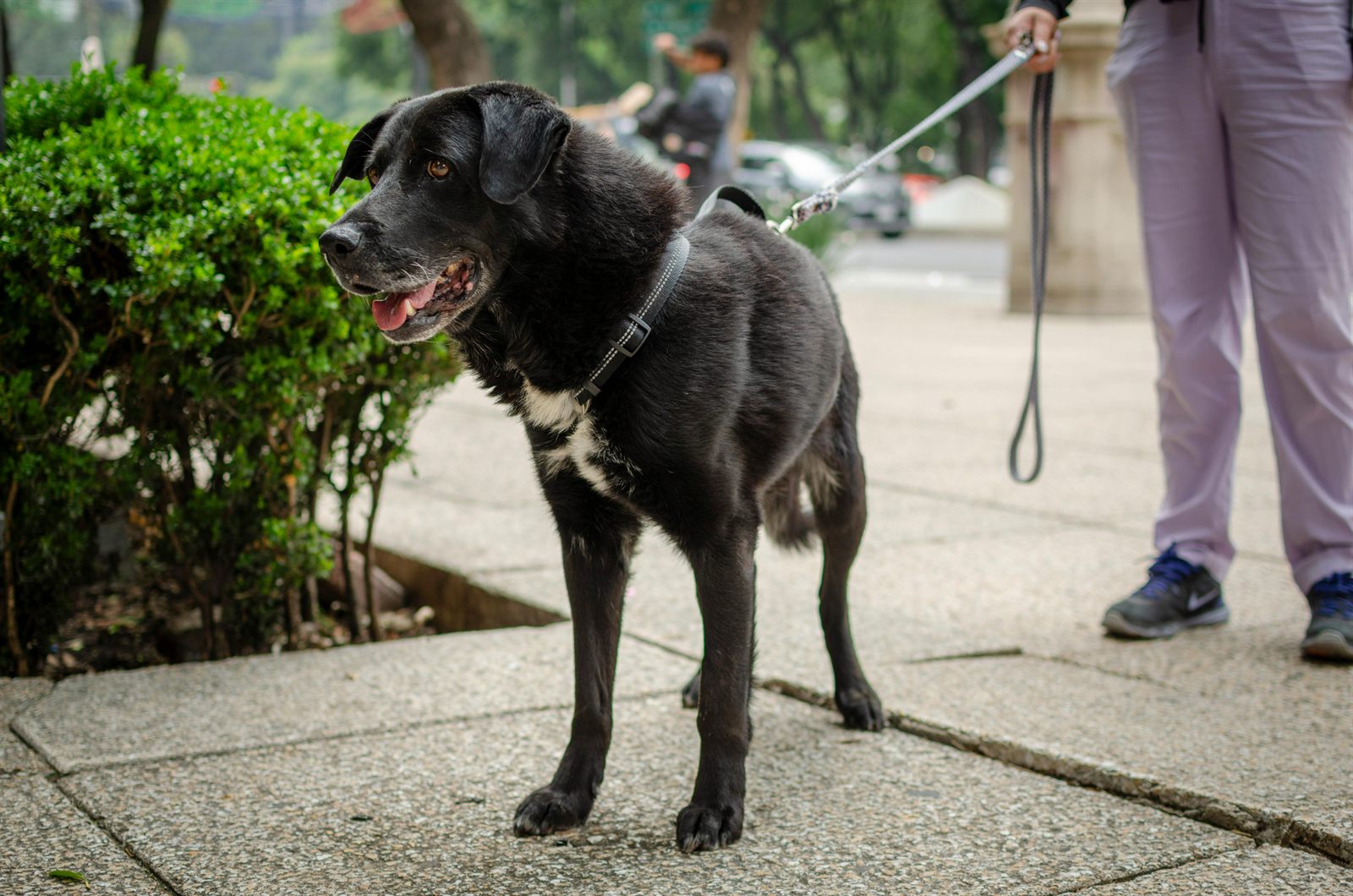
A dog who lunges is already past the easy learning point. The goal is to notice the early signs and create space before the launch.
Why dog lunging on leash happens
The lunge is the loud part. The cause is underneath.
Common reasons include:
- fear
- frustration
- overexcitement
- prey drive
- pain or discomfort
- lack of leash skills
- repeated practice of the same reaction
AKC's guide to leash lunging describes common motivations such as overexcitement, fear, and leash aggression. That is important because the same outward behavior can have different emotional roots.
A dog lunging toward another dog because they want to play needs a different plan from a dog lunging because they feel trapped.
Fear-based lunging
Fear-based lunging often looks more dramatic than people expect.
Your dog may be saying:
- "Stay away."
- "You are too close."
- "I cannot escape."
- "I need to make this stop."
Signs that fear may be involved:
- stiff body
- hard staring
- tucked tail or low body
- ears pinned or tense
- refusal to take treats
- barking that sounds sharp or panicked
- trying to move away before lunging forward
Fearful dogs may lunge because it works. If your dog lunges and the other dog moves away, your dog learns that the explosion created distance.
That does not mean your dog is plotting. It means the behavior got reinforced by relief.
Frustrated greeter lunging
Some dogs lunge because they want access.
These dogs may love other dogs off leash, enjoy daycare, or play well with familiar dogs. But on leash, they bark, bounce, spin, and launch forward because they cannot get where they want to go.
This is often called frustrated greeting.
You may see:
- wagging with a tense body
- whining
- bouncing
- pulling toward the dog
- barking when stopped
- calming after the other dog is gone
The mistake many owners make is allowing a greeting after the dog lunges. That teaches:
lunge hard enough and you get closer
Instead, teach your dog that calm behavior is what makes good things happen.
Excitement overload
Some lunging is not fear or frustration exactly. It is too much intensity.
Your dog sees another dog, child, scooter, runner, or blowing leaf and their brain jumps straight to action.
Excitement overload is common in:
- adolescent dogs
- high-energy breeds
- under-exercised dogs
- dogs with little impulse-control practice
- dogs who start walks already overaroused
These dogs need lower-intensity setups. More chaos rarely teaches calm.
If your dog is also barking during these moments, this companion guide explains why dogs bark at other dogs on walks.
For the full cluster, start with the reactive dog walking guides hub.
Prey drive and movement triggers
Some dogs lunge at moving things:
- bikes
- scooters
- cars
- joggers
- cats
- squirrels
- skateboards
This can be driven by chase instinct, surprise, frustration, or fear of fast movement.
With movement triggers, timing matters. Once the bike is close and your dog is already loading up, it is usually too late for a clean lesson.
Work at a distance where your dog can notice movement and still turn back to you.
Pain or sudden behavior changes
If lunging appears suddenly, gets worse quickly, or seems out of character, consider a vet check.
Pain can lower tolerance. A dog with sore hips, ear pain, vision changes, digestive discomfort, or skin irritation may react harder to normal walk stress.
Call your veterinarian if lunging appears with:
- limping
- appetite change
- sleep change
- sensitivity to touch
- sudden irritability
- yelping
- stiffness
- unusual fatigue
Training cannot fully solve a behavior that is being fueled by pain.
Lunging vs pulling vs barking
These behaviors overlap, but they are not identical.
Pulling
Pulling is steady leash tension. Your dog wants to move faster, sniff, or reach something.
If that is the main issue, start with how to stop dog pulling on leash.
Barking
Barking is vocal communication. It may come from fear, frustration, alarm, excitement, or habit.
Lunging
Lunging is the forward launch. It can include barking, growling, spinning, or jumping, but the defining feature is the sudden drive toward or away from a trigger.
If your dog does all three, treat it as a reactivity problem, not just a leash manners problem.
The signs before the lunge
Most lunges do not come from nowhere.
Watch for:
- closed mouth
- still body
- hard stare
- ears fixed forward
- tail stiffening
- sudden speed change
- weight shifting forward
- lower body crouch
- scanning the environment
- ignoring treats
VCA Animal Hospitals notes that freezing and staring can be subtle signals before barking and lunging. Those early seconds are where your best training happens.
Once your dog is airborne, you are managing, not teaching.
What to do when your dog is about to lunge
Your first job is space.
Do not wait for the full explosion if you already see the pattern.
Try:
- turn around
- cross the street
- step behind a parked car
- move into a driveway
- use a cheerful "this way"
- toss a treat on the ground away from the trigger
- let your dog sniff to decompress after you create distance
This is not avoidance forever. It is preventing another rehearsal while you build better skills.
What not to do
Do not tighten the leash and march forward
That often makes the dog feel trapped and loads the body for a bigger lunge.
Do not force greetings
If your dog is lunging, they are not in a good state for a polite hello.
Do not rely on punishment as the plan
Harsh corrections may suppress the display for some dogs, but they can also add fear, pain, or frustration to the trigger.
Do not practice in the hardest place first
Busy sidewalks, dog parks, pet-store aisles, and narrow trails are advanced environments.
Start easier.
The three-distance rule
Think of every trigger in three zones.
Green zone
Your dog notices the trigger and can still eat, respond, sniff, and turn away.
This is the training zone.
Yellow zone
Your dog is tense, staring, pulling, or slower to respond.
This is the "create space now" zone.
Red zone
Your dog is barking, lunging, spinning, growling, or unable to hear you.
This is management. Get out safely and make the next setup easier.
A simple training pattern
Use this when your dog is in the green zone.
Step 1: Let your dog notice
Do not demand a heel or stare into your face the whole time. Let your dog see the trigger from a safe distance.
Step 2: Mark the calm moment
Say "yes" when your dog sees the trigger without launching.
Step 3: Reward near you
Give the treat by your leg or slightly behind you so your dog naturally turns away from the trigger.
Step 4: Move away
Leave before your dog tips into the yellow or red zone.
This teaches:
I can see the trigger, check in, get paid, and move on.
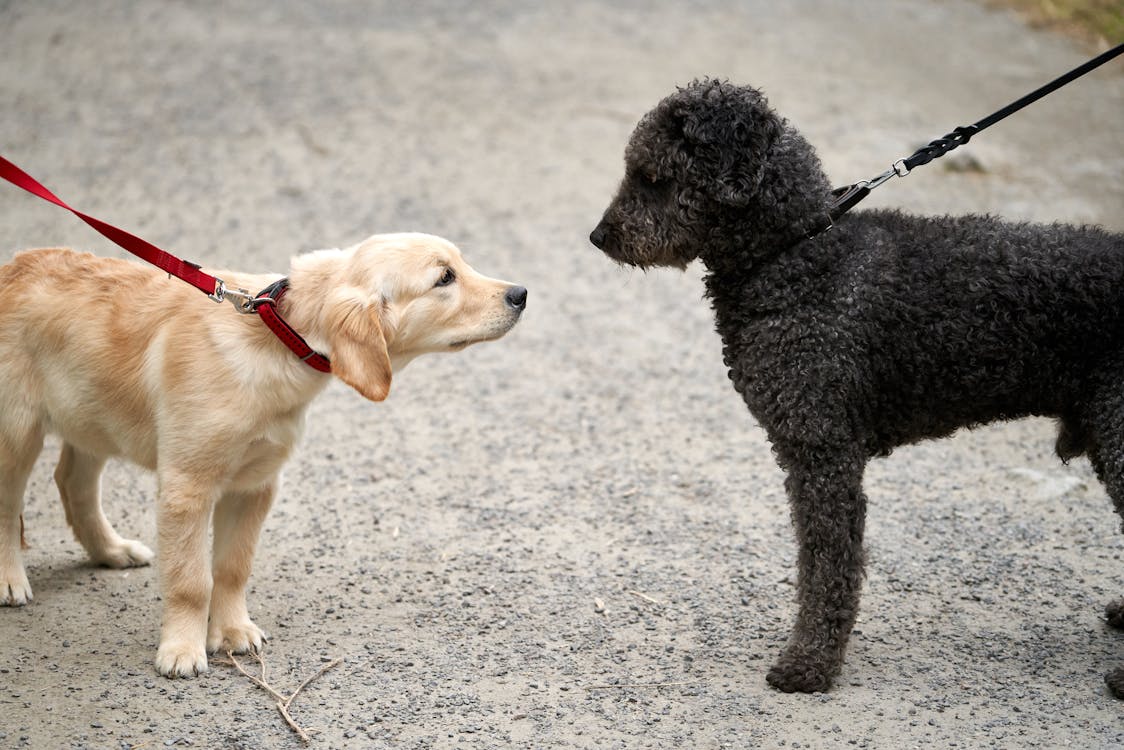
Leash tension and close face-to-face greetings can make a difficult moment harder. Distance gives both dogs more room to think.
Should you use treats?
Yes, if your dog can take them.
Food does not reward fear. Food helps change the emotional pattern when used at the right distance.
If your dog cannot eat, they are probably too close or too stressed.
Use high-value food for hard environments:
- chicken
- cheese
- soft training treats
- tiny meat-based rewards
Keep the pieces small. You want many calm repetitions, not one giant snack.
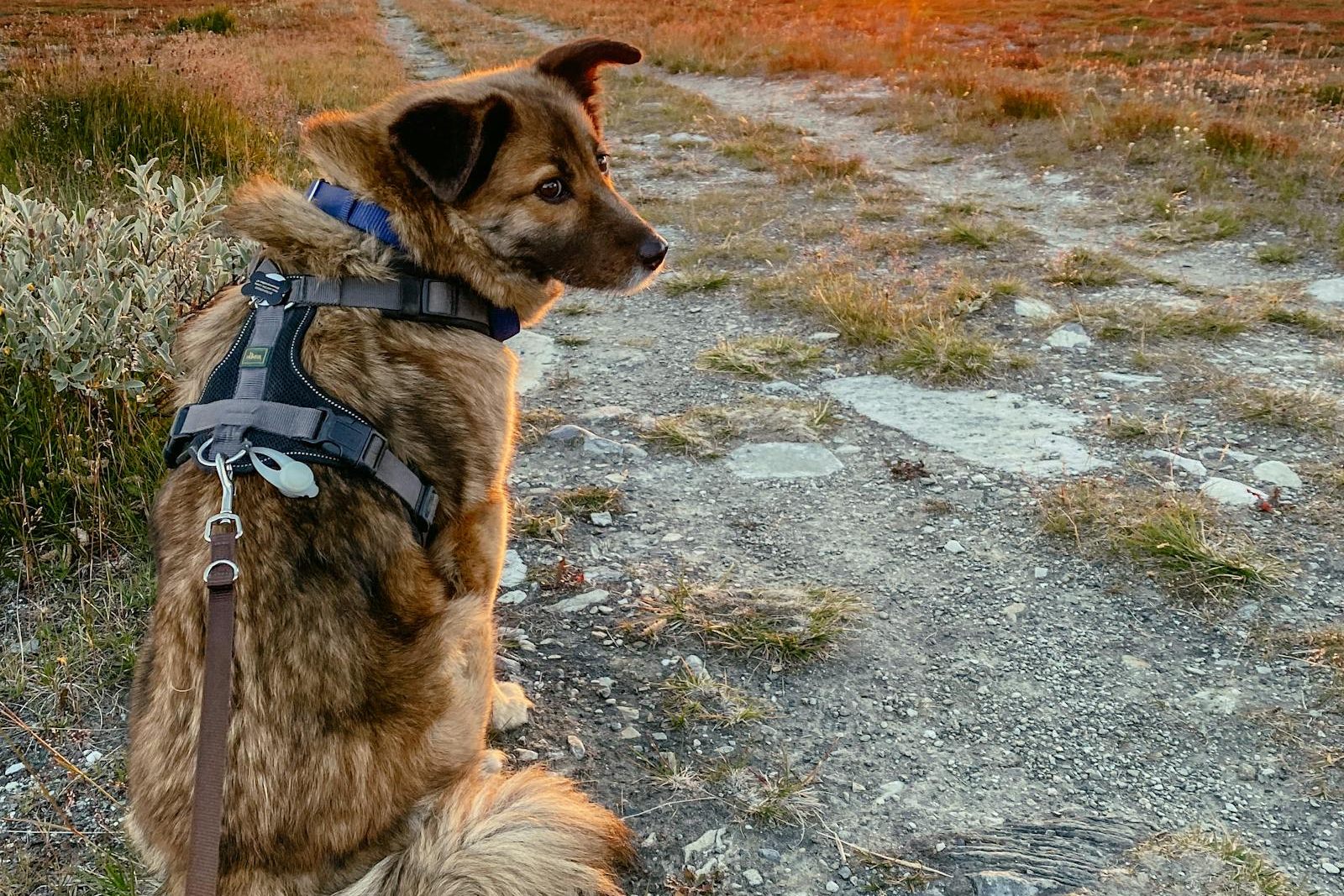
After a hard trigger moment, an easier route or decompression walk can help your dog come back down.
Equipment for safety
For strong lunging dogs, equipment matters.
Consider:
- a well-fitted harness
- a standard leash
- a backup clip if your dog can slip gear
- reflective gear for quieter low-light walks
- a treat pouch
Avoid retractable leashes for this kind of training. They make distance harder to control and can reward sudden surges.
If your dog has a bite history or you are worried about safety, ask a qualified professional about muzzle training. A muzzle should be introduced kindly and gradually, not slapped on during a crisis.
A 7-day leash lunging reset
This will not fix everything in a week, but it can stop the daily spiral.
Day 1: Track the pattern
Write down what your dog lunges at, where it happens, and how close the trigger was.
Day 2: Pick easier routes
Choose wide spaces, quiet times, and routes with escape options.
Day 3: Practice U-turns with no triggers
Say "this way," turn, and reward your dog for following.
Day 4: Reward calm noticing
Find a distance where your dog can see a trigger and still think.
Day 5: Skip greetings
No leash greetings for the day. Calm passing is the goal.
Day 6: Add decompression
Use sniff breaks after hard moments. Sniffing can help many dogs settle.
Day 7: Review
Ask what distance worked, which route helped, and what made lunging worse.
That information is more valuable than guessing.
When to get professional help
Get help from a qualified reward-based trainer, veterinary behaviorist, or your veterinarian if:
- your dog has bitten or nearly bitten
- you cannot safely hold the leash
- your dog redirects onto you
- your dog lunges at cars or traffic
- the behavior is getting worse
- your dog cannot recover after seeing a trigger
- you dread every walk
Cornell University College of Veterinary Medicine explains that reactive dogs can bark, lunge, and growl when overly aroused by common stimuli. The earlier you get structured help, the easier it is to prevent the pattern from becoming stronger.
FAQ
Why does my dog lunge on leash?
Dog lunging on leash can come from fear, frustration, excitement, prey drive, pain, or leash reactivity. Look at the trigger and your dog's body language before the lunge.
Is leash lunging aggression?
Not always. Some dogs lunge because they are scared, some because they want access, and some because they are overstimulated. It still needs careful management.
How do I stop my dog lunging at other dogs?
Start farther away, reward calm noticing, avoid close leash greetings, practice U-turns, and prevent repeated lunging rehearsals.
Should I let my dog greet after lunging?
Usually no. If your dog lunges and then gets access, the lunge can become stronger. Wait for calm behavior and use structured setups instead.
Can leash lunging get better?
Yes. Many dogs improve when owners manage distance, stop rehearsing explosions, reward calmer choices, and get professional help when safety is a concern.