If your dog has too much energy and you cannot go outside, it can quickly turn into a problem.
Barking, chewing, running around, or just constant restlessness are all signs your dog needs an outlet.
The good news is that you do not need a backyard or long walks every day to help your dog burn energy. With the right approach, you can tire out your dog indoors using simple activities that actually work.
Key takeaways
- Mental stimulation is just as important as physical exercise.
- Short sessions can be very effective.
- Simple games often work better than complicated setups.
- Routine matters more than intensity.
- You can tire out your dog even in small spaces.
Why indoor energy matters
Dogs are not just physically active animals. They also need mental challenges.
If your dog does not get enough stimulation, they will find their own ways to release energy, usually in ways you do not like.
That is why indoor activities are not just a backup plan. They are an essential part of a balanced routine.
15 ways to tire out a dog indoors
1. Play hide and seek
Hide somewhere in your home and call your dog.
This game:
- engages their brain
- uses their nose
- adds movement
2. Use scent games
Hide treats around a room and let your dog find them.
This is one of the most effective ways to tire a dog mentally. If your dog enjoys sniffing games, this full guide to indoor scent games for dogs gives you more beginner-friendly setups.
3. Teach new tricks
Training is one of the best ways to burn energy.
Try:
- sit
- stay
- spin
- paw
Just 5-10 minutes can be very effective.
4. Tug of war
A simple game that uses physical energy.
Make sure:
- you control start and stop
- your dog releases on command
5. Indoor fetch (modified)
Use a hallway or open space.
Tips:
- use soft toys
- keep distance short
- avoid slippery floors
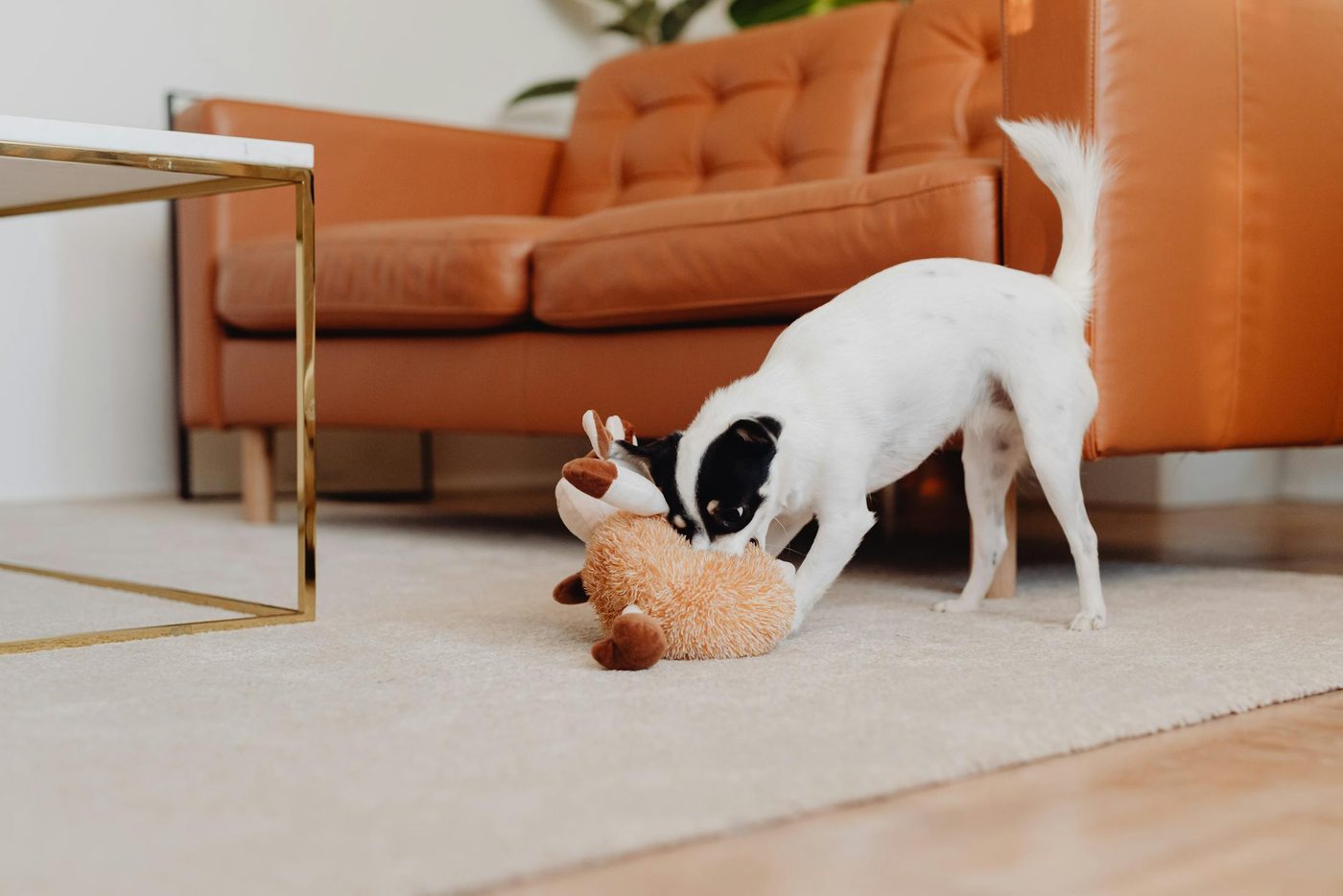
Keep indoor fetch short, controlled, and safe for your floor surface.
6. Puzzle toys
Great for mental stimulation.
They:
- slow down eating
- engage problem-solving
- reduce boredom
7. Food scatter game
Throw kibble on the floor and let your dog search.
This turns feeding into an activity.
8. Obstacle course
Use household items like:
- chairs
- cushions
- boxes
Guide your dog through the course.
9. Stair exercises (if safe)
Short controlled sessions up and down stairs can burn energy quickly.
Avoid overuse, especially for puppies.
10. Follow the leader
Walk around your house and let your dog follow you.
Add:
- turns
- stops
- pace changes
11. Toy rotation
Dogs get bored of the same toys.
Rotate toys every few days to keep interest high.
12. Training games
Combine commands into small games:
- sit -> stay -> come
- down -> wait -> release
13. Calm chewing time
Chewing helps release stress and energy.
Use:
- safe chew toys
- long-lasting chews
14. Short play bursts
Instead of one long session:
- do 5-minute bursts
- repeat throughout the day
15. Structured routine
Energy problems often come from inconsistency.
A daily structure helps regulate behavior.
Mental vs physical exercise
Most owners focus only on physical activity.
But mental work:
- tires dogs faster
- reduces destructive behavior
- improves focus
A 10-minute training session can be more effective than a long walk.
Common mistakes
Only relying on physical play
Running alone is not enough.
Sessions too long
Dogs lose focus quickly.
No routine
Random activity leads to inconsistent behavior.
Overstimulating the dog
Too much excitement can backfire.
Sample 15-minute indoor routine
- 5 minutes: training
- 5 minutes: scent game
- 5 minutes: play, such as tug or fetch
This simple mix works because it gives your dog focus, sniffing, and movement without turning the whole day into playtime.
FAQ
Can I really tire my dog indoors?
Yes. Mental stimulation is very effective.
What is the fastest way?
Scent games and training combined.
How often should I do this?
Daily, even short sessions.
Is indoor exercise enough?
It can be, but outdoor time is still beneficial when possible.
Conclusion
Learning how to tire out a dog indoors is about working smarter, not harder.
You do not need a big space, expensive tools, or long sessions. You just need the right combination of mental and physical activities.
Start simple, stay consistent, and focus on what works for your dog.
Even small changes can make a big difference.