Apartment fit
The Schipperke can fit apartments because it is small, but only with daily exercise, quiet training, and limits on window or hallway barking.
 Belgium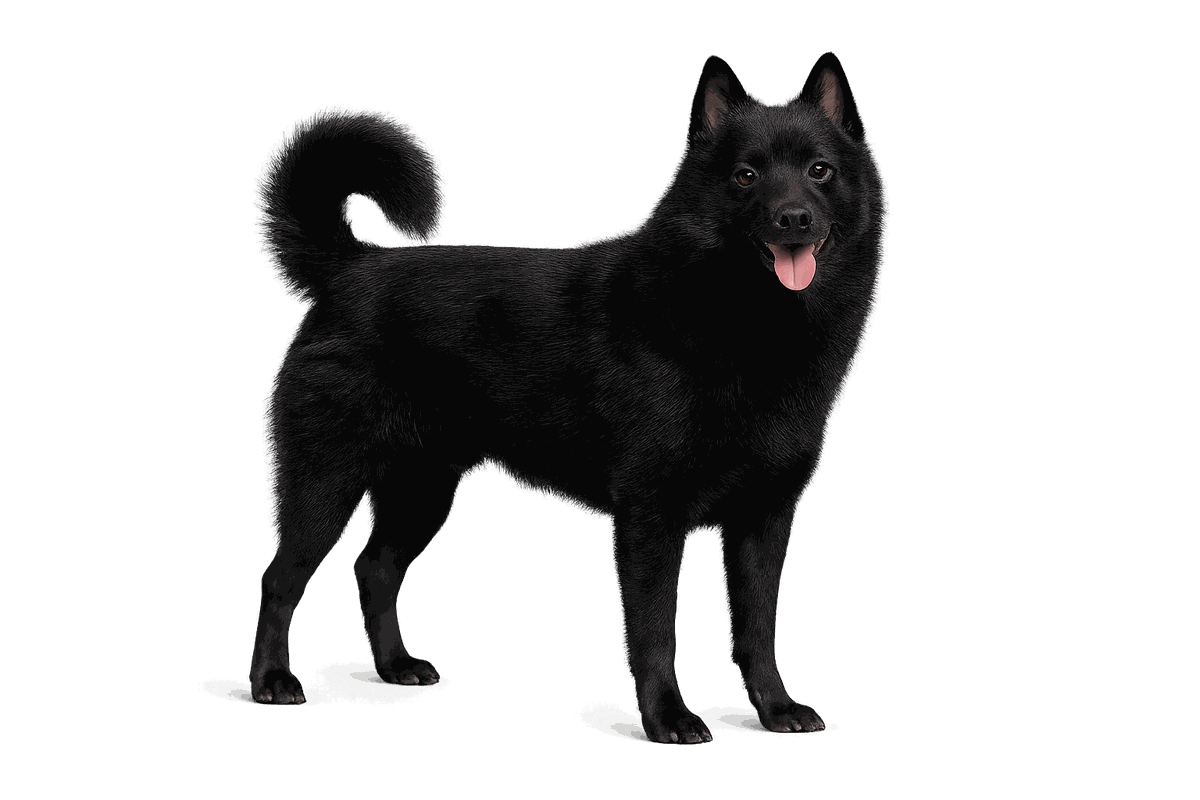
Weight
10-16 lb
Height
10-13 in
Lifespan
12-14 yrs
Coat
Double Medium
The Schipperke is a small Belgian watchdog and companion, curious, confident, foxlike, and usually black with a distinctive ruff.
Official, native, and commonly used variants
No widely used alternate names are recorded for this breed.
Weight
10-16 lb
Height
10-13 in
Lifespan
12-14 yrs
Coat
Double Medium
At A Glance
A quick read on energy, upkeep, and what day-to-day life with this breed usually feels like.
Energy
High
Barking
High
Drooling
Low
Shedding
Moderate
Grooming
2/5
First-time owner
Yes
The Schipperke is a small Belgian breed known for a compact body, foxlike expression, thick ruff, and alert personality. Historically associated with Belgian towns, barges, and watchdog work, it is lively and self-important despite its small size. In the AKC, the breed is in the Non-Sporting Group, while the FCI places it with sheepdogs and cattle dogs.
A Schipperke is curious, confident, independent, and quick to notice anything unusual. It can be an excellent small watchdog, but that same alertness can turn into barking, door reactivity, or escape attempts if not trained. The breed is small enough for apartments, but only if owners provide exercise, enrichment, and clear rules.
The coat is a stand-off double coat, most often black in many standards, with a distinctive ruff, cape, and culottes. Grooming is usually straightforward, but seasonal shedding can be heavy. Owners should also watch weight, dental health, eyes, patellas, thyroid health, and MPS IIIB risk in breeder conversations.
This breed tends to suit homes looking for a curious, confident, alert companion, with daily rhythms shaped by high energy, high barking, and low drooling.
Coat type
Double
Coat length
Medium
Shedding
Moderate
Colors
Black
The Schipperke can fit apartments because it is small, but only with daily exercise, quiet training, and limits on window or hallway barking.
Schipperkes are quick watchdogs that notice changes. They need early quiet cues, enrichment, and predictable rules so alertness does not become constant noise.
Keep training upbeat, structured, and varied. Work early on recall, door manners, quiet cues, leave-it, and impulse control because Schipperkes are alert, fast, and independent.
Brush weekly and more often during seasonal shedding. The ruff, trousers, and tail area hold loose undercoat, but trimming is usually minimal beyond nails, feet, and hygiene.
Most Schipperkes need 45 to 60 minutes of daily activity plus training games, puzzle work, and supervised exploring. A bored Schipperke will often invent its own job.
Brush weekly and more often during seasonal shedding. The ruff, trousers, and tail area hold loose undercoat, but trimming is usually minimal beyond nails, feet, and hygiene.
Keep training upbeat, structured, and varied. Work early on recall, door manners, quiet cues, leave-it, and impulse control because Schipperkes are alert, fast, and independent.
Measure food carefully because small active dogs can gain weight from treats quickly. Ask your veterinarian about dental care, patellas, thyroid screening, and breed-specific genetic testing.
Energy level
High
Barking level
High
Drooling level
Low
Watchdog ability
5/5
Guard dog ability
1/5
Climate tolerance
Common concerns to discuss with your vet and breeder.
This profile was researched from established breed and canine-care references. Breed tendencies describe typical patterns, not a guarantee for every individual dog.
Reviewed by the Dogs Index Editorial Team. For health or behavior concerns, consult a veterinarian or appropriately qualified professional.
Our Shop
Browse practical products for feeding, grooming, cleanup, enrichment, and smoother daily routines.