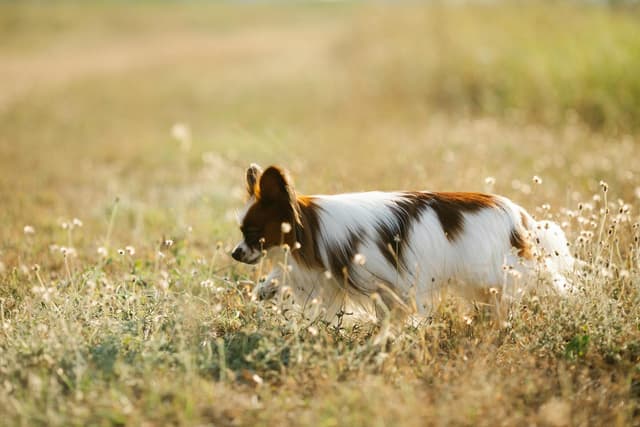
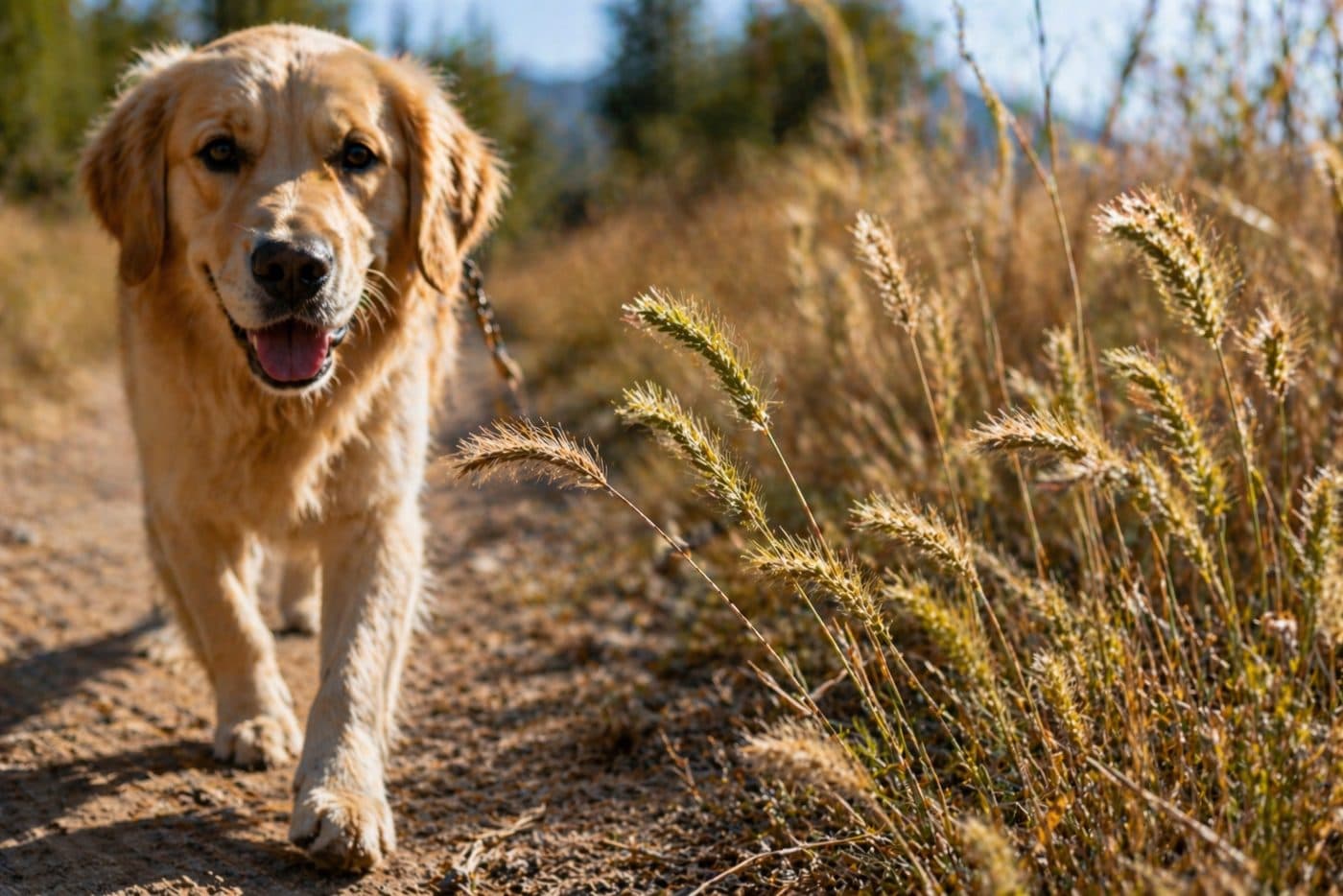
Foxtails can look like ordinary dry grass, but for dogs they can become a serious spring and summer hazard.
The problem is the seed head. Foxtails and similar grass awns have tiny barbs that help them move forward. Once they catch in fur, between toes, inside an ear, near an eye, or around the nose, they can work deeper instead of falling away.
That is why this topic is worth covering now. Spring search interest around foxtails is picking up, and recent pet-safety coverage has started warning owners before the dry-grass season gets worse.
Key takeaways
- Foxtails are barbed grass seed heads that can lodge in a dog's body.
- Common problem areas include paws, ears, nose, eyes, mouth, armpits, belly, and long coats.
- Limping, paw licking, head shaking, sneezing, coughing, and eye irritation are warning signs.
- Remove only loose visible foxtails from the coat. Do not dig into skin, ears, eyes, or the nose.
- Avoid overgrown dry grass and check your dog after every risky walk.
Why foxtails are dangerous for dogs
The danger is mechanical, not because the plant is simply "toxic."
A foxtail awn is shaped to catch and move in one direction. If it enters the wrong place, it can keep traveling into tissue. The American Kennel Club warns that barbed grass awns can get caught around the ears, eyes, mouth, nose, and toes, and can become especially serious if inhaled.
Humane Society Silicon Valley also highlighted foxtails as a current spring hazard in an April 2026 pet-safety guide, noting that they can be easy to overlook when grass is still part green and part dry.
This is why a quick after-walk check matters. A loose seed caught in the coat is simple to remove. An embedded one can become painful, infected, and much harder to treat.
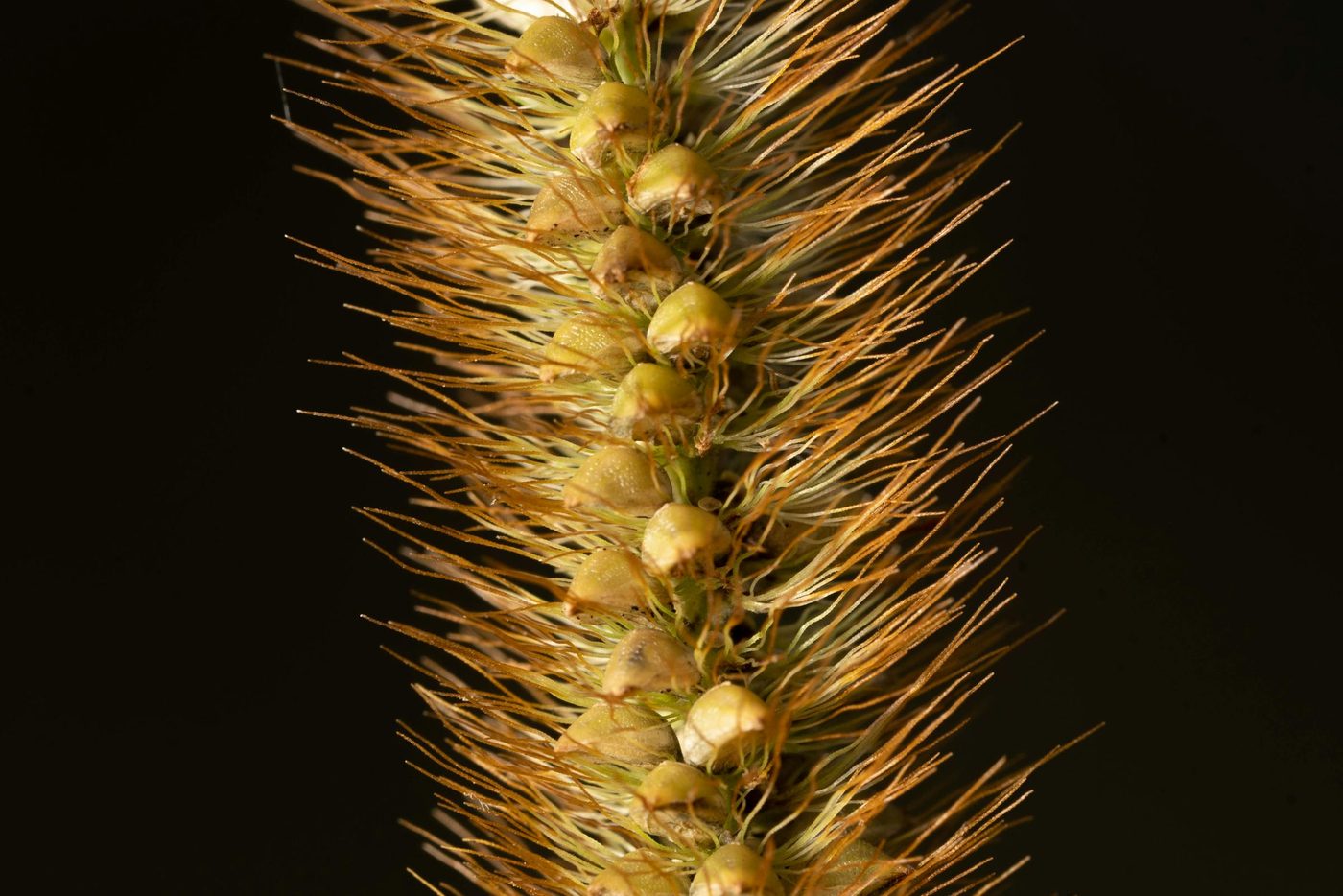
The barbed shape is what makes foxtails risky: they can catch in fur and keep moving forward.
Where foxtails get stuck
Foxtails can attach almost anywhere, but these areas deserve extra attention:
- Paws: between toes, paw pads, and around nails
- Ears: inside or near the ear canal, especially in floppy-eared dogs
- Nose: after sniffing tall grass or dry seed heads
- Eyes: under eyelids or near the eye surface
- Mouth: gums, tongue, lips, or throat area
- Coat: armpits, chest, belly, tail, and thick feathering
- Skin: any place a small sharp awn can burrow
Long-haired dogs, dogs with heavy feathering, floppy-eared dogs, hunting dogs, and dogs that run through brush may pick up more debris. But any dog can get a foxtail after the wrong walk.
Dog foxtail symptoms to watch for
Symptoms depend on where the foxtail is lodged.
Foxtail in a dog paw
Watch for:
- limping
- licking one paw repeatedly
- swelling between the toes
- redness
- a small hole or draining spot
- sudden sensitivity when you touch the paw
Paw problems can look like allergies, a cut, a torn nail, or a foreign object. If your dog is licking paws mostly after spring walks, compare this with the signs in the spring allergies in dogs guide, but do not ignore swelling or limping.
Foxtail in a dog ear
Watch for:
- sudden head shaking
- scratching one ear
- holding the head tilted
- crying or pulling away when the ear is touched
- ear odor or discharge
Do not push cotton swabs or tools into the ear. If the awn is in the canal, your vet may need proper instruments and sedation to remove it safely.
Foxtail in a dog nose
Watch for:
- repeated sneezing
- violent sneezing fits
- pawing at the nose
- nasal discharge
- bleeding from one nostril
- coughing or gagging after sniffing in grass
Nose symptoms after tall-grass exposure should be taken seriously. The Drake Center for Veterinary Care advises veterinary attention for signs such as sneezing, head shaking, coughing, limping, or eye irritation after possible exposure.
Foxtail in a dog eye
Watch for:
- squinting
- pawing at the eye
- redness
- swelling
- discharge
- sudden light sensitivity
Eye issues should not wait. Awns near the eye can scratch or embed quickly, and home removal attempts can make the injury worse.
How to check your dog for foxtails after a walk
Make foxtail checks part of your normal spring and summer routine, especially after hikes, dog parks, fields, trail edges, or vacant lots.
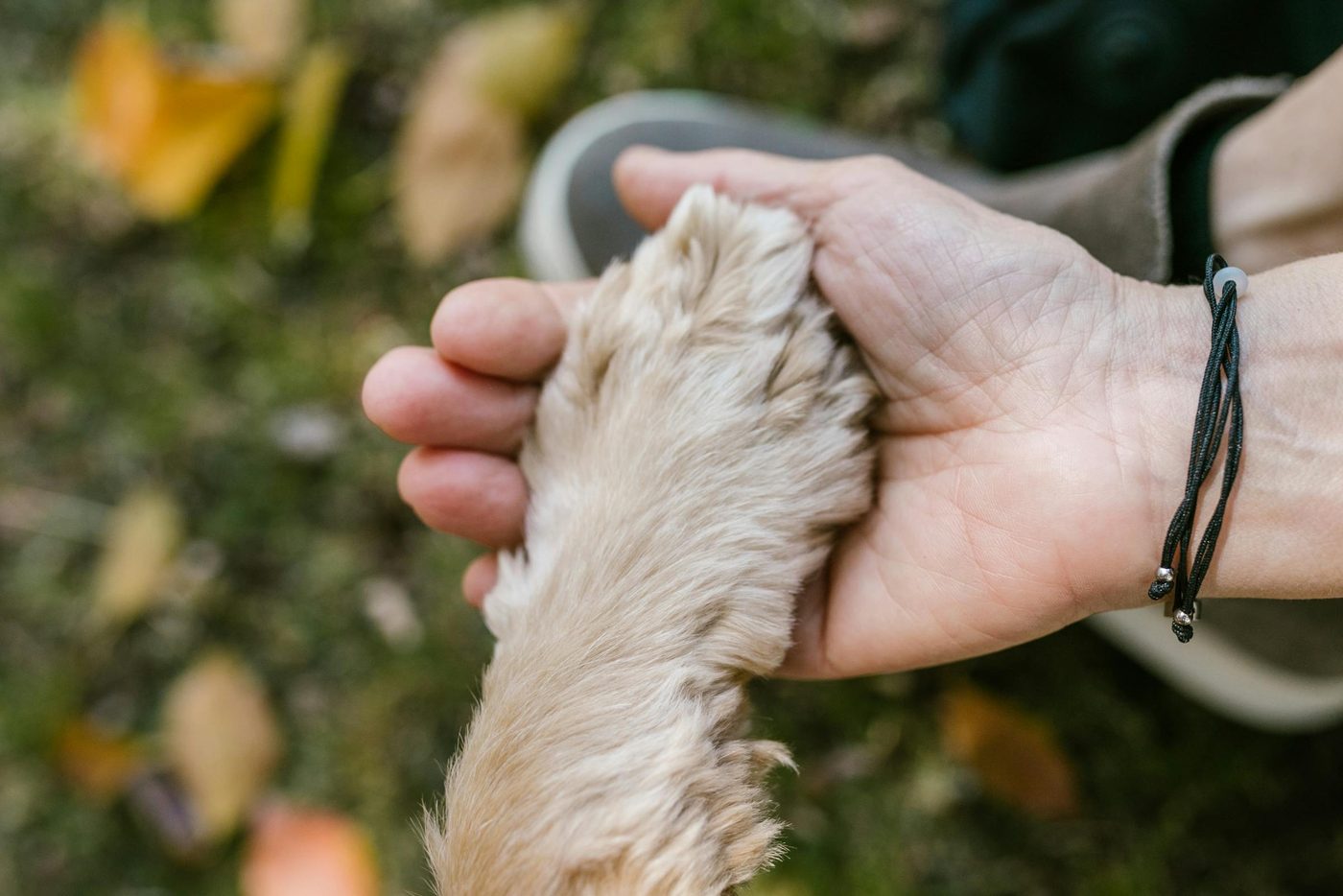
Paws and toes are one of the first places to inspect after tall-grass walks.
Use this order:
- Start with the paws and spread the toes gently.
- Check under the belly and armpits.
- Look around the ears and under ear flaps.
- Check around the eyes, muzzle, lips, and beard.
- Run your fingers through the coat and tail.
- Use a brush or comb for long coats.
- Watch your dog for the next few hours for sneezing, shaking, licking, or limping.
This pairs well with your normal tick check after walks. Ticks and foxtails are different problems, but both are easier to handle when you catch them early.
What to do if you find a foxtail
If the foxtail is loose and sitting on top of the coat, remove it with your fingers, tweezers, or a comb.
If it is stuck between hairs but not embedded, work slowly and avoid pulling skin. After removal, check the same area again because seed heads can break apart.
Do not try to dig out a foxtail if:
- it is under the skin
- the area is red, swollen, painful, or draining
- it is in the ear canal
- it is near or inside the eye
- it is in the nose
- your dog is coughing, gagging, or sneezing repeatedly
- your dog will not let you safely inspect the area
In those cases, call your veterinarian. Foxtails do not reliably work their way back out, and waiting can make removal harder.
How to prevent foxtails on dogs
You cannot control every seed your dog walks past, but you can reduce risk.
1. Avoid overgrown dry grass
High-risk places include:
- dry trail edges
- overgrown fields
- vacant lots
- unmaintained dog parks
- roadside grass
- brushy hiking areas
If seed heads are brushing your dog's legs, face, or belly, choose a cleaner route.
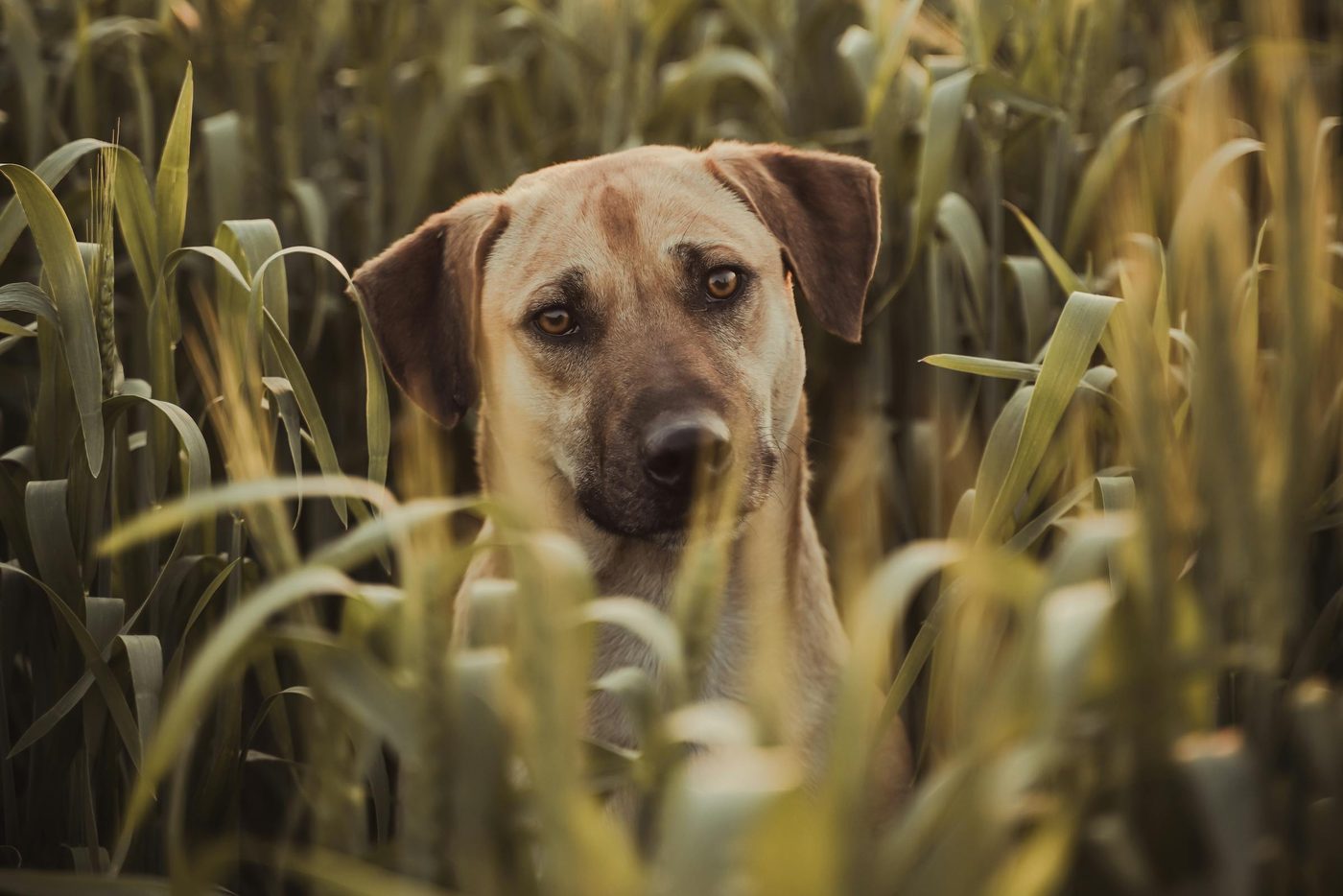
Overgrown grass is the main environment to avoid when seed heads are dry and brushing against your dog.
2. Keep your yard trimmed
If foxtails grow in your yard, remove them before they dry and seed. Mowing helps, but pulling or controlling the plant before seed heads mature is better.
If you are not sure what you are looking at, ask a local extension office, landscaper, or vet clinic familiar with your area. Foxtail risk varies by region.
3. Brush and trim high-risk coats
Dogs with long coats, feathered legs, fluffy ears, or thick tails can carry seeds without obvious signs.
Regular brushing helps. A seasonal trim can also reduce hiding places. If your dog is shedding heavily or matting, use the spring dog grooming tips article as a basic care checklist.
4. Consider boots or protective gear
Boots can help protect paws in foxtail-heavy areas, but they are not perfect. Seeds can still catch higher on the legs, belly, tail, ears, or face.
Use gear as a backup, not a replacement for avoiding risky grass and checking your dog afterward.
5. Choose safer enrichment on bad routes
If your usual trail or dog park is full of dry grass, skip it for a while. Use cleaner sidewalks, maintained parks, short leash walks, or indoor enrichment instead.
For high-energy dogs, the guide on how to tire out a dog indoors can help on days when outdoor routes are not worth the risk.
When to call a vet
Call your vet promptly if your dog has:
- sudden limping after grass exposure
- repeated paw licking
- swelling between the toes
- head shaking or ear pain
- repeated sneezing
- nasal discharge or bleeding
- coughing or gagging
- squinting or eye redness
- a small wound that drains
- a foxtail you can see but cannot remove easily
If your dog has trouble breathing, collapses, cannot stop coughing, or has a painful eye, treat it as urgent.
FAQ
Are foxtails dangerous for dogs?
Yes. Foxtails can lodge in paws, ears, nose, eyes, mouth, or skin. Because they are barbed, they can move deeper and cause pain or infection.
What does a foxtail in a dog paw look like?
You may notice limping, paw licking, swelling between the toes, redness, tenderness, or a small draining wound.
Can I pull a foxtail out myself?
Only if it is loose and clearly visible on the coat or surface. If it is embedded, painful, swollen, near the eye, in the ear, or in the nose, call your vet.
Do foxtails come out on their own?
Do not count on it. Foxtails are shaped to move forward, so an embedded awn may keep traveling into tissue instead of backing out.
What time of year are foxtails worst?
Risk often rises from late spring through summer and fall, especially when grass seed heads dry out.
Can dogs eat foxtails?
Dogs should not chew or eat foxtails. If your dog was chewing dry grass and then starts gagging, coughing, sneezing, pawing at the mouth, or acting painful, call your vet.
Conclusion
Foxtails are easy to miss because they look like normal grass. The risk comes from the barbed seed head and where it can travel once it catches on your dog.
The best plan is simple: avoid overgrown dry grass, check your dog after walks, remove loose visible seeds, and call your vet for any embedded awn or suspicious symptoms.
That routine can turn foxtail season from a hidden hazard into something you manage before it becomes an emergency.