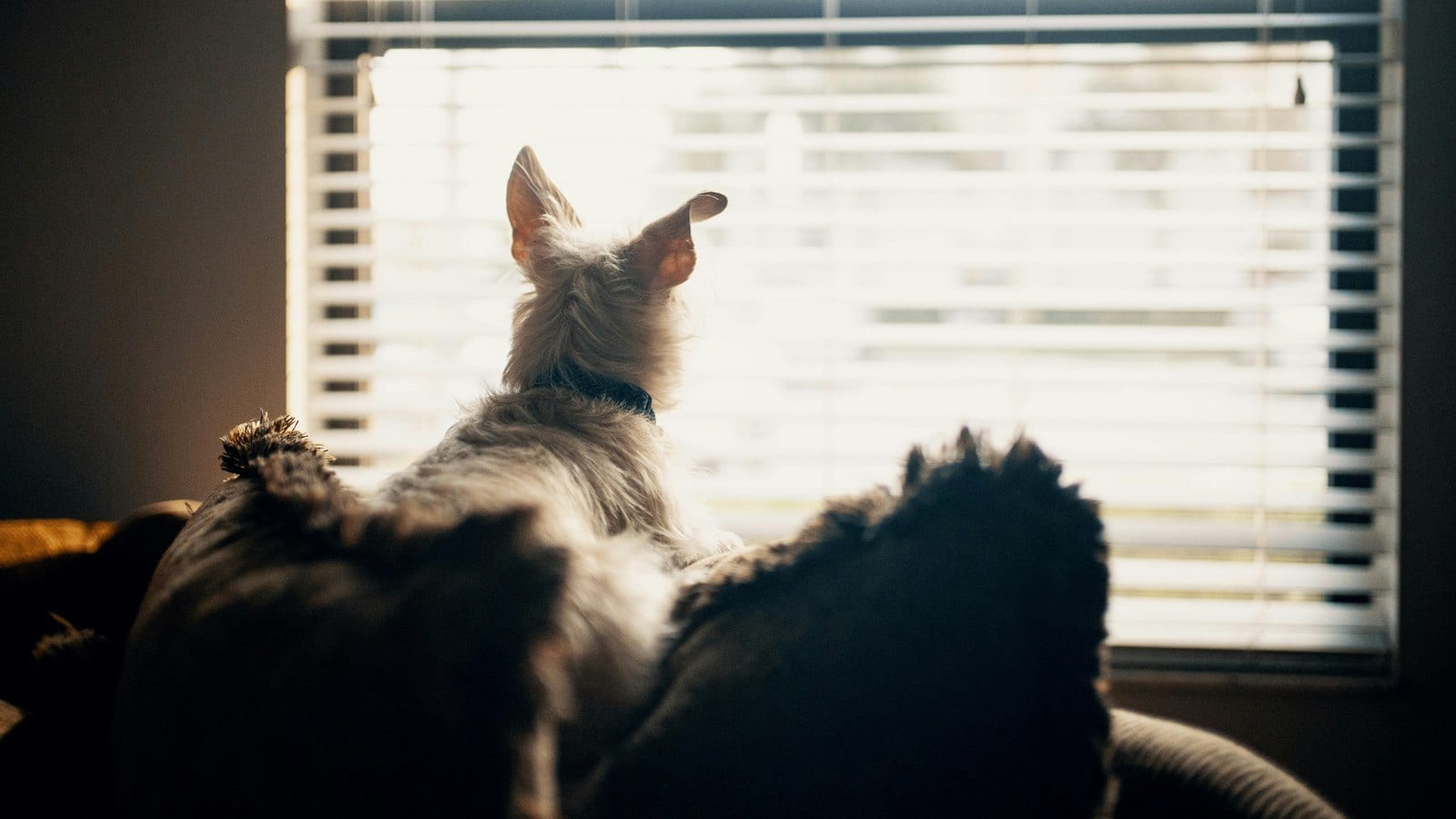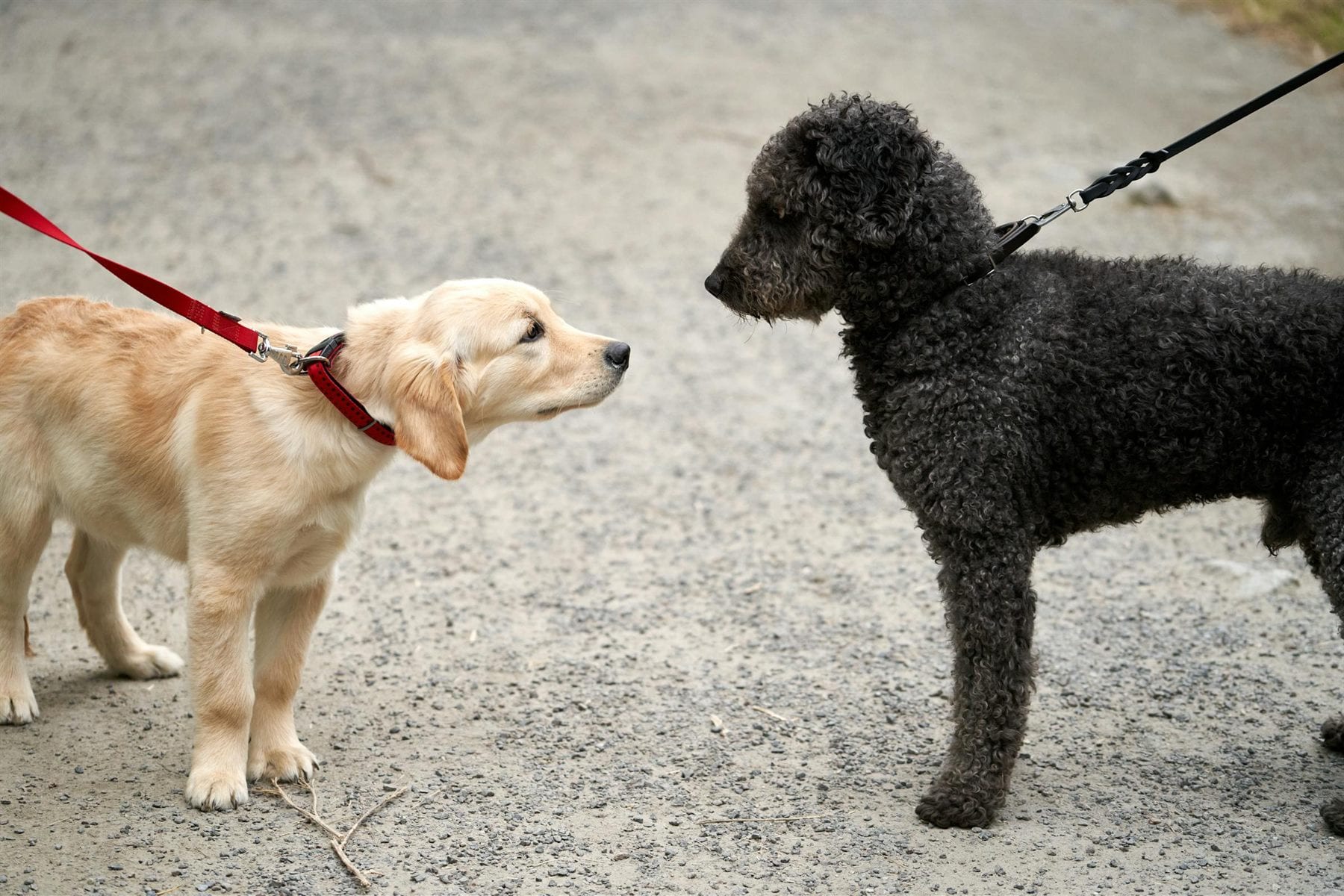
If your dog barks at the doorbell, the problem is rarely just noise.
The bell rings. Your dog launches toward the door, barks, jumps, spins, scratches, growls, or blocks the entry. You try to answer the door while holding a leash, apologizing to the person outside, and hoping nobody opens the door too fast.
The clear answer: doorbell barking improves when you stop treating the front door like a surprise event. Lower the trigger, teach your dog where to go, manage real visitors, and practice the routine before the next delivery or guest arrives.
Your dog does not need to love every visitor. They need a predictable job and enough distance to think.
Doorbell training starts before the door opens. The first goal is not silence; it is a safer, more predictable pattern.
Why Dogs Bark at the Doorbell
The doorbell is powerful because it predicts a lot at once.
It may mean:
- a stranger is outside
- a familiar guest is arriving
- a delivery person is walking away
- the door is about to open
- people will move quickly
- you will rush to the entry
- the dog may get access, conflict, or attention
After enough repetitions, the sound itself becomes the trigger. Your dog does not need to see the person. The bell, knock, buzzer, intercom, garage door, or delivery notification may be enough.
Some dogs are alarmed. Some are excited. Some are frustrated because they want to greet. Some are scared because people enter their space. Many dogs are a messy blend of all four.
The ASPCA's barking guidance separates barking by function, including territorial, alarm, greeting, attention, and frustration barking. Doorbell barking can sit in several of those buckets at once, which is why yelling "quiet" from across the house usually does not fix it.
If your dog also barks at people outside the home, read dog barks at strangers on walks. The same dog may need both visitor work and public-space work.
Do Not Start With the Real Doorbell
Real doorbells are too hard for many dogs.
They come with footsteps, voices, your movement, pressure at the door, and the possibility that a person will enter. If your dog already rehearses barking and rushing, practicing only during real deliveries means practicing at the hardest level.
Start smaller.
Use:
- a doorbell recording on your phone
- a soft knock on an interior wall
- a quiet tap on a table
- a helper texting before they approach
- a fake delivery setup with no person entering
Play the sound at a volume your dog notices but can still handle. Feed right away. Stop the sound. Repeat.
If your dog explodes at the recording, it is too loud, too close, or too realistic. Lower the volume or switch to a softer sound.
This is the same threshold rule used in reactive dog training: the dog has to be calm enough to learn.
Teach a Doorbell Job
The best doorbell plan gives your dog something specific to do.
Common jobs include:
- go to a mat
- go to a bed
- go behind a gate
- enter a crate
- move to a bedroom
- find treats scattered away from the door
- sit near you while leashed
For many homes, "go to your mat" is the cleanest choice.
Start when nobody is at the door:
- Put the mat several feet away from the entry.
- Toss a treat onto the mat.
- Let your dog step on it and eat.
- Toss another treat off the mat so they reset.
- Repeat until your dog moves to the mat quickly.
- Add a cue such as "place" or "mat."
- Reward several seconds of staying there.
Only after the mat is easy should you add a quiet doorbell sound.
The AKC and ASPCA both describe teaching dogs to go to a place or spot as part of doorbell and visitor-barking plans. The key is to teach the behavior first, then attach it to the sound.
Do not wait for a real guest and then try to teach the mat while your dog is already barking.
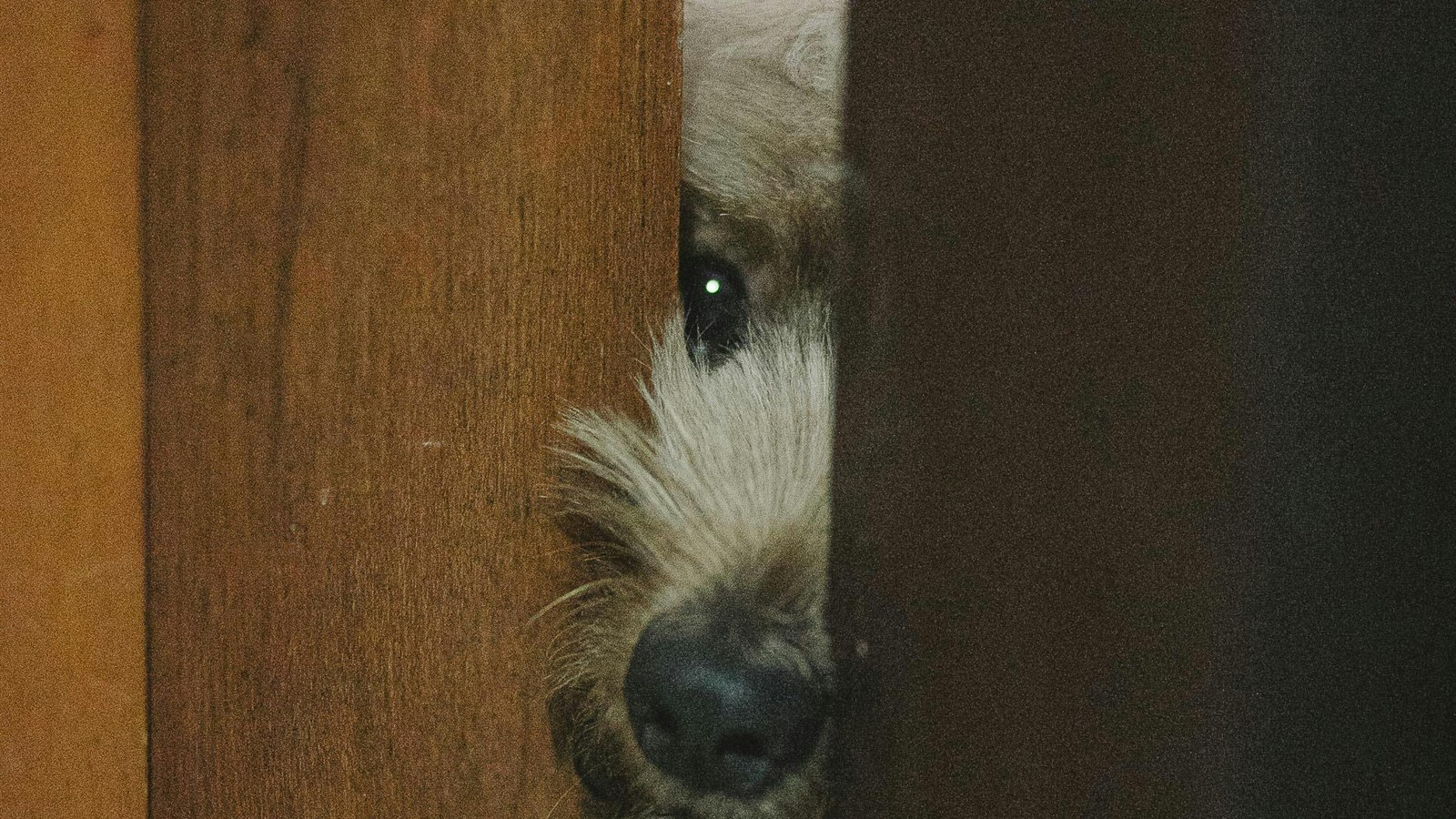
A mat, bed, crate, or room gives your dog a clear destination away from the entry.
Manage the Door Before You Train the Greeting
If your dog charges the door, management comes first.
Use whatever keeps everyone safe:
- leash before opening the door
- baby gate
- exercise pen
- crate, if your dog is crate comfortable
- bedroom with a chew or scatter
- closed interior door
- sign asking delivery drivers not to knock
- delivery instructions to leave items outside
- phone call or text instead of ringing
Management is not failure. It prevents rehearsal.
Every time your dog rushes the door and the person leaves, the pattern may get stronger. From the dog's point of view, barking worked: the person went away. For excited dogs, barking may also work because it creates more movement and attention.
Cornell's excessive barking article notes that barking can be reinforced when a scary person or animal goes away. That is exactly why delivery routines can become intense for alarm barkers.
Set up the door so your dog cannot keep practicing the old routine while you build the new one.
Separate Door Opening From Guest Greeting
Many owners ask too much at once.
They expect the dog to:
- hear the bell
- stop barking
- move away from the door
- stay still
- watch a stranger enter
- accept petting
- remain calm while people talk
That is a lot.
Split the routine into stages:
- Sound happens.
- Dog moves away from the entry.
- Dog is secured or stationed.
- Door opens.
- Visitor enters or delivery is handled.
- Dog remains separated until calm.
- Greeting happens only if appropriate.
Some dogs should not greet at the door at all. A nervous dog may do better meeting guests later in a larger room, outside on a short parallel walk, or not meeting them during that visit.
If your dog barks, lunges, or freezes near people outside, use the plan in dog barks at strangers on walks before assuming indoor greetings will be easier.
Should Guests Give Treats?
Sometimes, but not automatically.
For a social dog who is simply excited, a guest tossing treats away from their body may help reduce jumping and keep movement calmer.
For a fearful or conflicted dog, treats from the guest can backfire. The dog may approach for food while still feeling unsafe, then panic when they realize they are close to the person.
A safer default:
- you feed the dog
- food appears away from the guest
- the dog is not required to approach
- the visitor ignores the dog at first
- greetings happen later, if the dog chooses
Tell guests exactly what to do. "Ignore him" is often too vague. Say, "Please do not look at him, reach for him, talk to him, or offer your hand. I will handle him."
That may feel awkward for ten seconds. It is much easier than trying to undo a bad greeting.
A Simple Training Plan
Use this plan over several short sessions.
Step 1: Pick the Station
Choose one place away from the door.
It should be far enough that the door can open without your dog crowding the entry. For small apartments, this may be a mat behind a gate or a room around the corner.
Reward the station without any door sounds until your dog understands it.
Step 2: Add a Fake Sound
Play a soft doorbell recording or knock.
Immediately cue the station or toss food toward it. Reward several times while your dog stays there. Keep the sound low enough that your dog can still eat.
If your dog cannot eat, lower the difficulty. Use best treats for reactive dog training if food works indoors but fails near the door.
Step 3: Add Movement
Once the sound is easy, add your movement.
Stand up. Walk one step toward the door. Return and reward. Then two steps. Then touch the doorknob. Then open the door a crack with no person outside.
For many dogs, your rushing is part of the trigger. Train that piece separately.
Step 4: Add a Helper
Ask a helper to stand outside and text before knocking softly.
Your job is not to host a real visit yet. Your job is to run the routine:
- sound
- station
- food
- door movement
- close door
- release
Keep it boring.
Step 5: Add Planned Visits
When your dog can handle a helper, try a short planned visit.
The visitor should enter calmly and ignore the dog. Keep your dog behind a barrier, leashed, crated, or stationed. End before your dog is exhausted.
Successful visitor training often looks uneventful. That is the point.
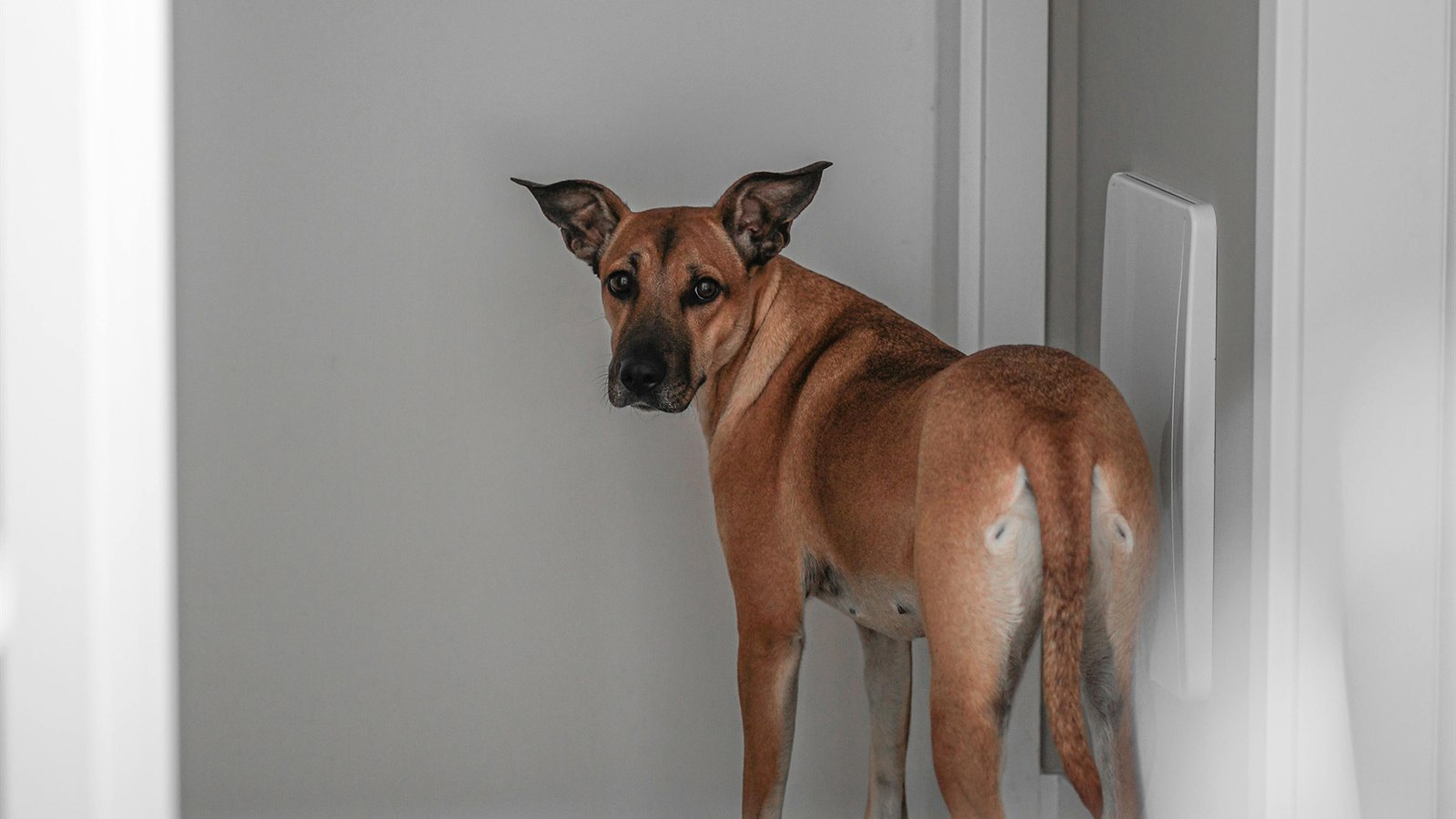
Hallway and entry-door setups are easier to train when your dog has a clear station away from the threshold.
Apartment Buzzers and Hallway Dogs
Apartment doorbell barking can be harder because sounds are closer and less predictable.
Your dog may react to:
- hallway footsteps
- elevator sounds
- neighbor doors
- intercom buzzers
- dogs passing your unit
- delivery carts
- people talking outside
For apartment dogs, management may matter even more than training.
Try:
- white noise near the door
- a visual barrier over low windows
- a mat farther from the entry
- treats stored by the leash
- delivery instructions that avoid knocking
- practice with the door closed before hallway work
- leaving through quieter exits when possible
If the same dog struggles in the hallway, pair this with how to walk a reactive dog in an apartment complex.
What If the Dog Keeps Barking After the Guest Enters?
Then the doorbell is only the first trigger.
Your dog may also be reacting to:
- eye contact
- voices
- standing posture
- reaching hands
- hats or bags
- fast movement
- sitting down or standing up
- the guest moving through the home
Do not force interaction.
Keep the dog separated with something calming to do. Use a stuffed food toy, scatter feeding, a chew, or a quiet room if those help your dog relax. If food creates guarding risk, skip food around guests and use distance instead.
If your dog escalates when the guest moves, train that separately with a helper at a safe distance. Guest sits, dog gets food. Guest stands, dog gets food. Guest takes one step, dog gets food. Keep the dog below threshold.
This is slow work, but it is clearer than hoping the dog will "get used to it" during a real visit.
Common Mistakes
The first mistake is practicing only when someone is actually at the door. Real visitors are too intense for early training.
The second mistake is yelling over the barking. For many dogs, your louder voice adds urgency.
The third mistake is opening the door while the dog is charging it. That teaches the old sequence again.
The fourth mistake is letting guests reach for the dog too soon. A dog can take treats and still be uncomfortable.
The fifth mistake is asking for a long stay before the dog has learned a short one. Build seconds before minutes.
The sixth mistake is dropping management too early. Keep gates, leashes, crates, and quiet rooms in the plan until the trained routine is reliable.
When Barking Is a Safety Issue
Doorbell barking needs professional help if your dog:
- growls at guests
- lunges at the door
- snaps or bites
- redirects onto you
- blocks people from entering or leaving
- guards the doorway, couch, or owner
- cannot recover after visitors arrive
- reacts more intensely over time
- has injured a person or another animal
The ASPCA's dog bite prevention guidance recommends seeking professional help the first time a dog shows aggressive behavior toward a person, even if nobody is injured. That is a useful line for visitor issues too.
Use a qualified reward-based trainer, certified behavior consultant, or veterinary behavior professional. Avoid anyone who wants to solve fear or visitor aggression by forcing greetings, flooding the dog with guests, or punishing warning signs.
Breed-Specific Notes
Any dog can bark at the doorbell.
Herding breeds may notice movement and sound changes early. Terriers may escalate quickly when frustrated. Guardian breeds may take entryways seriously. Hounds may bark because sound and scent are exciting. Small dogs may feel trapped when people loom over them in tight entry spaces.
For concrete examples, compare the visitor-management needs in the Caucasian Shepherd (Caucasian Ovcharka) guide with the scent drive and voice described in the American Leopard Hound guide. These are breed tendencies, not predictions for an individual dog.
Breed traits can shape the plan, but they do not replace the plan. The practical question is always the same: what trigger can your dog notice while still staying safe enough to learn?
FAQ
Why does my dog bark at the doorbell?
The doorbell predicts people, motion, access, uncertainty, and the door opening. After enough repetitions, the sound alone can trigger barking, rushing, jumping, or guarding.
How do I stop my dog barking when someone knocks?
Practice with quiet fake knocks first. Reward your dog for moving away from the door, then build toward a mat, gate, crate, or room routine before using real visitors.
Should I punish doorbell barking?
Punishment may stop some noise in the moment, but it does not teach your dog what to do instead and can add stress around visitors. Teach a replacement routine and use management while it develops.
Should my dog greet every guest?
No. Some dogs do better separated during visits, especially if they are fearful, territorial, overexcited, or have a bite history. Greeting is optional; safety is not.
Why does my dog bark more at delivery drivers?
Delivery drivers appear suddenly, approach the home, create noise, and leave quickly. From the dog's point of view, barking may seem to make them go away, which can strengthen the behavior.
Can I disconnect the doorbell?
Yes, as a management step. You can use signs, texts, delivery notes, or phone calls while you train. Reducing surprise helps your dog rehearse the new routine.
When should I call a trainer?
Call a qualified professional if your dog growls, lunges, snaps, bites, redirects, guards the door, blocks guests, or remains highly stressed after visitors arrive.