Reactive dog walks can make normal advice feel useless.
Someone says, "Just make him sit." Another person says, "Let her say hi." A stranger tells you, "Correct him so he knows it is wrong." Meanwhile your dog is barking, lunging, freezing, pulling, or spinning at the end of the leash.
The clear answer: do not try to fix a reactive dog at the hardest moment. Most mistakes happen because owners wait too long, get too close, or add pressure when the dog already feels overwhelmed.
Your job is not to win a sidewalk argument with your dog. Your job is to keep them under threshold long enough to learn.
Reactive dogs need earlier help, not more pressure after the reaction has already started.
Mistake 1: Forcing Your Dog to "Face Their Fear"
Many owners think a reactive dog needs more exposure.
Exposure can help only when the dog is far enough away to think. If the dog is barking, lunging, cowering, or frozen, the setup is too hard. Staying there does not teach bravery. It teaches panic, frustration, or defensive behavior.
Do not force your dog to stand near:
- dogs they are barking at
- strangers reaching for them
- bikes or scooters rushing past
- busy apartment lobbies
- crowded sidewalks
- dog park fences
- outdoor dining areas
Move farther away. Use a parked car, tree, hedge, doorway, or side path as a visual break. Distance is not failure. Distance is the tool that lets learning happen.
Cornell University College of Veterinary Medicine describes reactive dogs as overresponding to normal stimuli, often because of fear, anxiety, frustration, or overstimulation. Flooding a dog with more of the same trigger usually makes that overresponse harder to interrupt.
For the full behavior-change framework, use reactive dog training.
Mistake 2: Waiting Until the Bark to Start Training
The bark is not the beginning. It is often the middle or end of the reaction.
Earlier signs may include:
- mouth closing
- body stiffening
- tail rising or tucking
- ears locking onto the trigger
- faster pulling
- sudden stillness
- refusing treats
- scanning ahead
Do not wait for the explosion.
When your dog first notices the trigger and can still eat, mark with "yes" and feed. Then move before the stare builds.
If your dog already barked, you are mostly managing. That is okay. Turn away, create distance, and feed after your dog can reorient.
If treats are not working, read best treats for reactive dog training. Often the problem is not the treat. It is that the dog is too close to the trigger.
Mistake 3: Making the Leash Tight and Holding Your Dog There
Tight leash pressure can make a reactive dog feel trapped.
It also changes body language. A dog who might have curved away is now held forward. A dog who wanted space may feel like they have no exit. A dog who wants to greet may become more frustrated because the leash blocks access.
You still need safety. That does not mean constant tension.
Aim for:
- short enough leash to prevent a launch
- enough slack to avoid constant pressure
- your body turned away from the trigger
- steady movement toward space
- no yanking or leash pops
If your dog pulls hard even without triggers, work on stopping leash pulling separately. Loose-leash skills give you more room to help when a trigger appears.
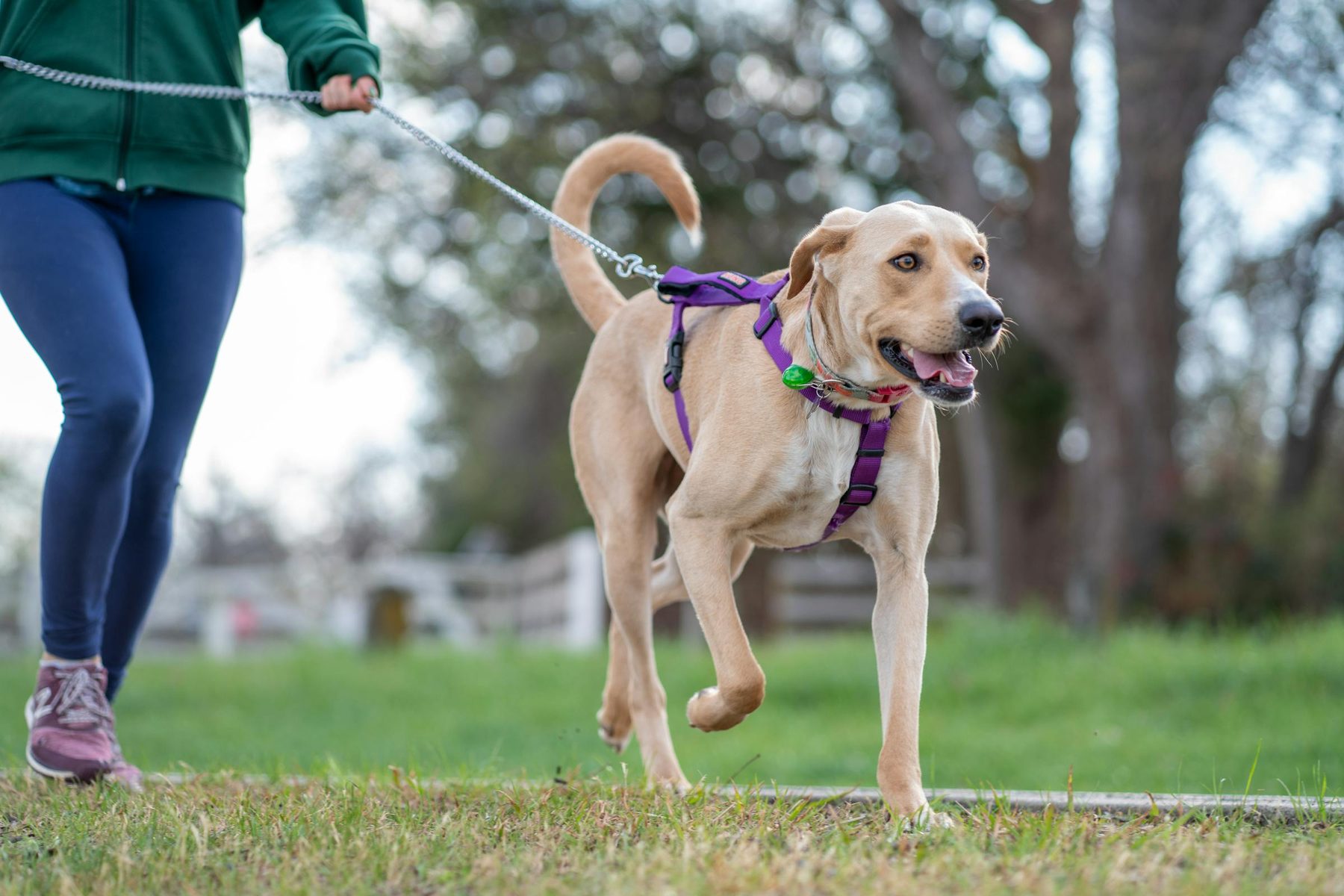
A tight leash often appears right before a reaction. Create distance before tension turns into a full launch.
Mistake 4: Forcing Greetings
"He just needs to say hi" is risky advice.
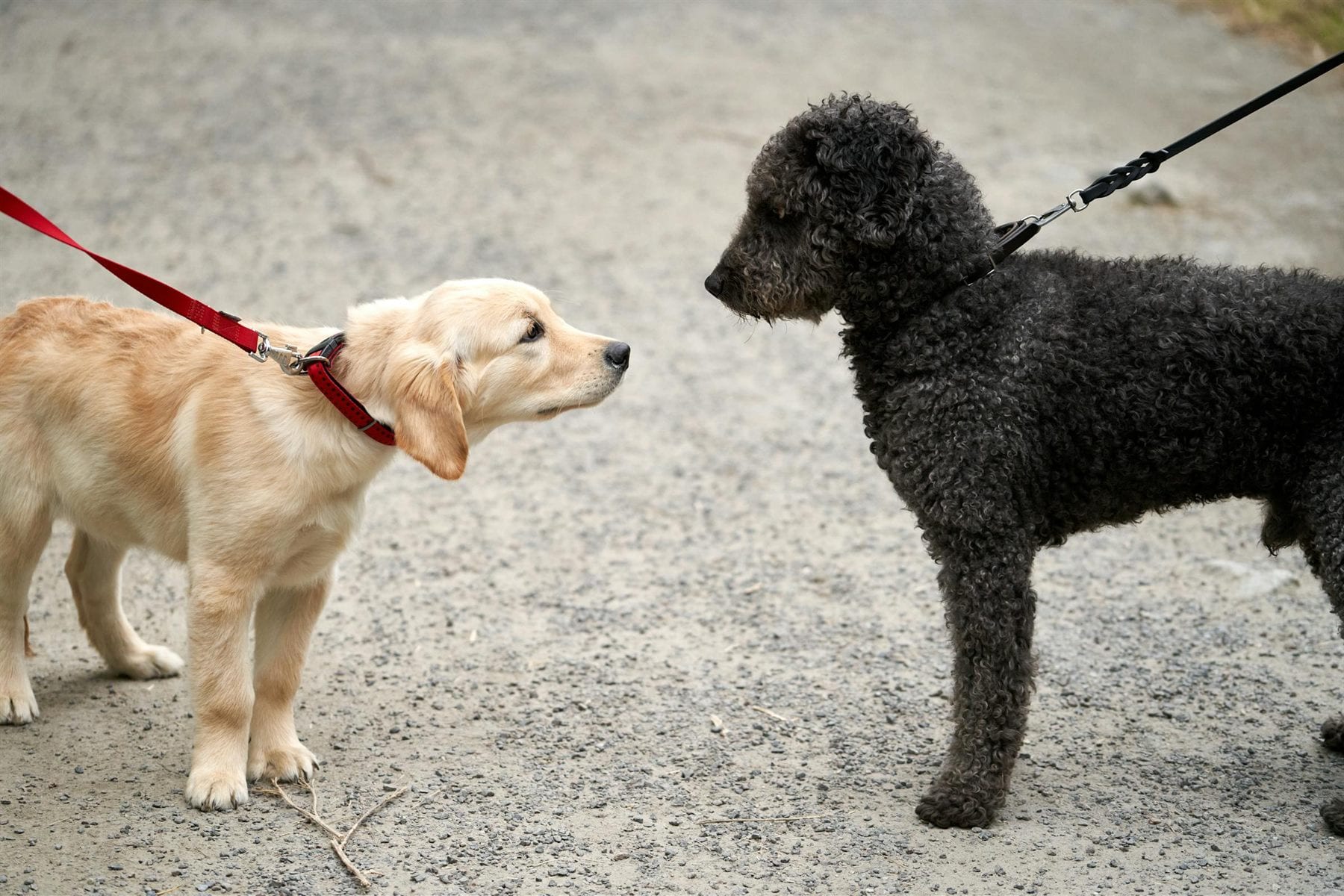
If your dog is barking, lunging, hiding, freezing, or pulling hard, they are not ready for a greeting. Letting the greeting happen may reward the pulling, scare the other dog, or push your dog into a worse reaction.
Avoid:
- nose-to-nose sidewalk greetings
- letting strangers pet a barking dog
- dragging your dog toward another dog
- letting other dogs rush into your dog's face
- greeting at apartment doors, elevators, or lobby entrances
If your dog is social off leash but reactive on leash, the problem is often the leash context, not a lack of greetings. Read dog fine off leash but reactive on leash for that specific pattern.
Mistake 5: Punishing the Reaction
Yelling, leash jerks, choke chains, prong collars, shock collars, and intimidation can make the trigger feel worse.
Your dog sees a dog. Pain or fear happens. Your dog may stop for a moment, but the emotional association can become darker: "Dogs make bad things happen."
The IAABC Standards of Practice reject methods that rely on pain, fear, or intimidation. With reactive dogs, that matters because the dog is already struggling around the trigger.
Instead of punishing the bark, change the setup:
- increase distance
- reward earlier
- choose quieter routes
- avoid surprise corners
- practice short successful sessions
- call a qualified professional when safety is a concern
You are not "letting the dog get away with it." You are changing the conditions so better behavior becomes possible.
Mistake 6: Practicing in Places That Are Too Hard
Busy routes feel efficient because triggers are everywhere. That is exactly why they are usually too hard.
Hard setups include:
- dog park fences
- narrow sidewalks
- school pickup
- crowded trails
- apartment courtyards at peak potty time
- outdoor markets
- vet clinic waiting rooms
- pet store aisles
Choose easier practice spots first:
- wide streets
- quiet park edges
- empty parking lot edges
- open fields
- low-traffic apartment exits
- routes with cars or hedges as visual barriers
If your dog reacts in tight building spaces, use how to walk a reactive dog in an apartment complex.
Mistake 7: Asking for a Sit When Movement Would Help
Sitting is not wrong. It is just not always helpful.
Some reactive dogs can sit and watch calmly. Many cannot. Sitting may make them stare harder while the trigger keeps approaching.
If your dog stiffens in a sit, stop using it as the default.
Try:
- U-turns
- treat scatters
- walking behind a visual barrier
- moving to grass
- feeding by your leg as you walk away
- sniff breaks
Movement can lower pressure. It gives the dog an exit and gives you something active to reward.
Mistake 8: Letting Every Walk Become a Test
Reactive dog training is tiring for dogs and people.
Not every walk needs to be a training session. Some outings should be simple management: potty, sniff, avoid the hard corner, go home.
Your dog needs successful reps, not heroic struggles.
Try splitting walks into:
- quick potty trips
- quiet sniff walks
- planned training sessions
- decompression time
If your dog is recovering from a hard day, lower the difficulty. That is not going backward. It is preventing rehearsal.
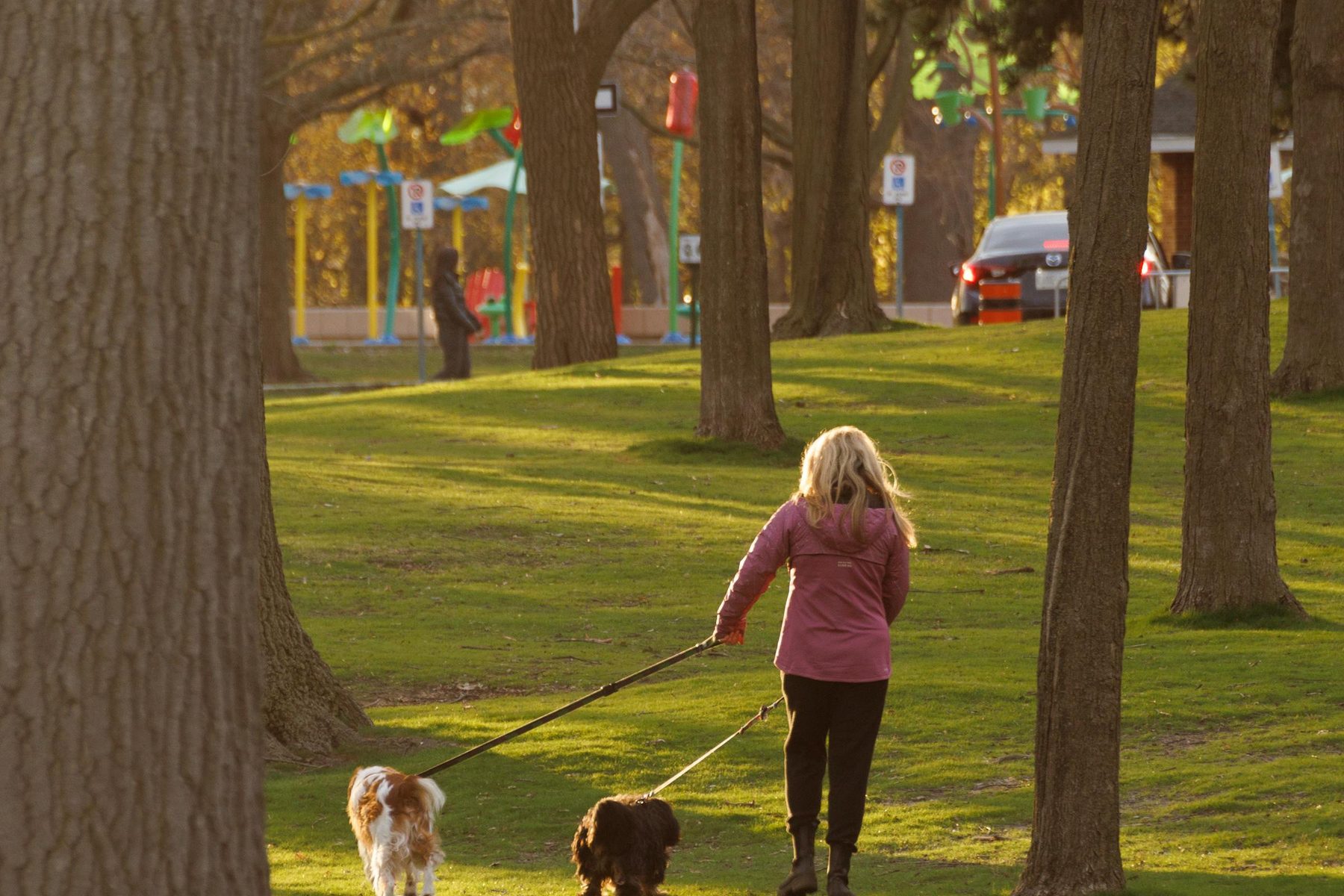
Wide routes and quieter spaces make it easier to avoid repeated reactions and reward calm choices.
Breed-Specific Notes
Any breed can be reactive.
Herding breeds may stare and lock onto movement. Terriers may escalate fast when frustrated. Guardian breeds may be sensitive near home, cars, or their person. Sporting breeds may pull toward dogs because they expect social access. Small dogs may react because larger dogs or strangers repeatedly crowd them.
Breed traits can explain patterns, but they do not change the basics: distance, body language, reward timing, and safe management.
When to Call a Professional
Call a qualified reward-based trainer, certified behavior consultant, or veterinary behavior professional if:
- your dog lunges with full force
- your dog has bitten or nearly bitten
- your dog redirects onto you
- your dog cannot recover after triggers
- your dog reacts in every normal walking route
- your dog is suddenly worse
- you feel unsafe
Professional help is not a last resort. It is the right tool when safety, timing, or setup is beyond what you can manage alone.
FAQ
What should you not do with a reactive dog?
Do not force greetings, punish reactions, walk straight toward triggers, flood your dog, hold constant leash tension, or practice in places that are too hard.
Should I correct my dog for barking at other dogs?
Do not rely on corrections. Create distance, reward earlier, and work below threshold. Corrections can add stress around the trigger.
Is avoiding triggers bad?
No. Avoiding overwhelming setups prevents rehearsal. Training works best when your dog notices the trigger but can still eat, move, sniff, or look back.
Should I make my dog sit when another dog passes?
Only if sitting keeps your dog loose and responsive. If it creates staring or stiffness, move away instead.
What if my dog already reacted?
Leave the situation calmly. Create distance first, then feed when your dog can reorient. Review what early sign you missed so you can act sooner next time.
When should I get help?
Get help if your dog lunges hard, redirects onto you, has a bite history, cannot recover, or makes walks feel unsafe.