It can feel confusing when your dog plays normally off leash but turns into a different dog on walks.
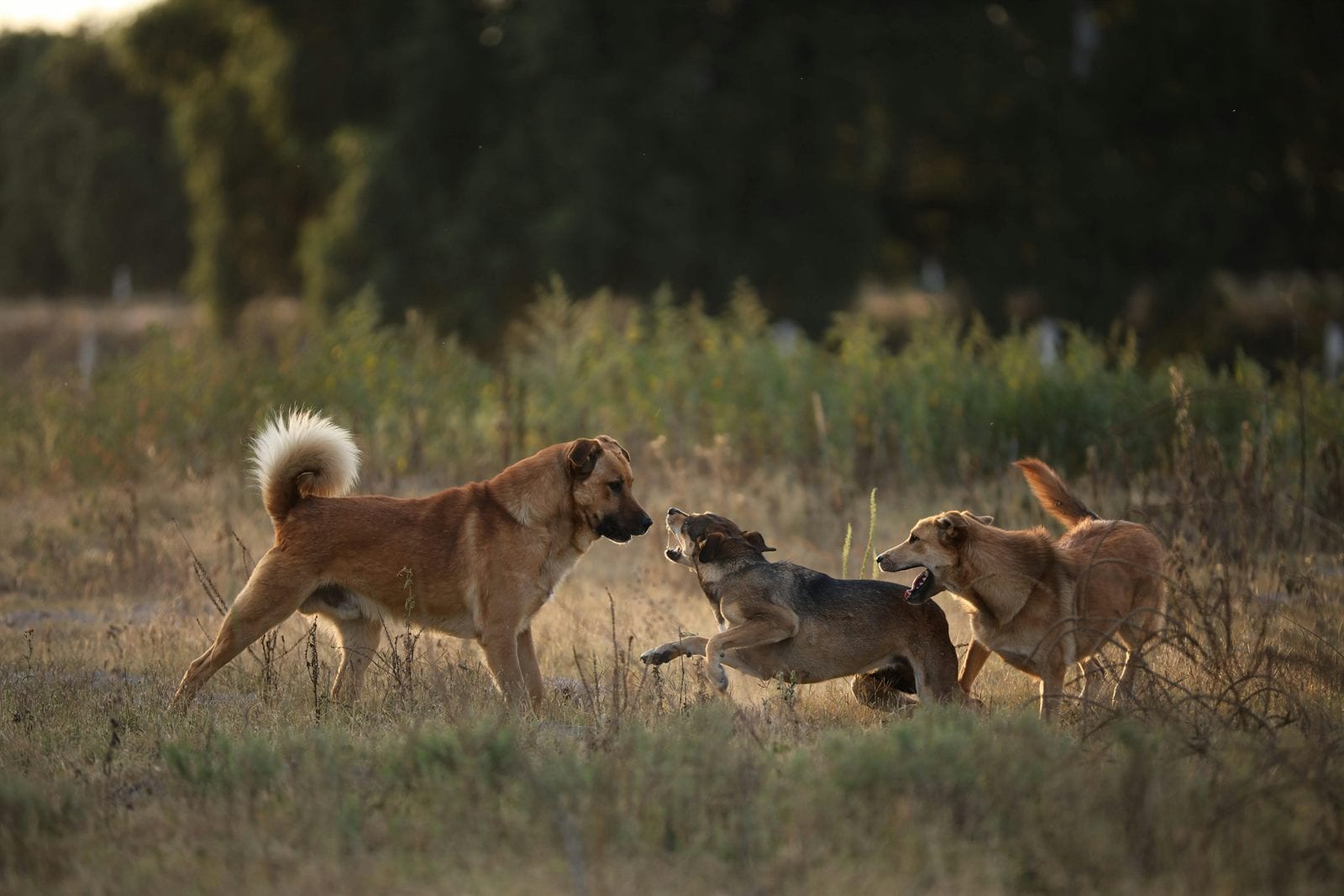
At the dog park, they may run, sniff, chase, and recover. On a leash, they stare, pull, bark, whine, lunge, or refuse to move when another dog appears.
The clear answer: the leash changes the situation. It limits your dog's movement, adds body pressure, blocks natural curved approaches, and can turn another dog into either "I need space" or "I need to get there now." Your dog may not be aggressive. They may be frustrated, trapped, overexcited, worried, or rehearsing a habit that has worked before.
The goal is not to prove your dog is social by letting them greet more dogs on leash. The goal is to teach your dog that seeing another dog on a walk does not require pulling, barking, or direct contact.
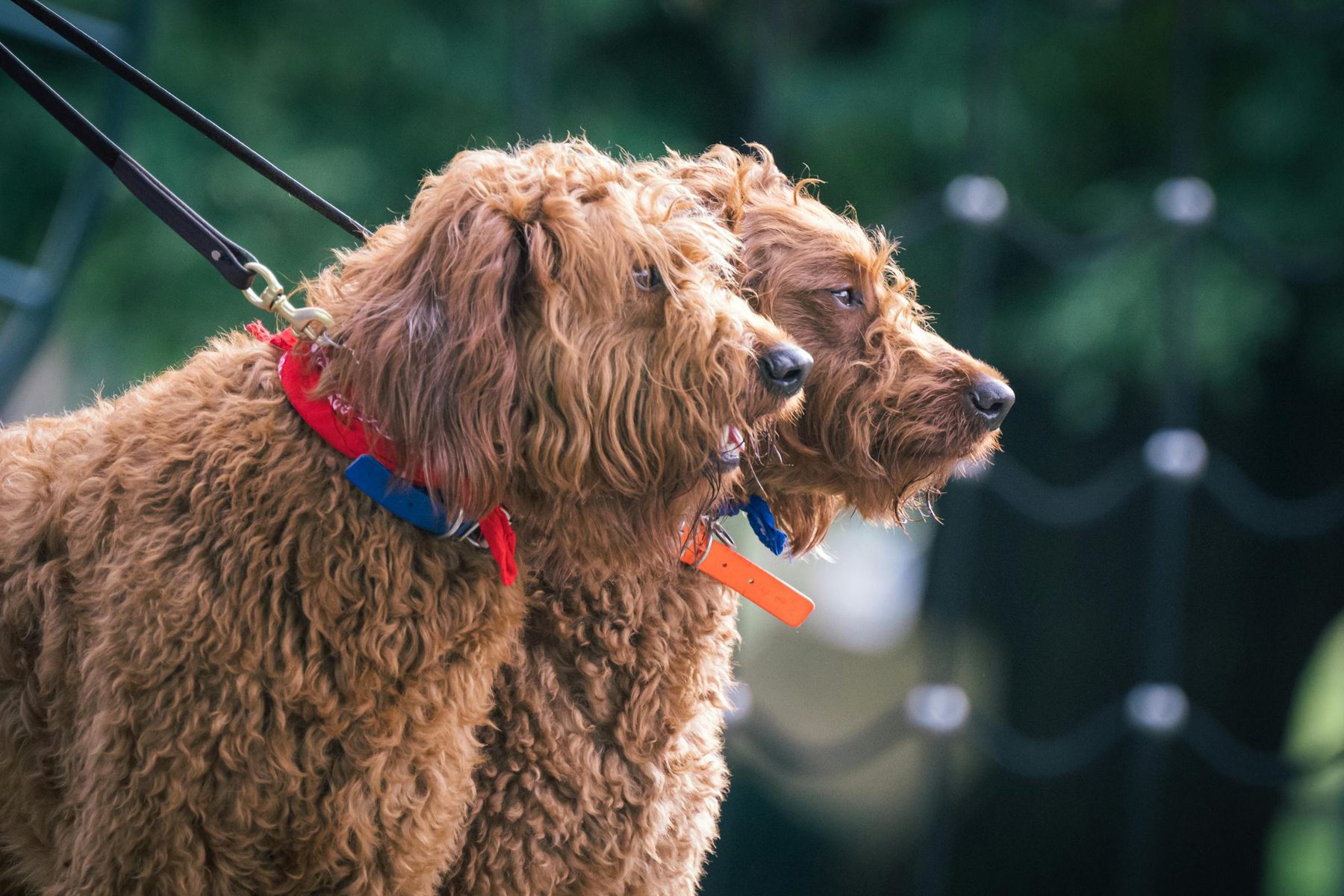
A dog can be social and still struggle when leash pressure, close distance, and direct approaches are added.
Why the Leash Changes Everything
Dogs do not usually greet in a straight line when they have space. They curve, pause, sniff the ground, look away, speed up, slow down, or leave.
A leash can remove those choices.
On leash, your dog may feel:
- trapped near a dog they would rather avoid
- frustrated because they want to reach the dog
- tense because the leash tightens around the chest or neck
- confused because every dog sighting sometimes leads to a greeting and sometimes does not
- blocked from using normal body language
Cornell University College of Veterinary Medicine notes that some dogs are fine with other dogs off leash but become reactive on leash, and that this is often called leash reactivity. That matches what many owners see: the problem is not just "other dogs." It is other dogs plus restraint, pressure, and limited space.
If your dog's reaction includes full-body launching, read dog lunging on leash alongside this article.
Leash Reactive Does Not Always Mean Aggressive
Some leash-reactive dogs want distance. Some want access. Some want both depending on the dog, location, or day.
A frustrated greeter may:
- pull forward with a loose, wiggly body at first
- whine or bark in a high, sharp way
- become more explosive when held back
- struggle most near familiar dogs or dog parks
A worried dog may:
- stiffen early
- close their mouth
- stare hard
- hide, freeze, or arc away
- bark when the other dog keeps approaching
The AKC explains that reactivity can look intense without always meaning the dog intends harm. Still, it deserves a serious plan. Repeated barking and lunging can become stronger over time, and a dog who feels trapped can escalate if pushed too close.
If barking at dogs is the main symptom, start with why dogs bark at other dogs on walks.
Why More Leash Greetings Usually Make It Worse
It is tempting to think, "If I let him say hi, he will calm down."
Sometimes the dog does calm down after greeting. The problem is what they learned before the greeting. If your dog stares, pulls, whines, barks, and then gets to meet the dog, the whole chain can become stronger.
Leash greetings also put dogs face-to-face in tight space. That is hard even for friendly dogs.
For now, make walks predictable:
- no random leash greetings
- no nose-to-nose meetings on narrow sidewalks
- no dragging your dog away after they have already greeted
- no using another dog as the reward for pulling
This does not mean your dog can never have dog friends. It means training walks need a different job.
What to Do Instead When Another Dog Appears
The useful moment is before the bark, before the lunge, and before the leash goes tight.
1. Find Working Distance
Working distance is the space where your dog can notice another dog and still think.
Your dog should be able to do at least one of these:
- take food
- look back at you
- sniff the ground
- turn with you
- keep the leash softer
- watch without locking on
If your dog cannot eat, cannot move, or is already screaming, you are too close. Move away first.
2. Reward the First Calm Look
When your dog sees another dog and stays quiet, mark it with "yes" or a click, then feed.
Feed near your leg or slightly away from the other dog. This matters. If you feed forward, your dog may keep leaning and staring. If you feed away, your dog practices noticing and then reorienting.
3. Move Before the Stare Builds
Many leash reactions start as a stare.
Do not wait for the bark to prove the setup was too hard. After one or two calm looks, move away, cross the street, step behind a parked car, or turn onto another path.
Short successful reps are better than one long sidewalk battle.
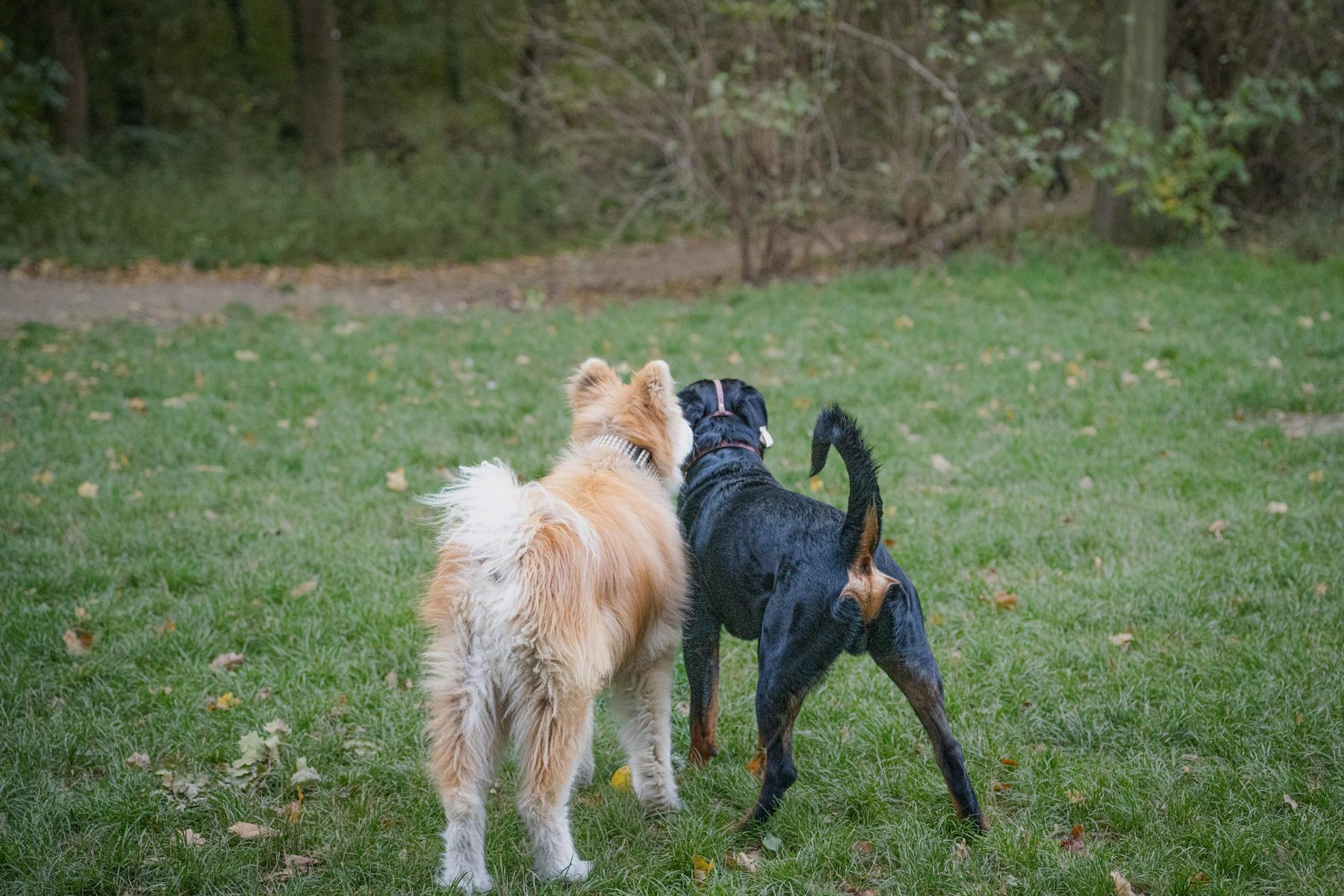
Off-leash comfort does not automatically transfer to leash walks. The leash adds restraint and changes how dogs can move around each other.
Use Parallel Walks, Not Direct Greetings
If you have a friend with a calm dog, skip face-to-face greetings at first.
Try parallel walking instead.
Start far apart. Walk in the same direction. Let both dogs sniff, move, and check in with their handlers. If both dogs stay loose and responsive, you can slowly reduce the distance over multiple sessions.
Keep the setup easy:
- neutral location
- wide path
- both dogs on comfortable equipment
- no tight leashes
- plenty of breaks
- end before either dog gets pushy
Parallel movement lowers pressure because the dogs are not staring directly at each other. It also gives you a way to practice dog sightings without making every sighting a greeting.
If your dog gets stuck and cannot move during these setups, the guide on dogs who freeze on walks will help you read that quieter stress response.
What About Dog Parks?
Dog parks are complicated for leash-reactive dogs.
Some dogs are truly relaxed in large off-leash spaces and only struggle when restrained. Other dogs look "fine" at the park because they are constantly moving, avoiding, rushing, or staying too busy to settle.
A dog park can also teach a dog that every dog is available. Then the normal rules of leash walking feel frustrating: suddenly dogs are visible but not reachable.
You do not have to quit the dog park forever, but be honest about what it is teaching.
Ask yourself:
- Does my dog rush straight at new dogs?
- Do they ignore recall around dogs?
- Do they seem more reactive on leash after park days?
- Can they calmly leave the park?
If the park makes leash walks worse, take a break and replace it with decompression walks, sniffing time on a long leash in legal safe spaces, or controlled play with one known dog.
A Simple Training Plan for the Next Two Weeks
Keep this boring and repeatable.
For the first few days, avoid close dog passes when you can. Cross early. Turn early. Skip crowded dog routes. Your dog does not need more practice exploding.
Then find a place where dogs appear far away: a park edge, a wide street, or the outside of a walking path. When your dog sees a dog, say "yes" and feed. If your dog stares too long, feed away and move.
In week two, add a simple pattern:
- dog appears
- "yes"
- treat by your leg
- turn and walk five steps
- scatter two treats on the ground
The pattern gives your dog something familiar to do instead of escalating.
If bikes, runners, or scooters also trigger the same chase-pull feeling, use the related plan for dogs who react to bikes on walks.
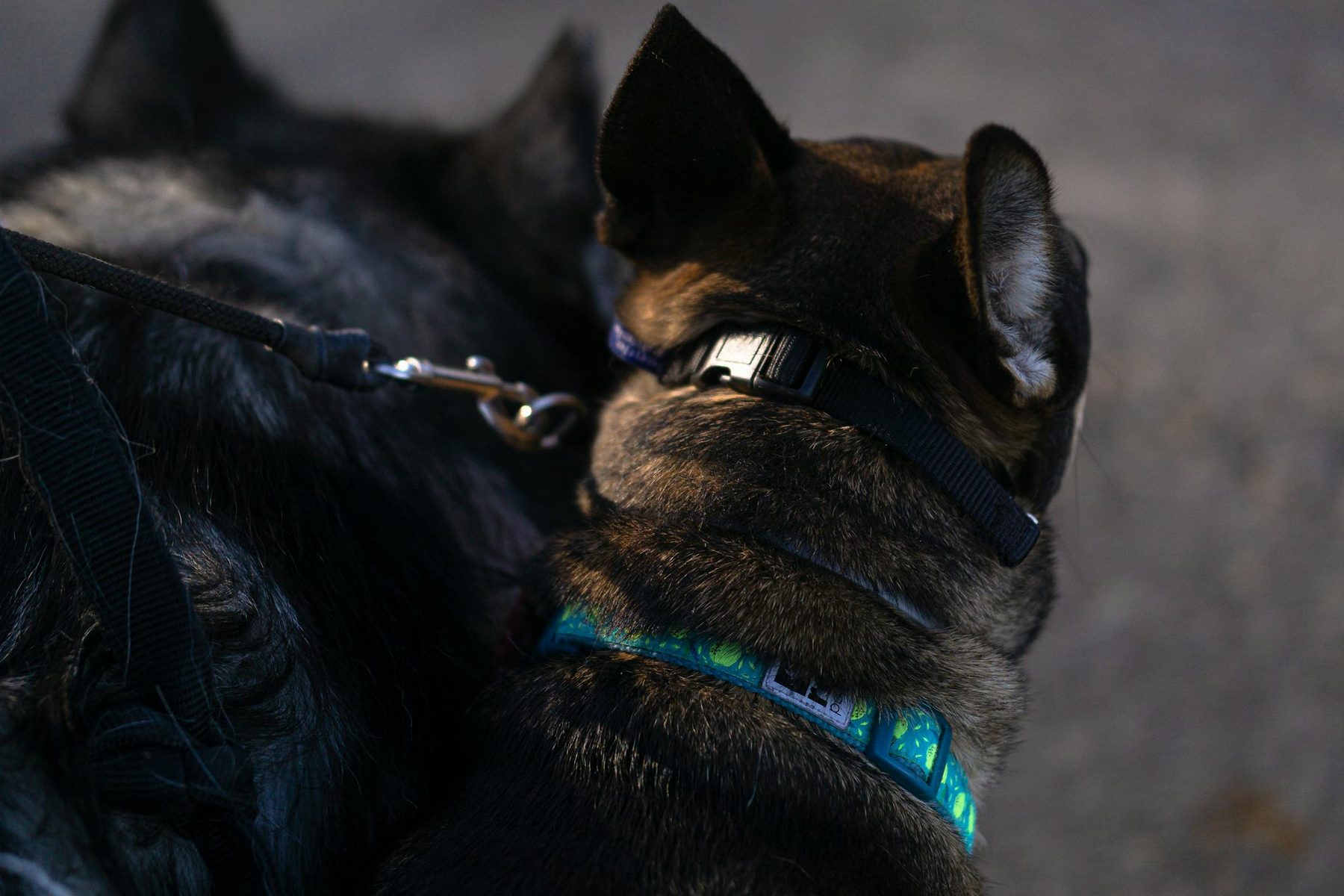
Watch the leash and the body. Once the dog is locked in and the leash is tight, create distance before asking for more.
Common Mistakes
The biggest mistake is letting your dog greet sometimes. Random greetings keep the slot machine alive. Sometimes pulling works, sometimes it does not, so your dog keeps trying harder.
Waiting too close is another common problem. If the other dog is already ten feet away and approaching head-on, training may be over for that moment. Move.
Avoid yelling, leash jerks, choke chains, prong collars, and shock collars. They can add stress to an already charged situation. The IAABC Standards of Practice reject methods that rely on pain, fear, or intimidation.
Also be careful around dog park gates. Dogs are arriving, leaving, crowding, and pulling in tight space. Use calmer locations first.
Breed-Specific Notes
Any breed can be reactive on leash.
Herding breeds may lock onto movement and stare before reacting. Terriers may escalate quickly when frustrated. Sporting breeds may become highly social and frustrated when blocked from greeting. Guardian breeds may be more sensitive when dogs approach their person, home, or car.
Breed tendencies can help explain the pattern, but they do not replace the plan: distance, predictable rules, calm observation, and no forced leash greetings.
Apartment and Neighborhood Notes
This issue is harder in apartment complexes and dense neighborhoods because dogs appear suddenly.
Use the environment:
- check before leaving your door
- wait for the next elevator
- avoid lobby pileups
- step behind cars
- choose quiet potty times
- leave the courtyard before dog traffic builds
For tight buildings, use the apartment-specific guide on walking a reactive dog in an apartment complex.
If your dog also pulls hard when no dogs are present, work on stopping leash pulling separately. A dog who already walks on a tight leash has less room to stay calm when a trigger appears.
When to Call a Professional
Call a qualified reward-based trainer, certified behavior consultant, or veterinary behavior professional if:
- your dog lunges with full force
- your dog has bitten or nearly bitten
- your dog redirects onto you or another household dog
- your dog cannot recover after dog sightings
- reactions are getting worse
- you cannot safely create distance where you live
- you feel anxious or unsafe on walks
A good professional can help you tell frustration from fear, set up helper-dog sessions, and choose a plan that does not rely on flooding or punishment.
FAQ
Why is my dog fine off leash but reactive on leash?
The leash changes movement and choice. Your dog may feel trapped, frustrated, or unable to greet or avoid dogs naturally.
Is my dog aggressive if they only bark on leash?
Not necessarily. Many leash-reactive dogs are frustrated, worried, or overexcited. Still, barking and lunging should be managed carefully because repeated reactions can become stronger.
Should I let my dog say hi to other dogs on walks?
Usually not while you are working on leash reactivity. Random greetings often reward pulling and staring. Use calm distance work and parallel walks instead.
Why does my dog pull toward every dog?
Your dog may expect access, especially if leash greetings or dog park play happen often. Teach that seeing dogs predicts food and calm movement, not automatic greetings.
Can dog parks cause leash reactivity?
They can contribute for some dogs. If a dog learns that every dog is available off leash, restraint on normal walks can become frustrating.
What if my dog reacts only to some dogs?
Track the pattern. Size, breed type, staring, barking, speed, location, and distance can all matter. Use more space around the dogs your dog finds hardest.