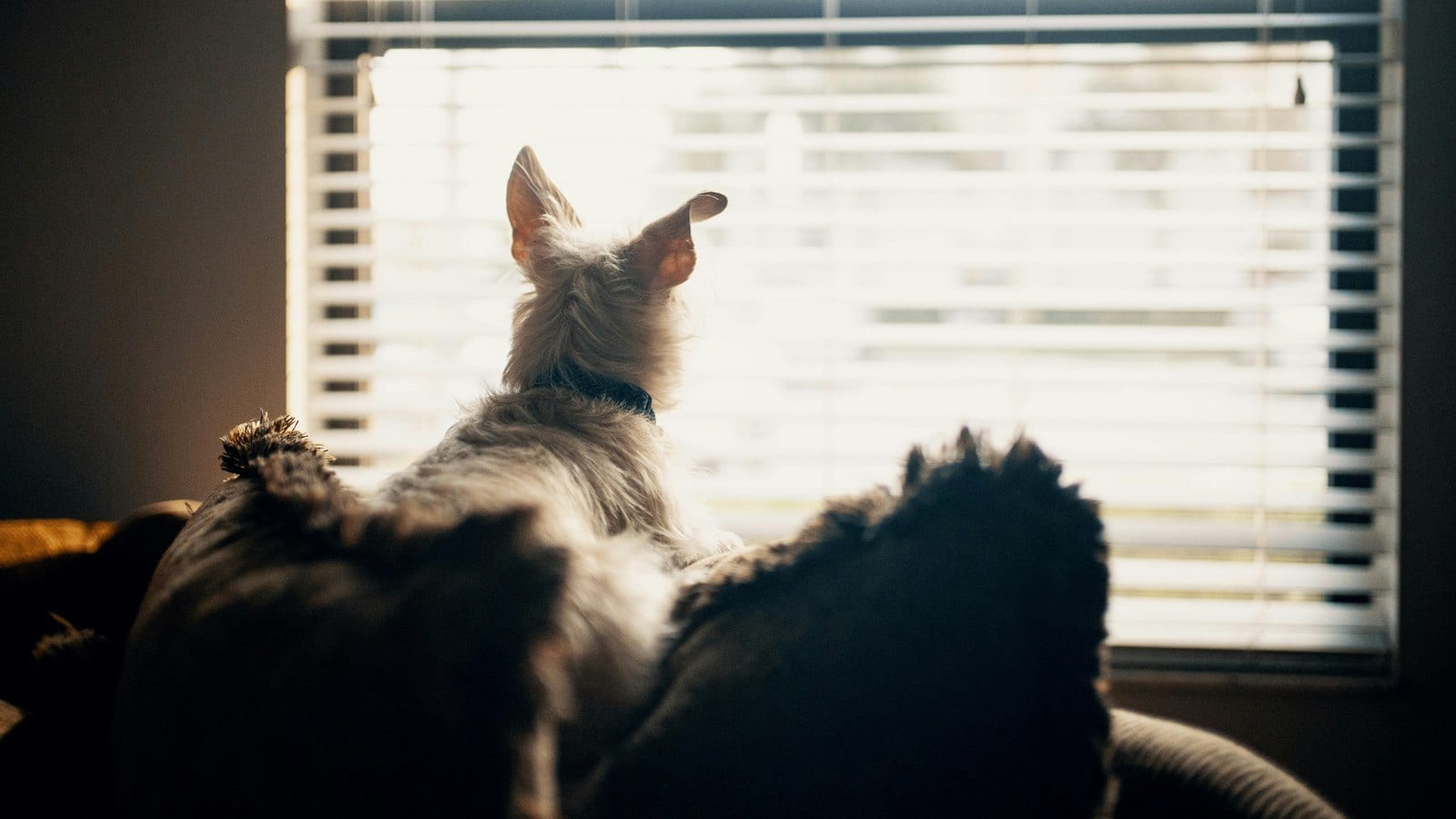
If your dog barks out the window all day, the window has probably become a job.
Your dog watches the sidewalk. A person appears. Barking starts. The person keeps walking and disappears. From your dog's point of view, the barking worked.
Then it happens again with a dog, bike, delivery worker, car door, neighbor, mail carrier, squirrel, or child on a scooter.
The clear answer: window barking improves when you reduce rehearsal and teach a new pattern away from the glass. Block part of the view, reward calm noticing, train a station behavior, and stop letting the window be your dog's full-time security desk.
You are not trying to make your dog ignore the world. You are teaching them that outdoor movement does not require a full alarm response.
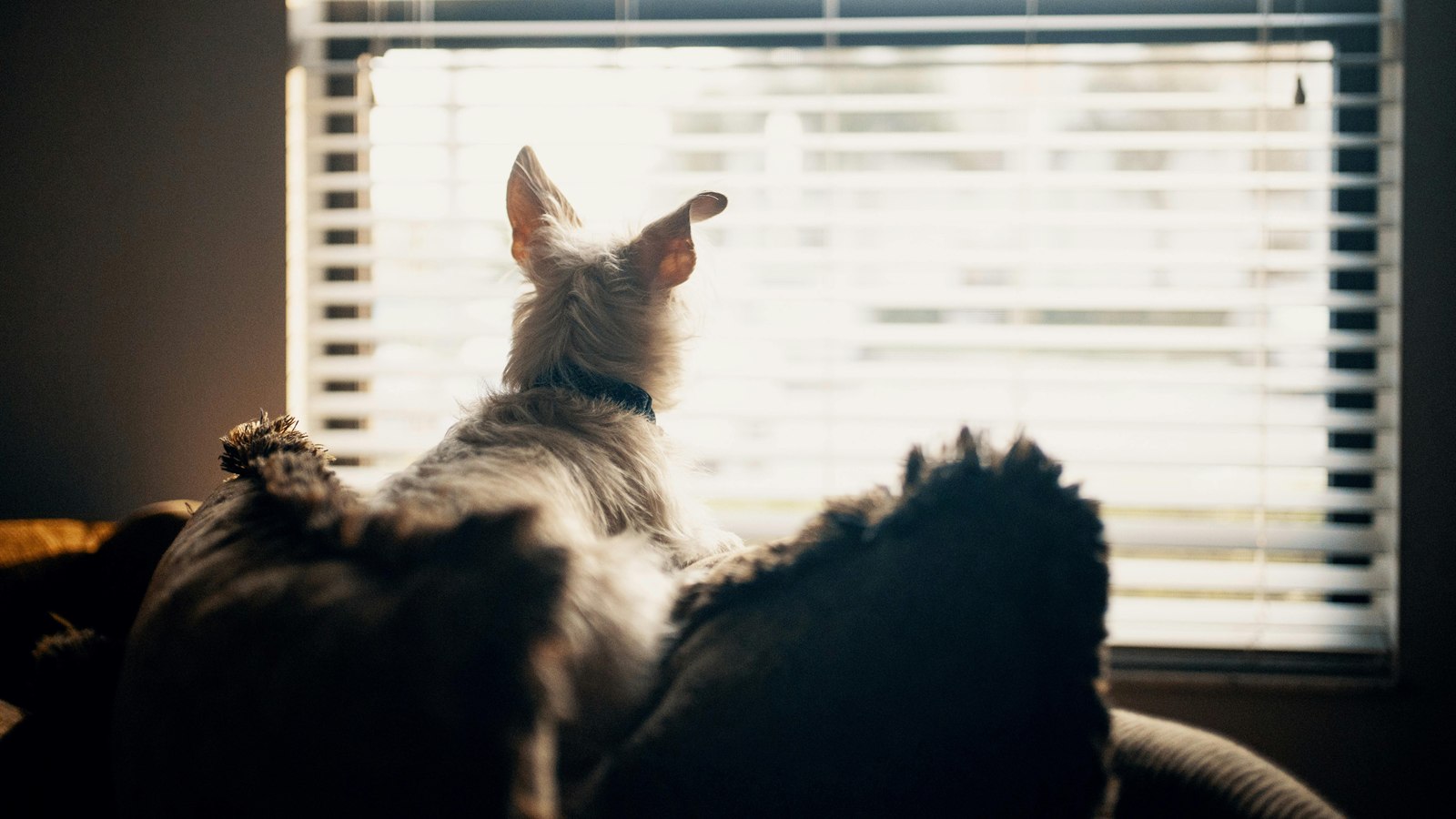
Window barking often starts as watching, then turns into a rehearsed reaction pattern.
Why Dogs Bark Out Windows
Window barking can come from several motivations at once.
Your dog may be:
- alarmed by sudden movement
- guarding the home area
- excited by dogs or people
- frustrated because they cannot reach the trigger
- bored and looking for stimulation
- startled by sounds outside
- rehearsing a habit that has worked before
That last point matters.
When a dog barks at someone walking past the house, the person almost always leaves. The dog may connect those events: "I barked, and the person went away." Even if the person was already leaving, the pattern can still reinforce the behavior.
Cornell's excessive barking guidance specifically notes that for window barking, owners should look beyond the immediate outdoor space and reduce exposure to triggers. The ASPCA also separates territorial, alarm, greeting, and frustration barking, which is useful because window barking can include pieces of each.
If your dog's window barking is mostly about people, pair this with dog barks at strangers on walks. If it is mostly about dogs, read dog barks at other dogs on walks.
First, Reduce Rehearsal
Training is much harder when your dog practices the old behavior fifty times a day.
Start with management.
Useful options include:
- frosted window film on the lower glass
- closing blinds during busy times
- moving couches and chairs away from windows
- using baby gates to block the room
- keeping your dog in a quieter room during delivery hours
- using white noise near street-facing windows
- closing curtains before school pickup, mail delivery, or evening dog-walking traffic
This does not mean your dog can never look outside. It means they should not spend hours scanning for triggers and escalating.
The AKC's window-barking advice includes blocking the view as a practical first step, and that is often the fastest way to lower the daily arousal load.
For many reactive dogs, management is not optional. It is how you stop the behavior from getting stronger while you teach something better.
The Problem With "Watching"
Some owners hesitate to interrupt window watching because the dog looks calm at first.
But calm watching can quietly build.
Watch for:
- closed mouth
- stiff posture
- ears fixed forward
- tail held high or still
- slow growling
- weight shifting forward
- breathing getting faster
- dog ignoring you
- dog tracking movement without blinking
That is not relaxed observation. That is loading.
If your dog is already locked on, you waited too long. Move them away, lower the view, and try again later at an easier moment.
A useful goal is not "my dog can stare out the window for three hours." A better goal is "my dog can notice outdoor movement, then disengage."
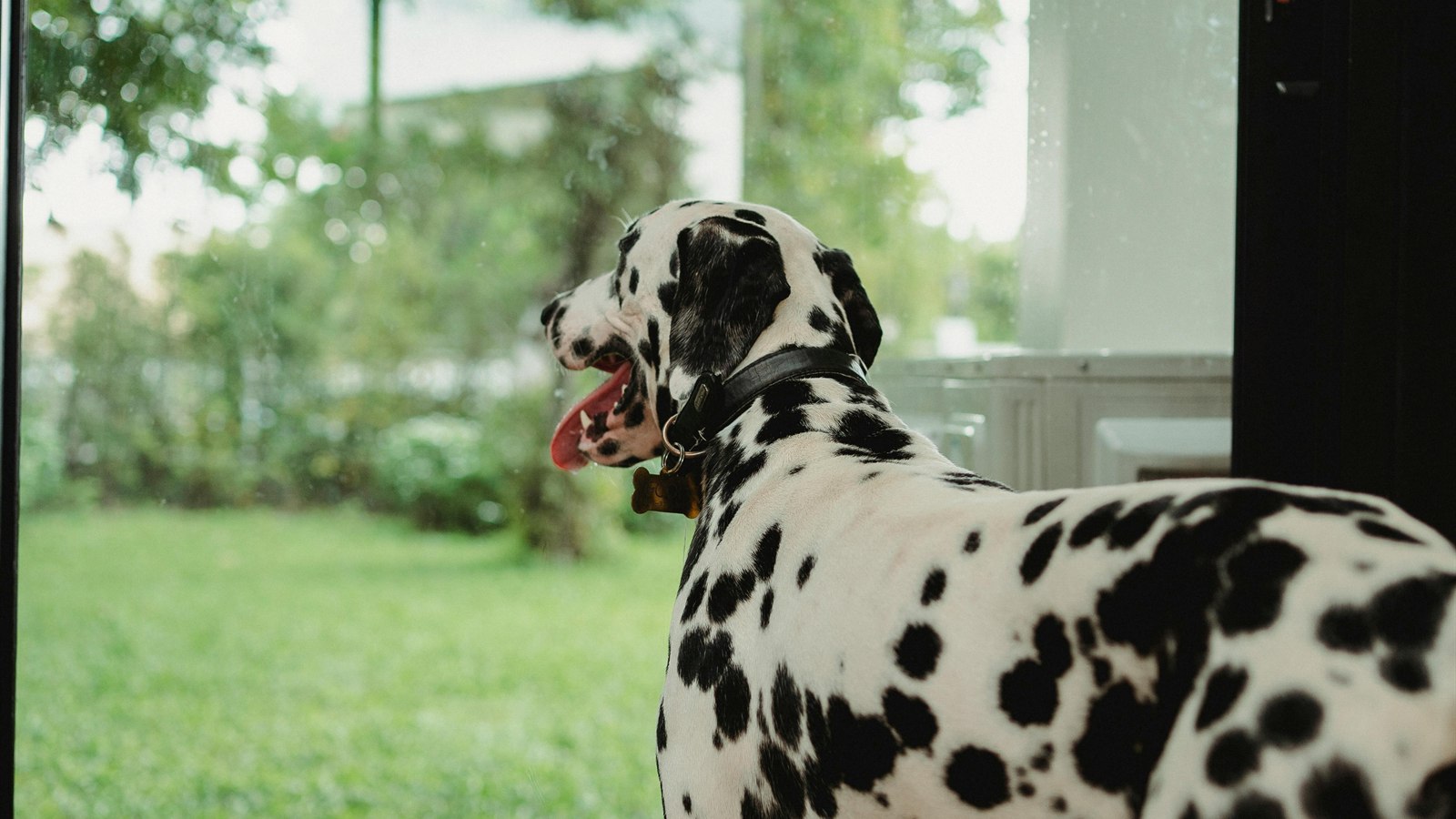
A dog can be quiet and still be building toward a reaction. Reward the turn-away, not the stare.
Teach a Window Station
Your dog needs somewhere else to go.
Choose a station away from the window:
- mat
- bed
- crate
- couch away from the glass
- rug behind a gate
- quiet room
Train it when nothing is happening outside.
Start simply:
- Toss a treat onto the station.
- Let your dog step onto it and eat.
- Toss a treat away so they reset.
- Repeat until they move to the station quickly.
- Add a cue such as "place," "bed," or "away."
- Reward one second of staying.
- Build to five seconds, then ten, then thirty.
Only after the station is easy should you add window triggers.
This station can also help with dog barks at the doorbell, because door and window reactions often share the same home-alert pattern.
Reward the First Look, Not the Explosion
Timing matters.
The useful training moment is when your dog notices the trigger and can still respond.
That might look like:
- ears turn toward the sidewalk
- head lifts
- eyes find a person
- body pauses
- mouth closes briefly
- dog leans toward the window
Mark that moment with "yes" or a click, then feed away from the window.
If your dog turns back to the window, mark and feed away again if they are still calm. If they bark, move them away and lower the difficulty.
Do not hold food at the window while your dog stares and vibrates. That can create a dog who eats and reacts at the same time.
Use the same principle from best treats for reactive dog training: food is useful only when the dog is under threshold enough to learn.
Train a "Window Away" Cue
A separate cue can help when you see your dog drifting toward the window.
Try this:
- Say "away" in a normal voice.
- Toss a treat behind your dog, away from the window.
- Let them eat it.
- Toss another treat onto their station.
- Repeat with no outdoor triggers first.
Over time, "away" starts to mean: turn from the window and move to the reward zone.
Do not poison the cue by using it only when your dog is already exploding. Practice during easy moments until the movement is automatic.
If your dog is barking hard, skip the cue and manage. Close the curtain, guide them out of the room, or use a leash if needed.
Set Up Controlled Practice
Real sidewalks are unpredictable.
Use a helper if you can.
Ask the helper to:
- walk past far from the window
- stand still at a distance
- walk by slowly
- avoid staring at your dog
- stop before your dog loses control
- repeat the same easy pass several times
Your job is to reward your dog for noticing and turning away.
Do not begin with a helper walking right up to the glass, ringing the doorbell, and waving. That is too much for most dogs.
Start with the easiest version that keeps your dog successful. Then add difficulty slowly.
What If Your Dog Barks at Dogs Outside?
Dogs outside are often harder than people.
They move unpredictably. They sniff, stop, stare, bark back, or pull toward the house. Your dog may be frustrated, territorial, scared, or socially excited.
Use more management for dog-heavy times.
Practical changes:
- close the view during busy walking hours
- avoid letting your dog watch known dog routes
- reward before the outside dog gets close
- move your dog to a station farther from the window
- use higher-value food for dog sightings
- end the session before your dog is frantic
If your dog also reacts to dogs on leash, the window may be adding fuel to the same pattern. Use dog barks at other dogs on walks as the walking plan.
What If Your Dog Barks at Cars, Bikes, or Delivery Workers?
Fast movement is a common trigger.
Cars, bikes, scooters, runners, delivery carts, and mail carriers appear and disappear quickly. That speed can create a chase-like response.
For fast triggers, do not wait.
Reward as soon as your dog notices. If you cannot reward before barking, block that view during high-traffic times and train with slower setups first.
For vehicle-specific reactivity, use dog reacts to cars on walks. For bikes and scooters, use dog reacts to bikes on walks.
Do Bark Collars Fix Window Barking?
They may suppress noise, but they do not solve the underlying pattern.
VCA warns that punishment can increase barking and anxiety when the barking is tied to anxiety or territorial response. Cornell also recommends addressing the cause rather than relying on anti-bark collars or shock collars.
For window barking, the goal is not just less sound. The goal is a dog who can:
- notice movement
- stay safer around glass
- turn away
- recover faster
- settle in another place
If a tool reduces noise but leaves the dog tense, staring, and ready to explode, the training problem is still there.
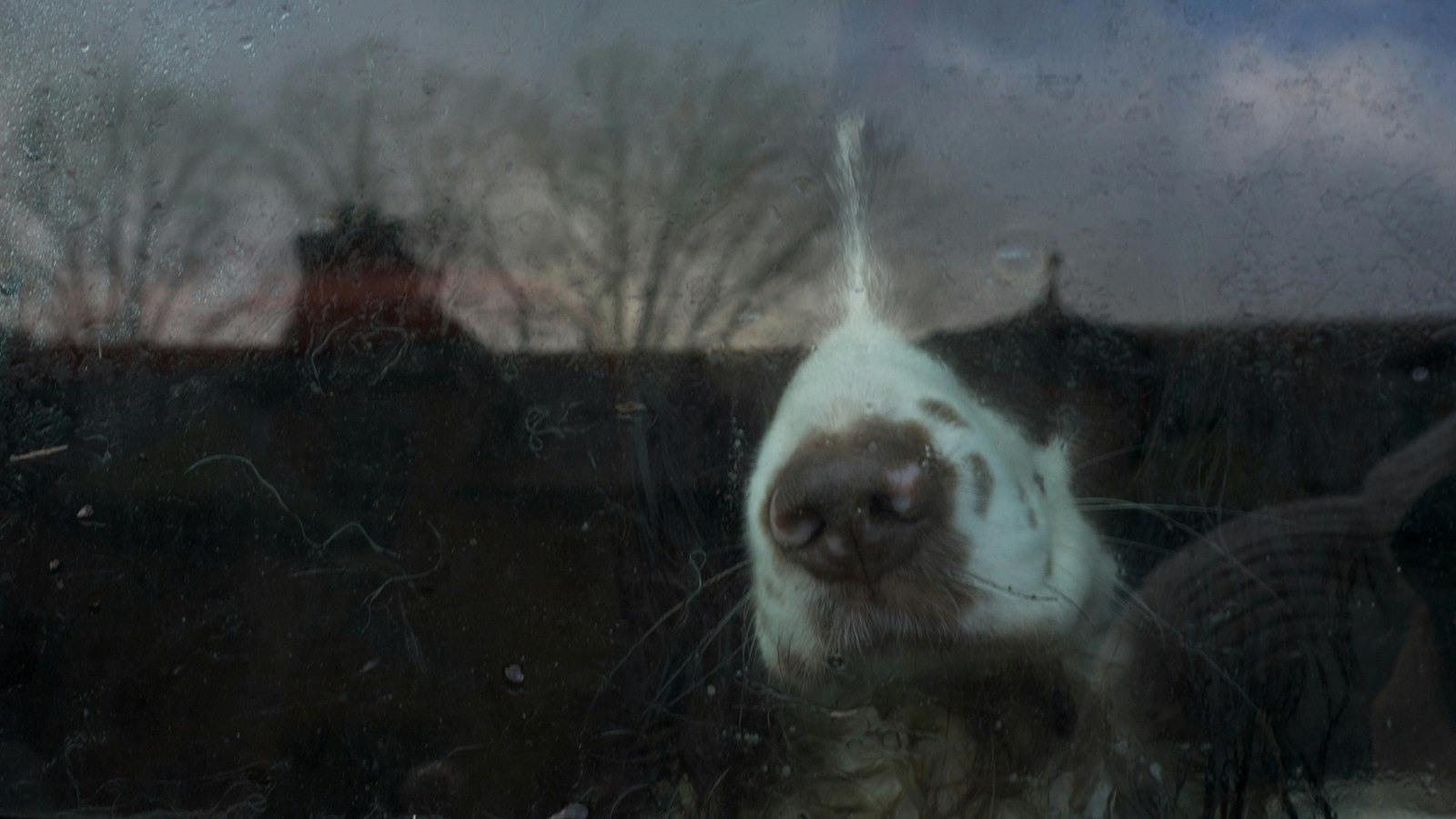
When a dog is this close to the glass, management and distance usually need to come before training.
Safety Around Glass
Some dogs do more than bark.
They slam into the window, scratch glass, jump at blinds, chew window trim, or shove through screens. That is a safety issue.
Use barriers immediately:
- close the room
- block access with gates
- remove furniture that lets the dog launch
- use window film
- install stronger screens if needed
- keep leashes away from blinds and cords
- prevent unsupervised access to risky windows
Do not rely on verbal cues if your dog is already launching. Physical management is the safer first step.
Call a professional if your dog throws their body at glass, redirects onto another pet, or becomes difficult to move away.
A Daily Window Plan
Use this simple structure for two weeks.
Morning
Before peak sidewalk traffic, decide which windows are open to view and which are blocked.
Give your dog a legal activity away from the window:
- breakfast puzzle
- chew
- scatter feeding
- short training session
- sniff walk if the environment is easy
Midday
Practice five easy repetitions:
- Dog looks toward window.
- You say "yes."
- Food appears away from window.
- Dog moves to station.
- Release after a few seconds.
Keep it boring and short.
Busy Times
Use management.
Close the blinds, block the room, or use white noise. Do not make your dog train through the hardest part of the day before the skill is ready.
Evening
Do one calm station session with no window triggers.
The station should become familiar and valuable, not only associated with hard moments.
Common Mistakes
The first mistake is letting the dog watch all day and only intervening after barking starts.
The second mistake is rewarding too late. If the dog is already barking hard, create distance first.
The third mistake is leaving a couch directly under the trigger window. That turns the window into a lookout platform.
The fourth mistake is yelling from another room. Your urgency can add to your dog's alarm.
The fifth mistake is opening the blinds during the busiest times and hoping the dog will self-control their way through it.
The sixth mistake is removing management too soon. Keep the view controlled until your dog has weeks of easier wins.
When to Call a Professional
Contact a qualified reward-based trainer, certified behavior consultant, or veterinary behavior professional if your dog:
- lunges into glass
- redirects onto people or other pets
- growls when moved from the window
- guards windows or furniture
- cannot recover after triggers leave
- reacts to every small sound outside
- has separation-related distress
- has suddenly started barking more than usual
Sudden behavior changes can also deserve a veterinary check, especially if your dog seems more anxious, painful, confused, or sensitive to sound.
Breed-Specific Notes
Any dog can develop window barking.
Herding breeds may track movement closely. Terriers may escalate quickly when frustrated. Guardian breeds may take property boundaries seriously. Hounds may bark at sounds and scents outside. Small dogs may use furniture and window ledges as lookout posts because the view is otherwise hard to reach.
Breed can shape the trigger pattern, but the plan stays practical: reduce rehearsal, reward calm noticing, teach a station, and build recovery.
FAQ
Why does my dog bark out the window?
Your dog may be alarmed, territorial, bored, excited, or frustrated. Window barking also gets reinforced because people, dogs, cars, and delivery workers usually leave after your dog barks.
Should I let my dog look out the window?
Some dogs can look calmly. Dogs who bark, growl, lunge, or stay tense need limited access while you train a calmer pattern.
Is window film a good idea?
Yes. Frosted window film can reduce visual triggers while still letting in light. It is especially useful for street-facing windows, apartment windows, and low glass doors.
How do I reward my dog without making barking worse?
Reward before barking, when your dog first notices the trigger and can still turn away. If barking has already started, move your dog away first and reward after they can think again.
Why does my dog bark more at delivery people?
Delivery workers approach the home and then leave quickly. That pattern can make barking feel successful to your dog, especially if they are alarmed or territorial.
Can window barking make leash reactivity worse?
It can contribute to the same arousal pattern. If your dog spends the day reacting to dogs or people through glass, they may start walks already keyed up.
When should I call a trainer?
Call a professional if your dog hits the glass, redirects, guards the window, cannot settle, reacts to every outdoor movement, or seems increasingly distressed.