Apartment fit
Cavaliers often fit apartments well when they get walks, companionship, and quiet routines.
 United Kingdom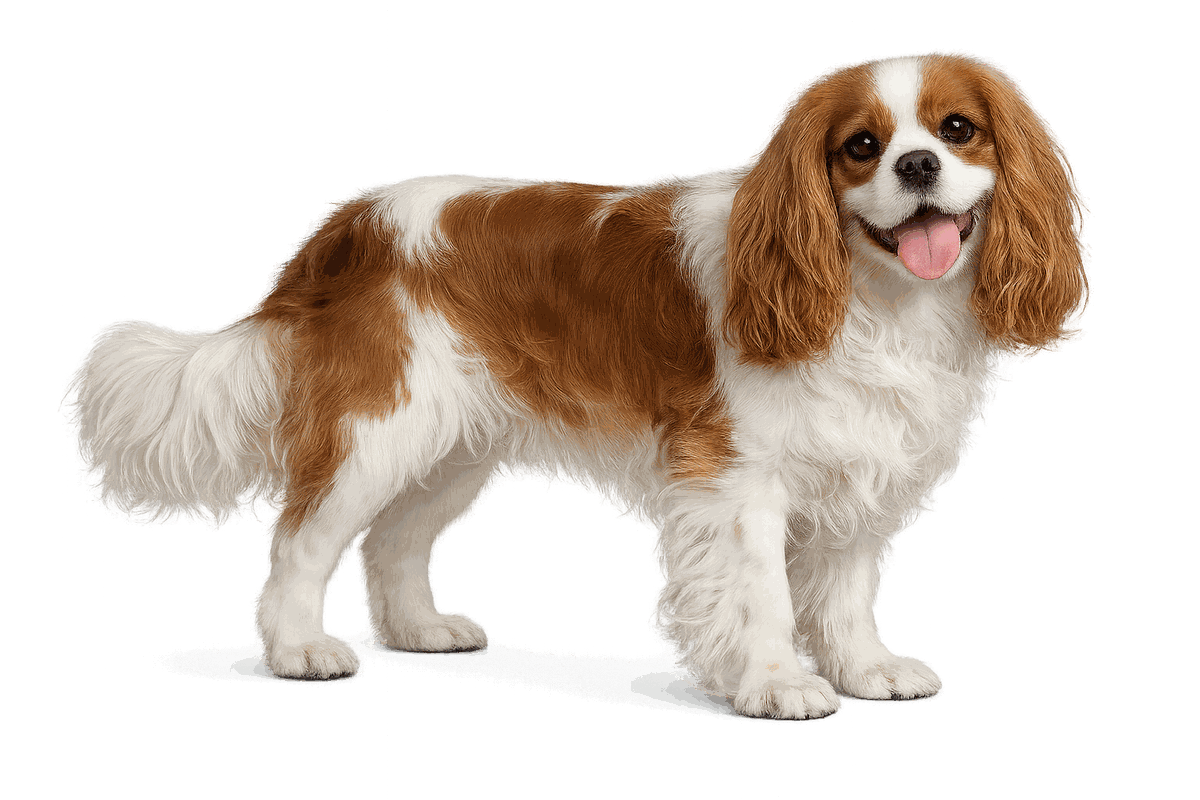
Weight
13-18 lb
Height
12-13 in
Lifespan
12-15 yrs
Coat
Double Medium
The Cavalier King Charles Spaniel is a small British toy spaniel with a silky coat, gentle companion temperament, and important heart and neurologic health risks.
Official, native, and commonly used variants
Weight
13-18 lb
Height
12-13 in
Lifespan
12-15 yrs
Coat
Double Medium
At A Glance
A quick read on energy, upkeep, and what day-to-day life with this breed usually feels like.
Energy
Moderate
Barking
Moderate
Drooling
Low
Shedding
Moderate
Grooming
3/5
First-time owner
Yes
The Cavalier King Charles Spaniel is a small companion spaniel from Britain, valued for its affectionate nature, soft expression, and willingness to live closely with people. It is usually friendly and adaptable, but it still benefits from normal walks, play, training, and social contact.
The silky medium coat comes in four classic colors: Blenheim, tricolor, black and tan, and ruby. The coat needs regular brushing around ears, feathering, legs, and tail to prevent tangles.
Cavaliers are often easy to love, but health screening is critical. Responsible breeders should discuss mitral valve disease, syringomyelia or Chiari-like malformation, eye disease, patellas, hips, and other inherited concerns.
This breed tends to suit homes looking for a affectionate, gentle, graceful companion, with daily rhythms shaped by moderate energy, moderate barking, and low drooling.
Coat type
Double
Coat length
Medium
Shedding
Moderate
Colors
Blenheim, Tricolor, Black and Tan, Ruby
Cavaliers often fit apartments well when they get walks, companionship, and quiet routines.
They are usually sociable companion dogs. Barking often comes from alerting or being left alone too long.
Use gentle reward-based training with recall, leash manners, handling, and alone-time confidence. Harsh handling is a poor fit.
The silky coat sheds moderately and needs brushing around ears, legs, tail, and feathering to prevent tangles.
Most healthy adult Cavaliers need gentle daily walks and play, often around 30 to 60 minutes total, adjusted for heart, breathing, orthopedic, and weather concerns.
Brush the silky coat several times a week, especially ears, feathering, tail, and friction areas. Check ears, nails, teeth, and skin regularly.
Use kind reward-based training with recall, leash manners, handling, and calm alone-time practice. Cavaliers usually want to cooperate and should not be handled harshly.
Feed a measured small-dog diet and keep the Cavalier lean. Extra weight can worsen heart, joint, and breathing comfort.
Energy level
Moderate
Barking level
Moderate
Drooling level
Low
Watchdog ability
4/5
Guard dog ability
1/5
Climate tolerance
Common concerns to discuss with your vet and breeder.
This profile was researched from established breed and canine-care references. Breed tendencies describe typical patterns, not a guarantee for every individual dog.
Reviewed by the Dogs Index Editorial Team. For health or behavior concerns, consult a veterinarian or appropriately qualified professional.
Our Shop
Browse practical products for feeding, grooming, cleanup, enrichment, and smoother daily routines.