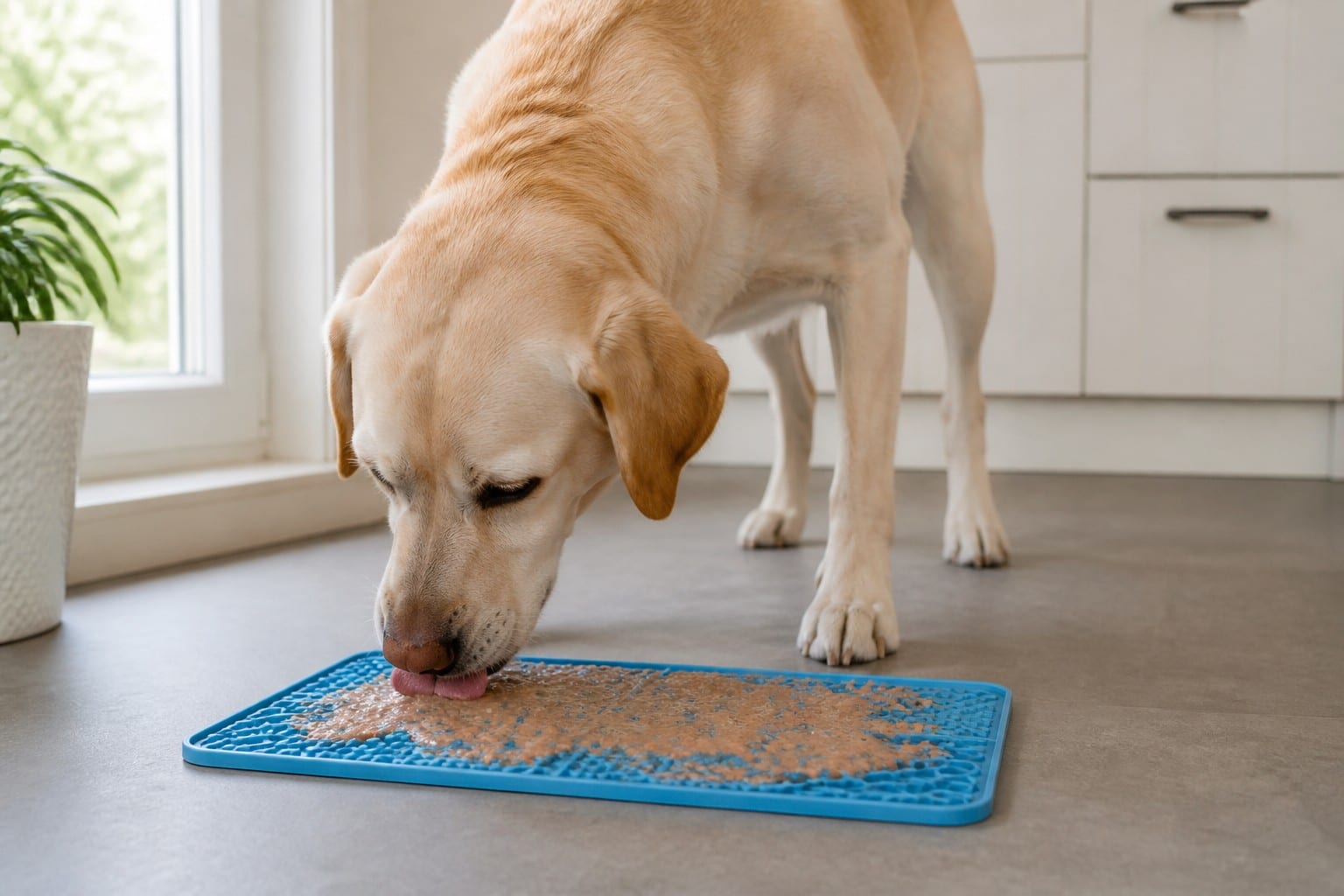
A lick mat can make a spoonful of food last longer than it would in a bowl. That makes it useful on a rainy afternoon, during a quiet break, or whenever you want to add variety without setting up a complicated puzzle.
The clear answer: a lick mat for dogs is a textured feeding surface designed for a thin layer of spreadable food. It can provide simple, low-movement enrichment when you use a suitable portion, supervise the dog, and wash the mat after every session.
It is not a chew toy, a treatment for anxiety, a replacement for dental care, or an activity to leave down all day.
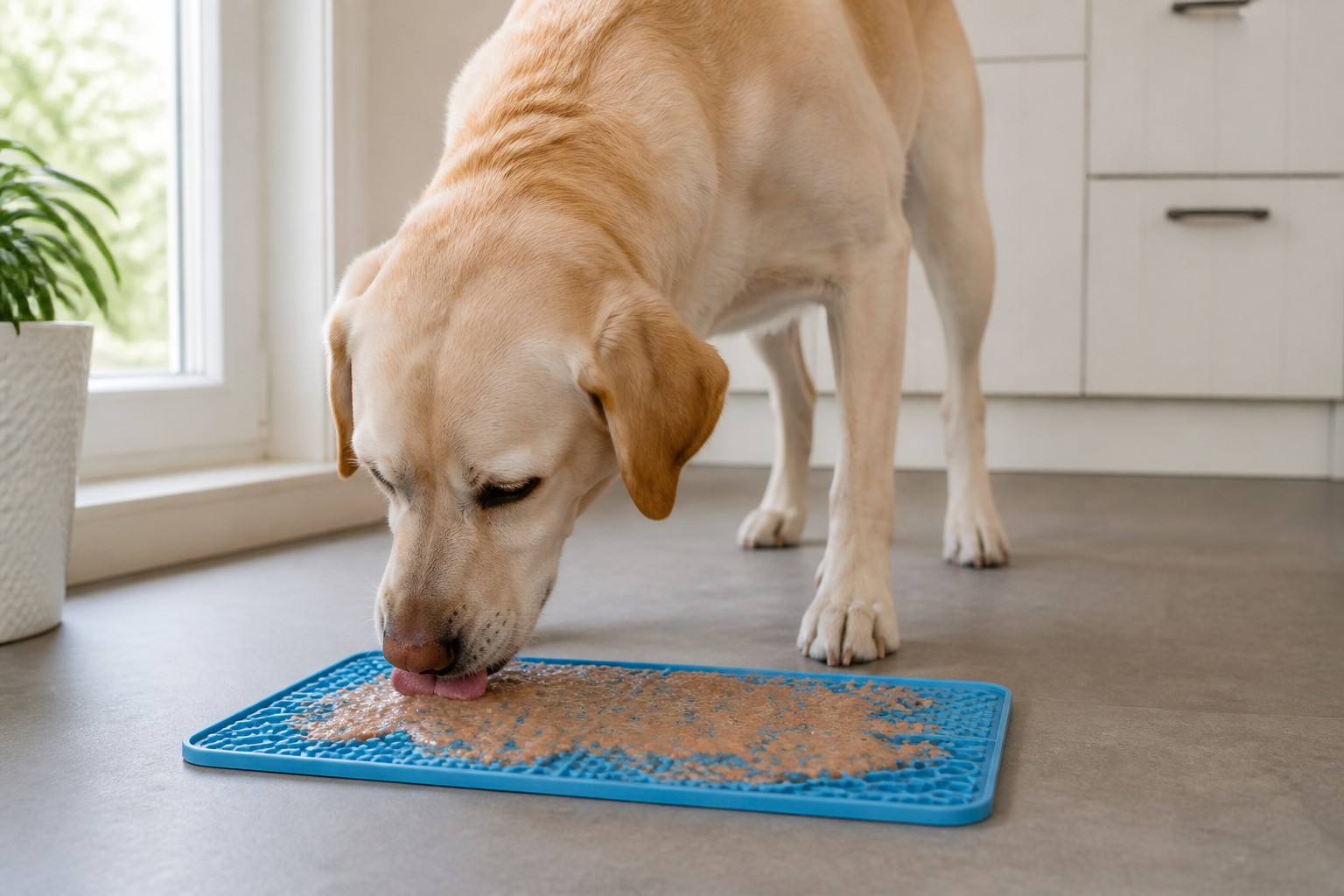
A useful lick-mat session involves steady licking, a modest amount of food, and supervision close enough to stop chewing.
What Is a Dog Lick Mat?
A lick mat is a flat rubber or silicone surface covered with ridges, grooves, bumps, or shallow pockets. You press spreadable food across that texture so the dog must lick around the pattern to remove it.
VCA Hospitals includes licking toys among food-enrichment options that encourage species-typical behavior. The activity is mechanically simple, which can make it more accessible than a puzzle requiring a dog to push, flip, or carry moving parts.
The enrichment comes from changing how the food is obtained. The mat does not create extra nutritional value, and a more complicated pattern is not automatically better.
For a balanced routine that also includes sniffing, movement, play, chewing, and exploration, start with the hub guide to dog enrichment ideas.
Are Lick Mats Good for Dogs?
They can be useful for many dogs when the setup is safe and appropriate.
A lick mat may:
- turn part of a normal meal into an activity
- encourage licking without requiring much floor space
- give a dog a quiet indoor option
- make a small amount of spreadable food take longer to consume
- provide low-impact enrichment for some senior or recovering dogs
- help create a positive routine around calm handling when introduced carefully
These are practical enrichment benefits, not guarantees. A lick mat should not be marketed as curing separation anxiety, stopping all stress, cleaning a dog's teeth, or preventing gastric dilatation-volvulus.
If your dog has anxiety, compulsive licking, guarding, swallowing trouble, or a medical condition affecting appetite, ask your veterinarian or a qualified behavior professional for an individual plan.
How to Choose a Lick Mat
Look for a mat that is:
- sold as food-safe
- large enough that your dog cannot easily swallow it
- made without cracks, sharp edges, or loose pieces
- easy to wash thoroughly
- stable on the surface where you will use it
- textured deeply enough to hold food but not impossible to clean
Suction cups may help on a smooth wall, bathtub, or tile floor, but test them before adding food. A mat that suddenly slides or falls can startle a dog.
Check the manufacturer's instructions for dishwasher use, freezing, temperature limits, and replacement. Do not boil a mat unless its care instructions specifically allow it. Heat can warp or damage some materials.
How to Introduce a Lick Mat
Keep the first session easy.
- Choose a quiet place away from other pets.
- Put the mat on a stable, washable surface.
- Measure a small amount of suitable food.
- Spread it thinly over an easy section of the mat.
- Place the mat down and let your dog investigate.
- Supervise until the food is gone.
- Pick up, inspect, and wash the mat.
Do not push the dog's face toward it or hold the dog in place. If your dog sniffs once and walks away, try familiar food, less texture, or an easier enrichment activity.
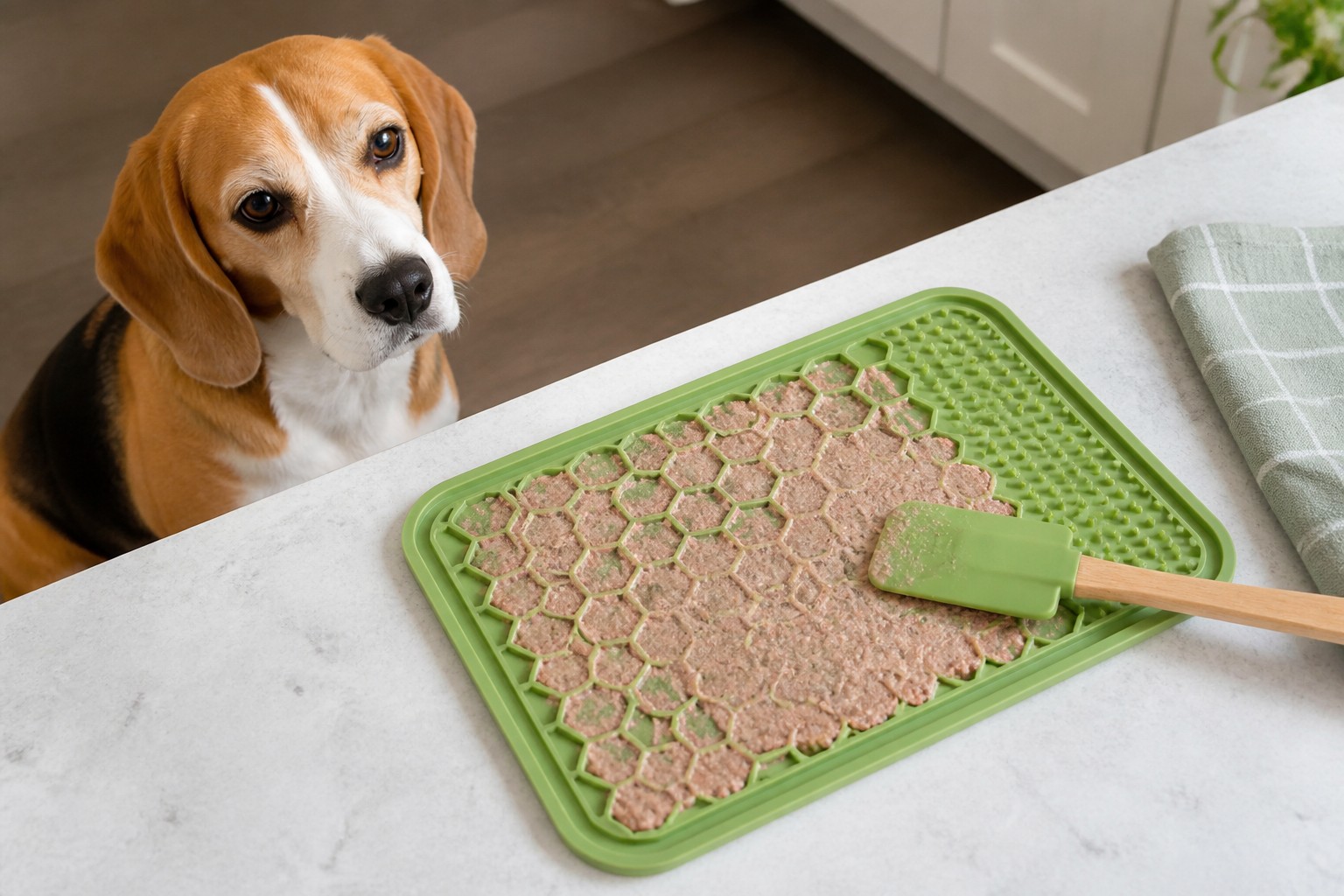
A thin, measured layer is enough for a first session. Filling every groove adds calories and can make cleanup harder.
What to Put on a Lick Mat for Dogs
The safest starting point is usually food your dog already eats successfully.
The Dog's Normal Wet Food
Spread part of the measured meal across the mat. This adds enrichment without introducing a new ingredient or unplanned treat calories.
Softened Kibble
Soak kibble in warm water until soft, then mash it. Allow it to cool before serving. Check with your veterinarian before changing how prescription food is prepared.
Veterinary or Prescription Diets
Some canned prescription diets spread easily, but only use food prescribed for that dog. If your dog is on an elimination trial, do not add yogurt, nut butter, fruit, broth, or flavored products unless the veterinarian managing the trial approves them.
Occasional Extras
Depending on the individual dog, a veterinarian may approve a small amount of plain pumpkin puree, plain unsweetened yogurt, or xylitol-free peanut butter. These are optional treats, not necessary parts of a lick mat.
Introduce only one new food at a time and use a small amount. Stop feeding it if your dog develops vomiting, diarrhea, itching, or another concerning reaction.
Foods and Ingredients to Avoid
Never add a food simply because it spreads well.
Avoid products containing:
- xylitol, also called birch sugar or wood sugar
- chocolate or cocoa
- grapes or raisins
- onions, garlic, chives, or leeks
- macadamia nuts
- alcohol or caffeine
- excessive salt, sugar, fat, or seasoning
The FDA warns that xylitol is poisonous to dogs and can appear in some peanut and nut butters as well as other sugar-free products. Read the complete ingredient label every time, including when you buy a familiar product in new packaging.
If you think your dog consumed xylitol, contact a veterinarian, emergency clinic, or animal poison-control service immediately. Do not wait for symptoms.
Broth also requires care. Many products made for people contain onion, garlic, high sodium, or other unsuitable ingredients. Plain water or the dog's normal food is a simpler default.
Count the Calories
A lick mat can hide how much food you are serving. Several spoonfuls of peanut butter or cheese may contain far more calories than the activity appears to involve.
VCA Hospitals advises that most daily calories should come from a complete and balanced food, with treats and snacks kept to a small part of the diet. The easiest way to stay within that limit is to use part of the dog's measured meal.
Before loading the mat:
- Measure the dog's daily food.
- Remove the portion you will spread.
- Keep optional extras small.
- Ask your veterinarian for a calorie target if weight or health is a concern.
Do not reduce a complete meal randomly to compensate for large amounts of unbalanced human food.
Should You Freeze a Lick Mat?
Freezing can extend the activity, but it is not the best first step for every dog.
Start with the mat unfrozen so your dog understands how it works. If they lick calmly and the chosen food freezes safely, try a lightly chilled mat before a hard-frozen one.
A frozen mat may be unsuitable for:
- a puppy with sensitive or changing teeth
- a senior dog with dental disease
- a dog who bites at hard surfaces
- a dog who becomes frustrated when food is difficult to remove
- a dog with a health condition affected by the ingredients or temperature
Freezing does not make unsafe food safe and does not replace cleaning. Thawing food should not sit at room temperature for long periods.
Supervision and Chewing Safety
A lick mat is made to hold food, not to be eaten.
Watch how your dog uses it. Remove the mat if you see:
- biting the corners
- folding or carrying it
- tearing at the texture
- missing or loosened pieces
- guarding when someone approaches
- frantic scraping after the food is gone
- coughing, gagging, or swallowing difficulty
VCA recommends supervision with food toys, particularly while learning how an individual pet interacts with them. If a dog chews pieces from a product, that product is not suitable for that dog.
Store the clean mat out of reach. Leaving it on the floor after the food is gone invites chewing and makes it harder to notice damage.
Use One Mat per Dog
Do not place one food-covered mat between several dogs. Even dogs who usually share space peacefully may compete over concentrated food.
Use separate rooms, gates, crates, or other comfortable barriers. Pick up every mat before bringing the dogs back together.
If your dog stiffens, freezes, hovers over the mat, eats faster when approached, or growls, do not punish the warning. Create space and seek qualified help for possible resource guarding.
Lick Mats for Puppies
Puppies can use a lick mat under close supervision, but many puppies switch quickly from licking to chewing.
Choose a large, sturdy mat, spread familiar food thinly, and keep the first session short. Remove it while the puppy is still licking calmly rather than waiting for them to discover the edges.
Offer an appropriate chew separately. A lick mat does not satisfy every chewing need.
Lick Mats for Senior Dogs
A senior dog may appreciate an activity that does not require running or manipulating a moving puzzle.
Make the setup comfortable:
- use a nonslip surface
- place the mat at an easy height
- use familiar, veterinarian-approved food
- avoid hard freezing if teeth are sensitive
- keep sessions short
- let the dog rest afterward
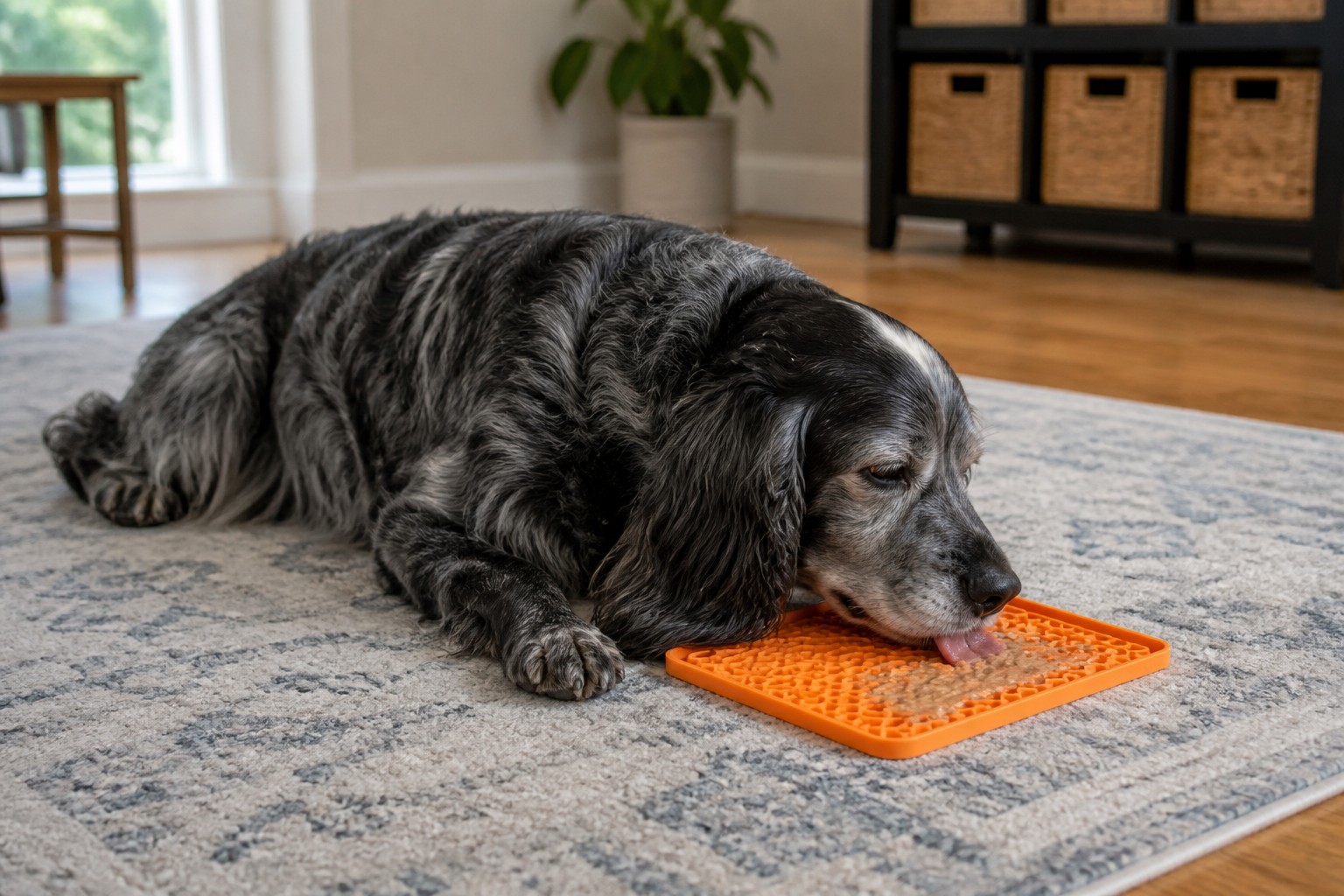
For an older dog, easy access and familiar food matter more than making the activity last as long as possible.
The senior dog enrichment guide offers more low-impact activities and signs that warrant a veterinary check.
Can a Lick Mat Help During Grooming?
Some dogs can learn to lick a mat during brushing, bathing, nail care, or veterinary handling. The food can support a positive association, but it should not be used to hold a frightened dog in a situation they cannot tolerate.
Start away from the full procedure:
- Offer the mat with no grooming.
- Briefly show or touch the grooming tool.
- Stop before the dog becomes worried.
- Progress in small steps over multiple sessions.
Pause if the dog stops eating, turns away, freezes, trembles, tries to escape, or becomes defensive. Those signs mean the procedure needs to become easier, not that the mat needs better food.
Lick Mats and Anxious or Reactive Dogs
Licking may be an enjoyable quiet activity, but a lick mat is not a treatment for anxiety, reactivity, noise phobia, or separation-related distress.
Use it when the dog is already able to eat and engage. Do not place a mat beside a trigger and expect food to make fear disappear. A dog who refuses the mat may be over threshold, unwell, or simply uninterested.
The guide to reactive dog thresholds explains how stress affects eating and learning.
Do not leave a lick mat with a dog during an absence unless its safety has been assessed for that individual. Dogs with separation distress may chew or ingest objects they normally leave alone.
How to Clean a Dog Lick Mat
Wash the mat after every use. Food can remain in narrow grooves even when the surface looks clean.
Follow the product's care instructions, then:
- Rinse away loose food before it dries.
- Wash every groove with warm water and suitable dish soap.
- Use a soft brush if the manufacturer permits it.
- Rinse thoroughly.
- Check both sides for residue and damage.
- Dry completely before storing or refreezing.
Discard a mat with cracks, punctures, ragged edges, missing texture, persistent odor, or material that has become sticky or brittle.
Lick Mat or Snuffle Mat?
Choose based on the food and behavior you want to encourage.
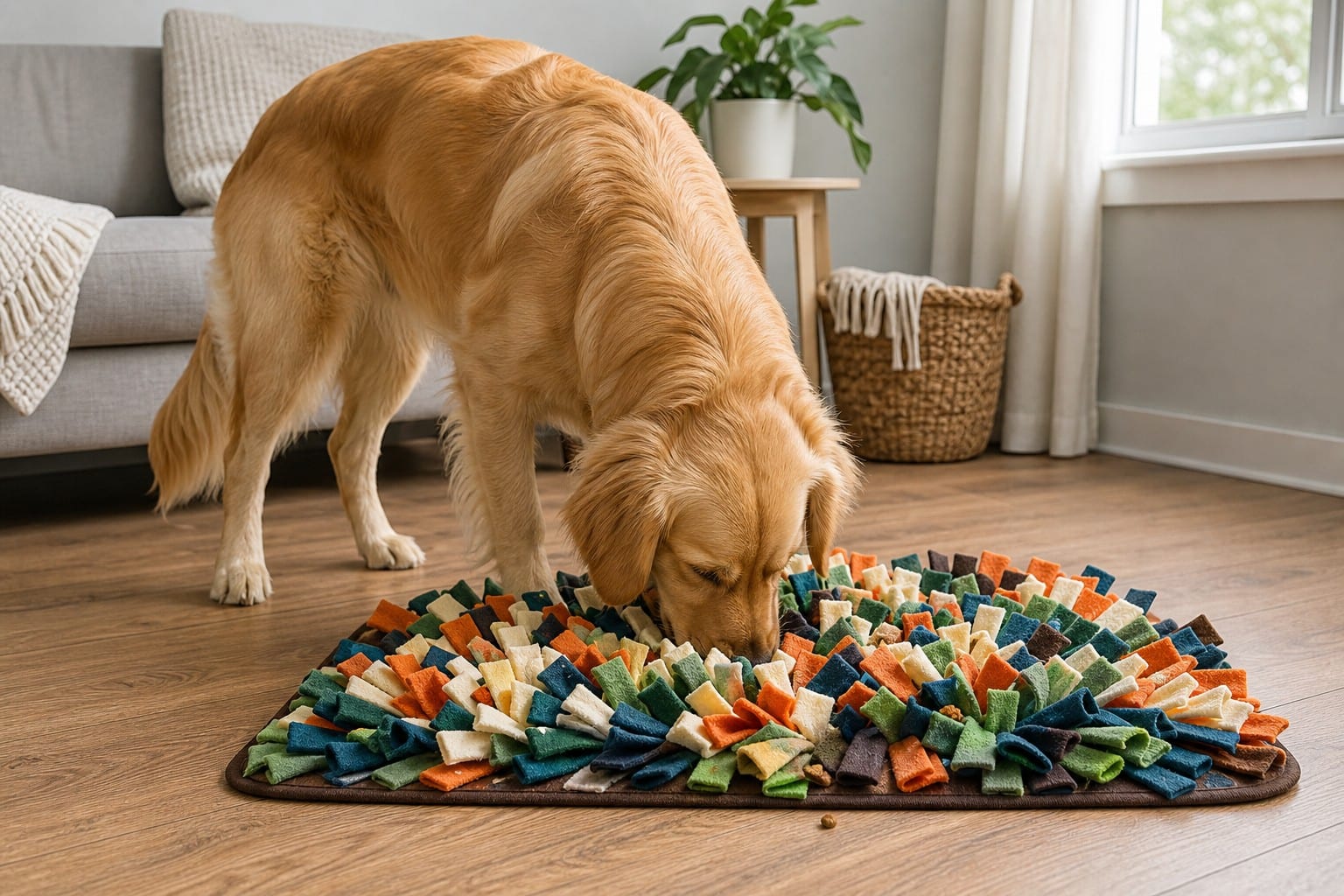
A lick mat works best with a thin layer of spreadable food and requires repeated licking. A snuffle mat for dogs works with small dry pieces and encourages sniffing and foraging through fabric.
Some dogs strongly prefer one. Rotate both with walks, play, training, rest, and social time instead of using food puzzles for every activity.
For other low-space options, see rainy day dog enrichment.
Common Lick Mat Mistakes
Avoid:
- covering the mat with a large unmeasured portion
- using sugar-free products without reading the ingredients
- assuming every food safe for people is safe for dogs
- freezing the first session until it is difficult
- leaving the dog unsupervised
- allowing several dogs to share one mat
- using a damaged mat
- skipping cleaning because the surface looks empty
- using food to push a frightened dog through handling
- treating the mat as a replacement for walks, play, or veterinary care
The best lick-mat setup is not the most elaborate recipe. It is familiar food, a manageable portion, a safe surface, and a dog who can use it comfortably.
FAQ
Are lick mats good for dogs?
They can provide simple food enrichment for many dogs. Use suitable food, supervise the activity, and remove the mat if the dog chews or damages it.
What can I put on a lick mat for my dog?
Start with a thin layer of the dog's normal wet food or softened kibble. Ask your veterinarian before adding other foods if your dog has allergies, digestive disease, weight concerns, pancreatitis risk, or a prescribed diet.
Can I put peanut butter on a dog lick mat?
Some dogs can have a small amount, but the ingredient list must be free of xylitol. Peanut butter is calorie-dense and does not suit every dog.
Should I freeze my dog's lick mat?
Freezing is optional. Introduce the mat unfrozen first, then try chilled or frozen food only if it remains comfortable and safe for your dog.
Can I leave my dog alone with a lick mat?
Supervise it unless you have reliable, individual guidance that unsupervised use is safe. Remove the mat when the food is gone or if the dog begins chewing it.
How often should I clean a dog lick mat?
Clean it after every use according to its care instructions. Inspect the grooves, rinse thoroughly, dry it completely, and replace it when damaged.
Sources
- VCA Hospitals: Behavior Management - Enrichment and Activity Toys
- VCA Hospitals: Enriching Your Pet's Environment With Their Food
- VCA Hospitals: Dog Treats
- U.S. Food and Drug Administration: Paws Off Xylitol; It's Dangerous for Dogs
- American Kennel Club: Lick Mats for Dogs
- WSAVA: Feeding Treats to Your Dog