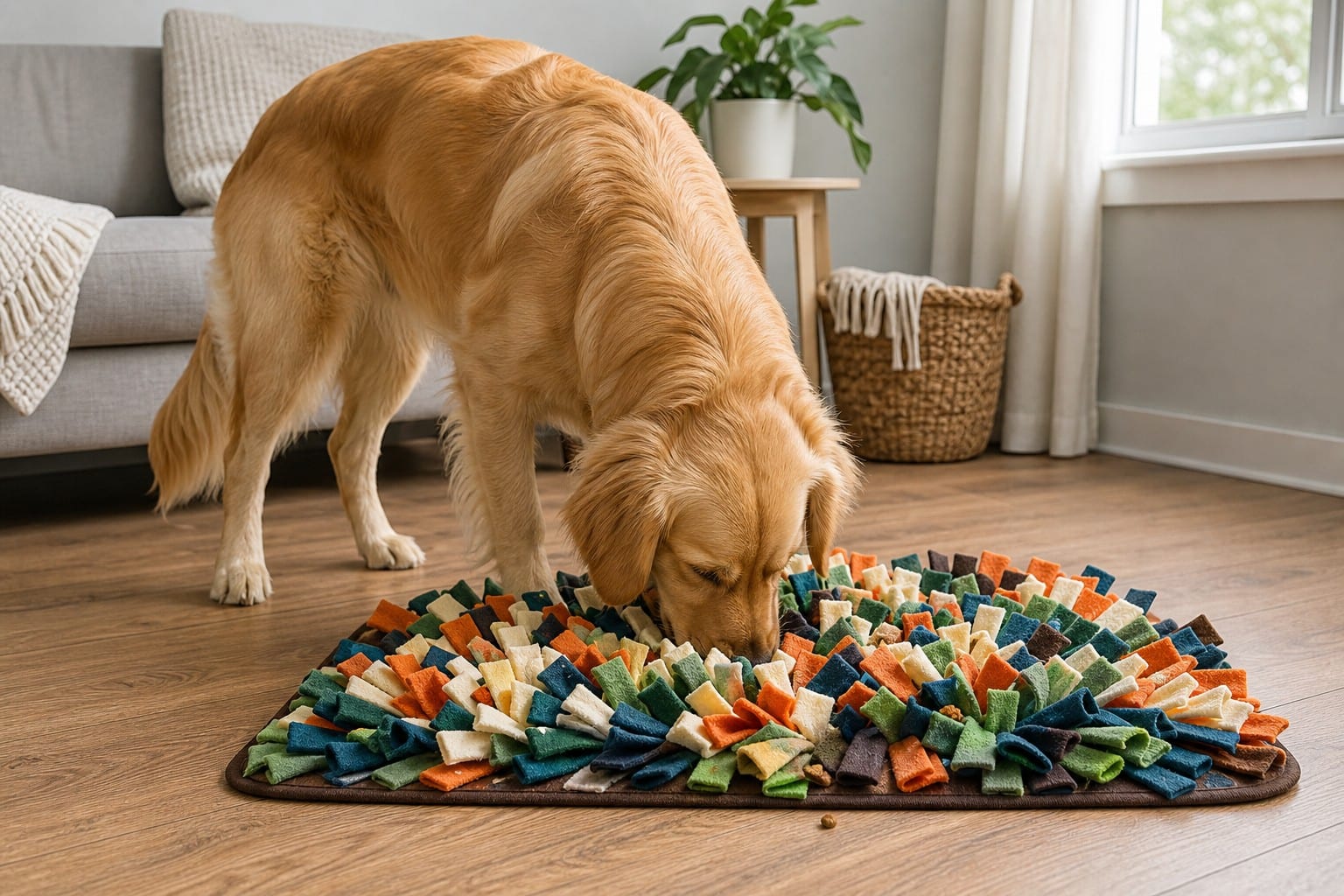
A snuffle mat looks simple: strips and folds of fabric with food hidden between them. For a dog, however, it can turn an ordinary handful of kibble into a scent search.
The clear answer: a snuffle mat for dogs can be useful enrichment when the food is easy enough to find, the mat stays flat, and a person supervises the activity. It encourages sniffing and foraging, may slow down a dry meal, and works indoors without requiring much space.
It is not a chew toy, a substitute for exercise, or something every dog should use unsupervised.
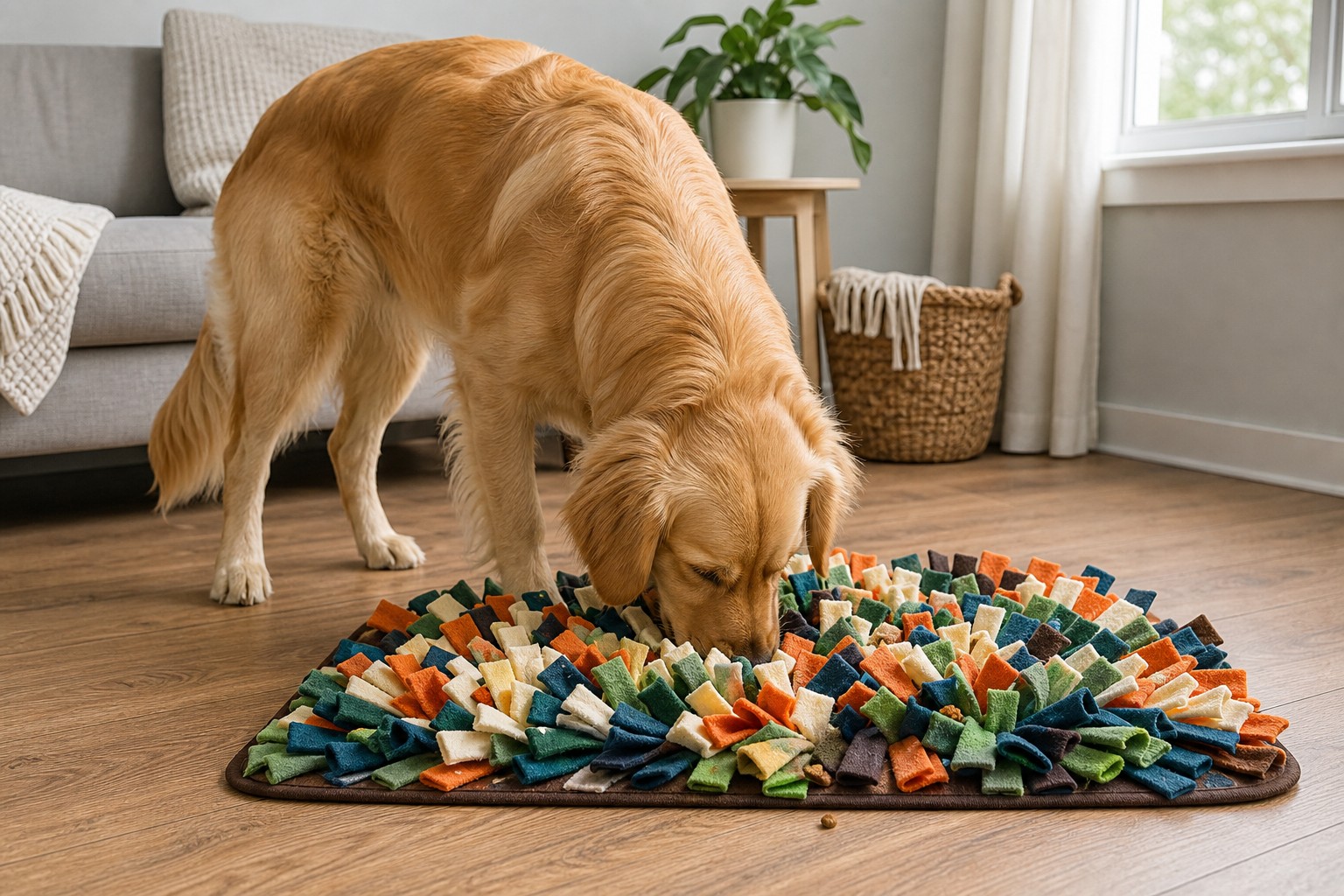
A useful snuffle-mat session looks focused and relaxed, with the dog searching rather than tearing at the fabric.
What Is a Snuffle Mat?
A snuffle mat is a food-enrichment tool made with fabric strips, pockets, folds, or flaps. Small pieces of dry food are scattered through the material so a dog must use their nose to locate them.
The American Kennel Club describes snuffle mats as a way to turn a dog's interest in sniffing into a food-search game. VCA Hospitals includes foraging and novel feeding methods among ways to enrich a pet's environment with food.
The mat does not need to be difficult to be worthwhile. Finding several easy pieces with the nose is still sniffing and foraging.
For a wider mix of food, scent, play, and movement activities, use the cluster guide to dog enrichment ideas.
Are Snuffle Mats Good for Dogs?
They can be. A suitable snuffle mat may:
- give a dog an appropriate reason to sniff
- turn part of a dry meal into a search
- add variety to an indoor routine
- offer a low-impact activity for some older dogs
- provide an easy first step into scent games
- help a dog eat dry food less directly than from an open bowl
These are enrichment benefits, not medical treatments. A snuffle mat should not be described as curing anxiety, preventing cognitive decline, or replacing professional care.
It also does not replace a walk. Sniffing outdoors includes changing odors, movement, exploration, and choices that a mat cannot reproduce. Think of the mat as one part of the day.
Which Dogs May Enjoy One?
Many puppies, adults, and seniors can use a snuffle mat, but the setup should match the individual dog.
It may be especially convenient for:
- dogs who enjoy searching for food
- dogs needing an indoor activity during bad weather
- dogs learning simple nose-work games
- seniors who benefit from an accessible, low-impact search
- dogs whose normal dry meal can be divided into enrichment portions
A snuffle mat may be a poor choice for a dog who immediately eats fabric, guards food, becomes frantic around scattered food, or has trouble breathing while pushing their face into dense material.
For senior dogs, place the mat on a nonslip surface and make food easy to reach. The adaptations in senior dog enrichment can help you account for mobility, vision, dental, or cognitive changes.
Ask your veterinarian about feeding tools if your dog has a prescribed diet, swallowing difficulty, dental pain, digestive disease, food allergies, or another medical condition that affects eating.
How to Introduce a Snuffle Mat
The first session should feel obvious.
- Put the mat flat on a quiet, nonslip floor.
- Measure a small portion of your dog's dry meal or suitable treats.
- Place five to ten pieces visibly on top of the fabric.
- Let your dog approach and investigate.
- Allow them to search without repeatedly pointing or giving commands.
- Pick up the mat when the food is gone.
Do not bury every piece deeply on day one. If a dog cannot find food, they may paw, bite, flip, or abandon the mat. That is not proof they need a harder challenge. It usually means the setup is unclear or too difficult.
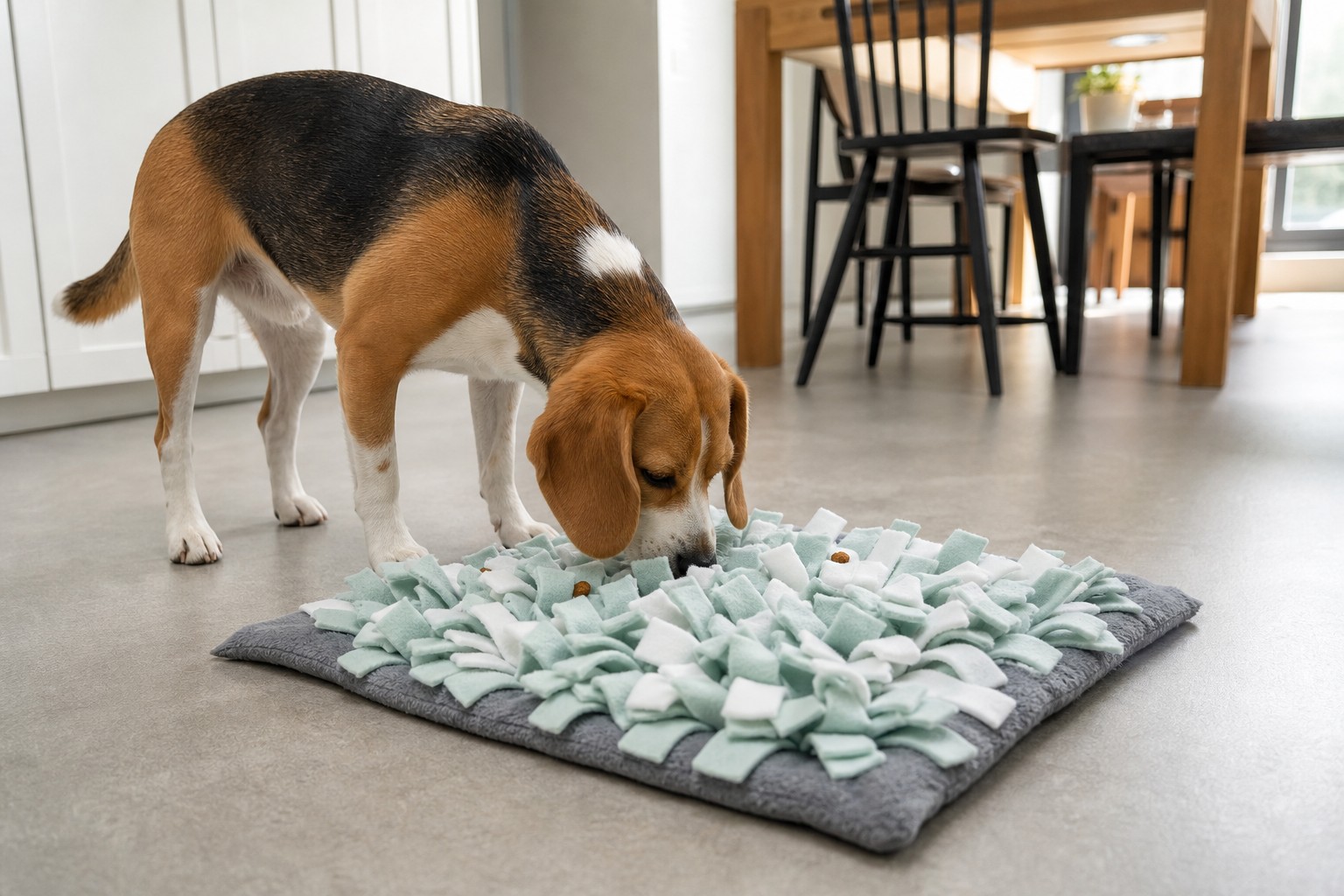
Start with food near the surface. Early success teaches the dog to search with the nose instead of attacking the mat.
Read the Dog, Not the Timer
There is no required number of minutes for snuffle-mat enrichment.
Useful signs include:
- steady sniffing
- a loose body
- brief pauses followed by more searching
- calmly moving around the mat
- leaving when the food is gone
Stop the session if you see:
- chewing or swallowing fabric
- pulling strips from the base
- repeatedly flipping the mat
- frantic scratching
- stiffening or guarding
- coughing, gagging, or breathing difficulty
- walking away and refusing to return
A short, successful search is better than a longer activity that ends in frustration.
How to Make the Search Harder
Increase difficulty gradually. Change one feature at a time:
- Begin with food on top.
- Place some pieces just inside loose folds.
- Spread food across a larger part of the mat.
- Use fewer pieces while keeping them reachable.
- Mix easy and slightly deeper hiding places.
Do not press food into inaccessible seams or bury it so deeply that the dog has to tear the mat. The purpose is to search, not to defeat the equipment.
If your dog works too quickly, resist the urge to make every piece difficult. You can use a larger mat, spread the meal across two short sessions, or alternate with a room-based find it game for dogs.
What Food Can Go in a Snuffle Mat?
Dry, small, low-crumb food is usually easiest to scatter and clean up. Suitable options may include:
- measured kibble from the dog's normal meal
- small training treats that fit the dog's diet
- dry prescription food approved for that dog
Measure the portion before loading the mat. Enrichment calories still count, even when the dog works for them.
Avoid assuming that human foods are safe. Foods containing xylitol, chocolate, grapes, raisins, onions, or macadamia nuts can be dangerous to dogs. High-fat foods may also be unsuitable for some dogs.
Wet, sticky, oily, or raw food can become trapped in fabric and may be difficult to clean safely. Unless the product is specifically designed and washable for that use, choose a lick mat, food toy, or bowl instead.
Snuffle Mat Safety Rules
Supervise Every Session
Stay close enough to interrupt chewing or damage. A dog who used the mat safely yesterday may decide to pull at it today, especially after the food is gone.
Inspect Before and After Use
Look for:
- loose fleece strips
- torn seams
- exposed backing
- missing pieces
- damp or dirty areas
- trapped old food
Stop using a damaged mat. Fabric and backing can become choking or intestinal-obstruction hazards if swallowed.
Keep It Stable
Place the mat on a rug or nonslip floor. A sliding mat can frustrate a dog and may be unsafe for puppies, seniors, or dogs with mobility problems.
Use One Dog at a Time
Food searches can create competition. Give each dog a separate activity in a separate area, especially if either dog eats quickly, crowds others, or has guarded food before.
Store It Out of Reach
When the search ends, remove the mat. Leaving it on the floor can turn a supervised feeding tool into an unsupervised fabric toy.
The ASPCA gives the same broad safety principle for homemade enrichment: supervise access and remove an item if the dog attempts to ingest it.
Snuffle Mats for Puppies
Puppies can enjoy simple searches, but they also investigate with their mouths.
Use a sturdy mat, keep the first sessions brief, and place the food near the surface. Redirect and remove the mat if the puppy begins chewing the strips or carrying it away.
Do not punish the puppy for chewing. The object is made of moving fabric and may look like a toy. End the activity and offer an appropriate chew instead.
Snuffle Mats for Senior Dogs
A snuffle mat can bring a food search to a dog who no longer wants intense games. Keep the setup accessible:
- use a shallow mat
- provide good traction
- spread food near the top
- avoid requiring repeated crouching if that looks uncomfortable
- use soft, suitable food if chewing is difficult
- keep the session short
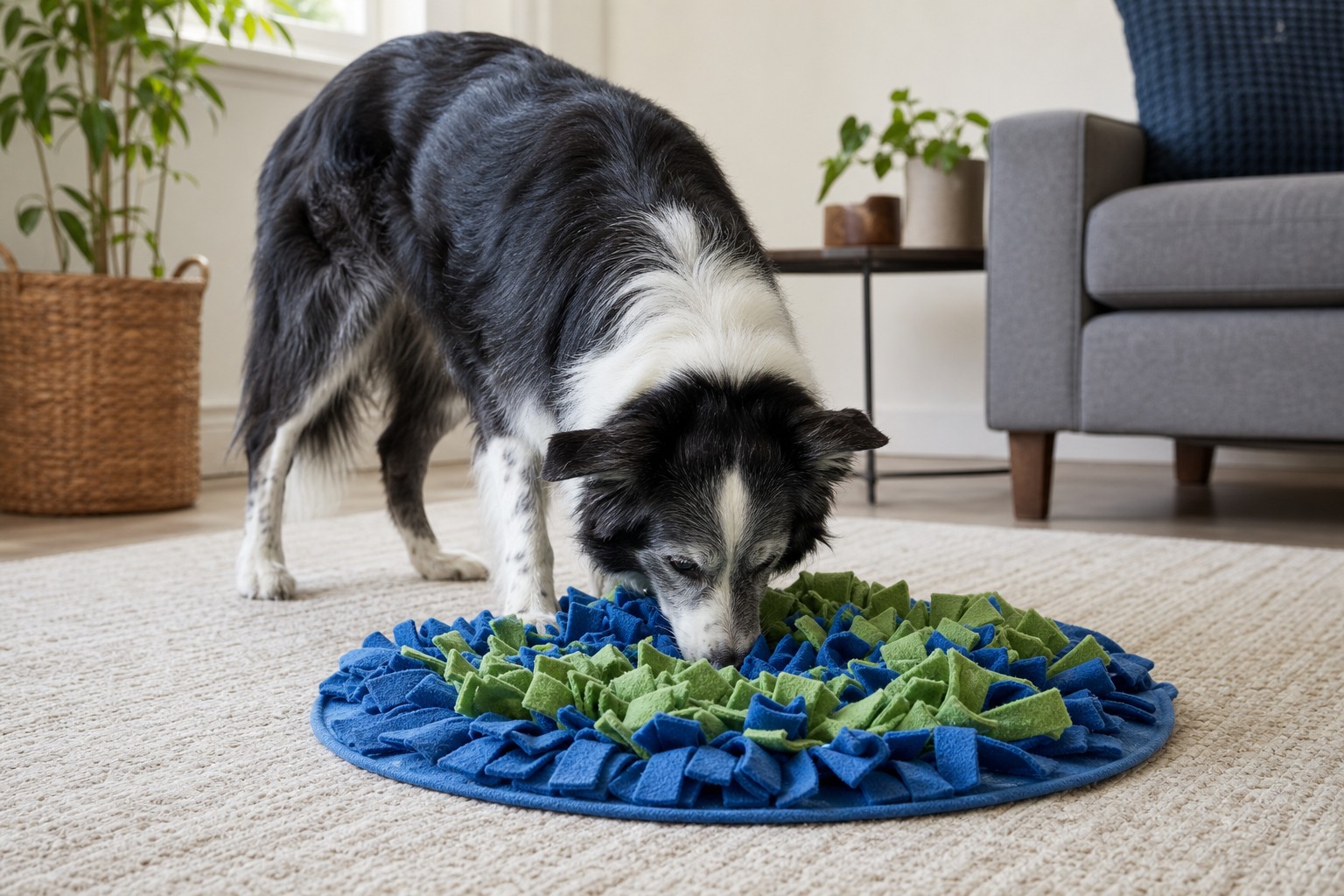
For an older dog, stable footing and easy hiding places matter more than making the puzzle impressive.
A sudden change in appetite, willingness to sniff, ability to find food, or comfort while lowering the head deserves veterinary attention.
Snuffle Mats for Reactive or Anxious Dogs
Some reactive dogs enjoy food searches at home, but a snuffle mat is not a treatment for reactivity or separation anxiety.
Offer it when the dog is able to eat and investigate calmly. Do not place it beside a window, door, visitor, or other trigger and expect sniffing to override fear.
If your dog is already highly aroused, create distance from the trigger and help them recover. The article on reactive dog thresholds explains why learning and eating become harder when a dog is overwhelmed.
Never leave a fabric mat with a dog during an absence unless you already know the dog will not chew it and the manufacturer explicitly states that unsupervised use is appropriate. A safer plan for separation-related distress should be developed with a veterinarian or qualified behavior professional.
How to Clean and Store a Snuffle Mat
Follow the manufacturer's care label because materials and construction vary.
As a general routine:
- Remove all visible food.
- Shake out crumbs after each session.
- Check folds and the underside for trapped debris.
- Wash according to the product instructions.
- Dry the mat completely.
- Store it in a clean place the dog cannot access.
Wash more often if the mat becomes damp with saliva, used outdoors, shared between animals, or loaded with crumbly food. A musty smell, greasy surface, or food residue means it needs cleaning before another session.
DIY or Store-Bought?
Either can work if the finished mat is durable, washable, stable, and appropriate for the dog.
The RSPCA describes homemade snuffle mats made from materials such as fleece, old towels, or T-shirts. A DIY version still needs close inspection. Knots, strips, holes, and backing must not pull free under the force your dog uses.
A store-bought label is not a guarantee of safety. Check construction and supervise it in the same way.
If your dog prefers shredding to sniffing, use a deliberately supervised setup from cardboard box enrichment for dogs rather than sacrificing the snuffle mat.
Common Snuffle Mat Mistakes
Avoid:
- burying all the food deeply for a beginner
- adding treats without accounting for calories
- using sticky food that cannot be cleaned from the fabric
- placing the mat on a slippery floor
- letting several dogs crowd one mat
- leaving the mat down after the search
- ignoring loose or swallowed fabric
- using it to replace walks and social interaction
- assuming a longer search is always better
- pushing the dog's face toward the mat
Good enrichment gives the dog a clear, safe opportunity. It does not need to be difficult or last a long time.
For more indoor variety, rotate the mat with activities from rainy day dog enrichment. Rotation helps prevent one tool from becoming the dog's entire enrichment routine.
FAQ
Are snuffle mats good for dogs?
They can be good food and scent enrichment for many dogs. Introduce the mat at an easy level, supervise it, and remove it if the dog chews or swallows the material.
How do I introduce my dog to a snuffle mat?
Place a few pieces of food visibly on top of a flat, stable mat. Let your dog find them without pressure. Hide pieces more deeply only after the dog searches calmly.
Can I put my dog's whole meal in a snuffle mat?
You can use measured dry food if the mat suits your dog and can be cleaned properly. Some dogs do better with only part of a meal in the mat. Ask your veterinarian about feeding changes for medical or prescription diets.
How long should a dog use a snuffle mat?
There is no set duration. End when the food is gone, the dog walks away, or searching changes to chewing, guarding, frustration, or fatigue.
Can puppies use snuffle mats?
Yes, under close supervision. Keep food easy to find and remove the mat as soon as the puppy starts chewing or pulling at its fabric.
How often should I wash a snuffle mat?
Follow the care label. Shake out crumbs after every use, inspect the folds, and wash whenever food, saliva, dirt, or odor remains. Dry it fully before storage.
Sources
- American Kennel Club: Everything You Need to Know About Snuffle Mats for Dogs
- VCA Hospitals: Enriching Your Pet's Environment With Their Food
- VCA Hospitals: Behavior Management - Enrichment and Activity Toys
- RSPCA Knowledgebase: How Can I Create Low-Cost DIY Enrichment for My Cat or Dog?
- ASPCA: Canine DIY Enrichment