Rainy days can make a normal dog feel like they have too much energy and nowhere to put it.
Maybe your dog brings you toys, barks at hallway sounds, chews the wrong thing, zooms through the living room, or stares at you like you personally cancelled the weather.
The clear answer: rainy day dog enrichment should give your dog safe outlets for sniffing, chewing, licking, searching, moving, and thinking without turning the house into a high-arousal playground. You are not trying to exhaust your dog into collapse. You are helping them feel satisfied enough to settle.
Start with calm nose work and food-based enrichment, add a little easy training, then give your dog a real rest period.
Good rainy day enrichment should help your dog come down, not spend the whole day ramping up.
Why Rainy Days Are Hard for Dogs
Rain changes the parts of the day many dogs depend on. Walks get shorter, sniffing time disappears, parks are muddy, and humans rush bathroom breaks.
Some dogs handle that fine. Others become restless because their normal outlets vanished.
The RSPCA explains enrichment as a way to help animals meet physical and behavioral needs. That matters on rainy days because your dog still needs sniffing, chewing, foraging, movement, problem solving, social contact, and rest.
The trick is choosing activities that match the dog in front of you. A young retriever may need searching, chewing, and controlled movement. A senior toy breed may need gentle food games and a warm nap. A reactive dog may need quiet recovery after hearing rain, traffic, and neighbors through the walls.
If your dog already struggles with over-arousal indoors, pair this article with the Dogs Index guide to dog enrichment ideas. The goal is not more stimulation. It is better stimulation.
A Simple Rainy Day Enrichment Plan
Use this plan when your dog is restless but not in full panic or distress.
1. Start With a Sniffing Game
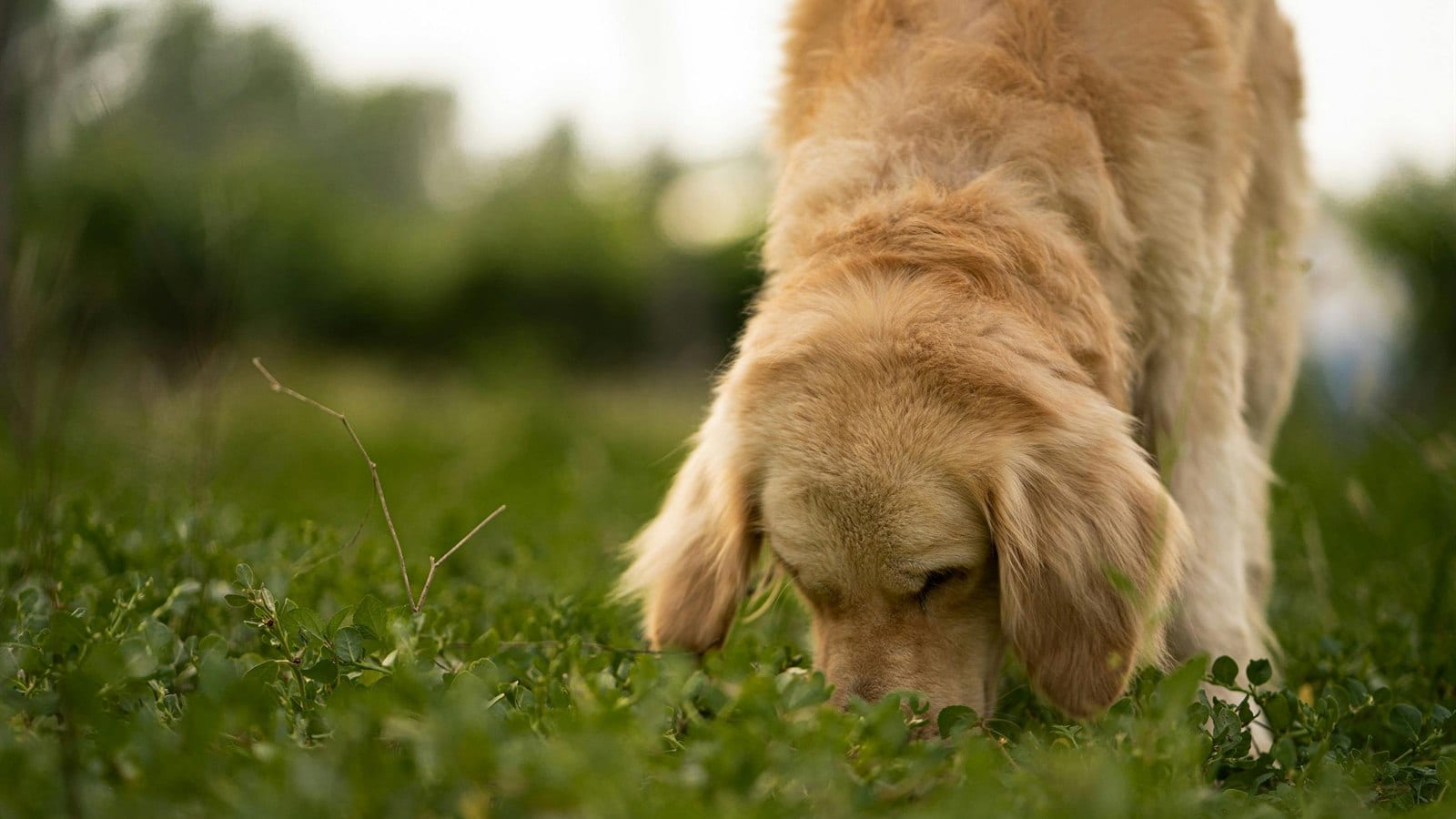
Sniffing is one of the easiest ways to give your dog information and choice indoors.
Try this:
- Ask your dog to wait behind a baby gate, door, or with another person.
- Scatter a small handful of kibble or soft treats across a safe room.
- Release your dog with a calm cue like "find it."
- Let them search without coaching every second.
- Stop while the game is still relaxed.
You can scatter food on a washable rug, towel, snuffle mat, or clear floor. If you have multiple dogs, separate them so no one feels pressured.
Keep it easy at first. A dog who is new to searching should win quickly.
For reactive dogs, this can also be useful after a hard bathroom break. If your dog came back inside tense after seeing another dog, a simple scatter search may help them shift from scanning to sniffing. That same idea connects with decompression walks for reactive dogs, just moved indoors for bad weather.
Food Enrichment That Does Not Create Chaos
Food enrichment is popular because it is simple and useful. The ASPCA includes food puzzles and enrichment recipes among its suggestions, and VCA Hospitals discusses using food as environmental enrichment.
But food enrichment can go wrong when the setup is too hard.
If your dog paws frantically, barks at the puzzle, throws it across the room, or gives up, simplify it.
Better options:
- scatter part of a meal on a towel
- roll kibble loosely in a towel
- use an easy puzzle tray
- smear a small amount of dog-safe wet food on a lick mat
- stuff a soft food toy loosely instead of packing it tight
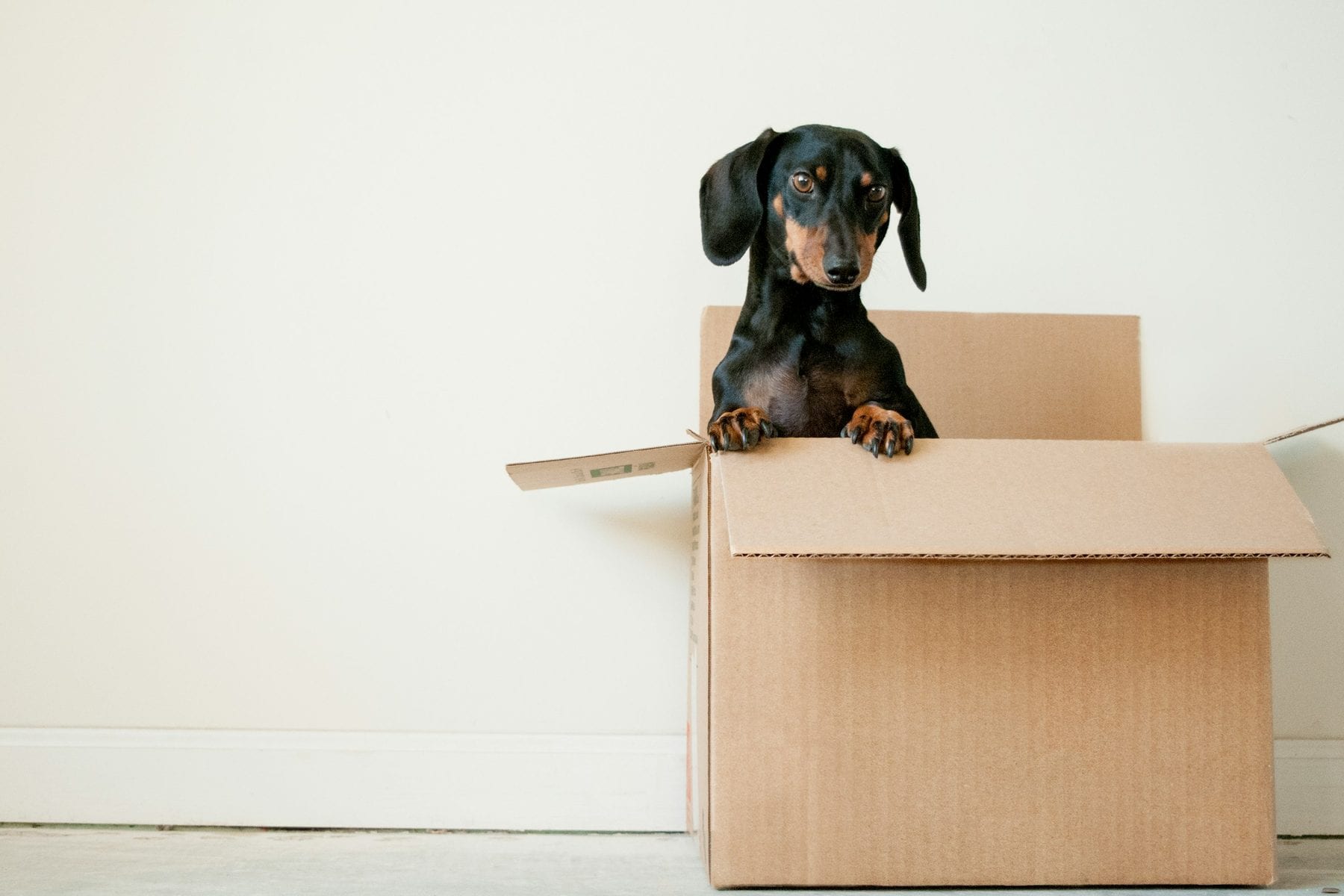
- hide a few treats in open cardboard boxes
Avoid making every rainy day a puzzle marathon. A dog can get frustrated if every meal becomes a difficult test.
For dogs who guard food, use caution. Give enrichment in a quiet, separate area. Do not reach into the dog's space while they are eating. If guarding is intense, work with a qualified trainer or veterinary behavior professional before adding shared food games.
Chewing and Licking: The Calm Part of the Day
Chewing and licking can be especially helpful when rain has made the day feel choppy.
Many dogs settle better after a safe chew or licking activity because these are repetitive, focused behaviors. Match the item to your dog's size, chewing style, diet, dental health, and supervision needs.
Good rainy day options may include:
- a dog-safe chew recommended by your vet or trainer
- a stuffed food toy
- a lick mat
- a soft rubber food toy
- a frozen enrichment item if your dog tolerates cold food
Skip anything that splinters, breaks teeth, upsets your dog's stomach, or causes guarding.
If your dog is a power chewer, supervise carefully. If your dog has allergies, pancreatitis, dental disease, or a sensitive stomach, ask your vet before adding rich foods or hard chews.
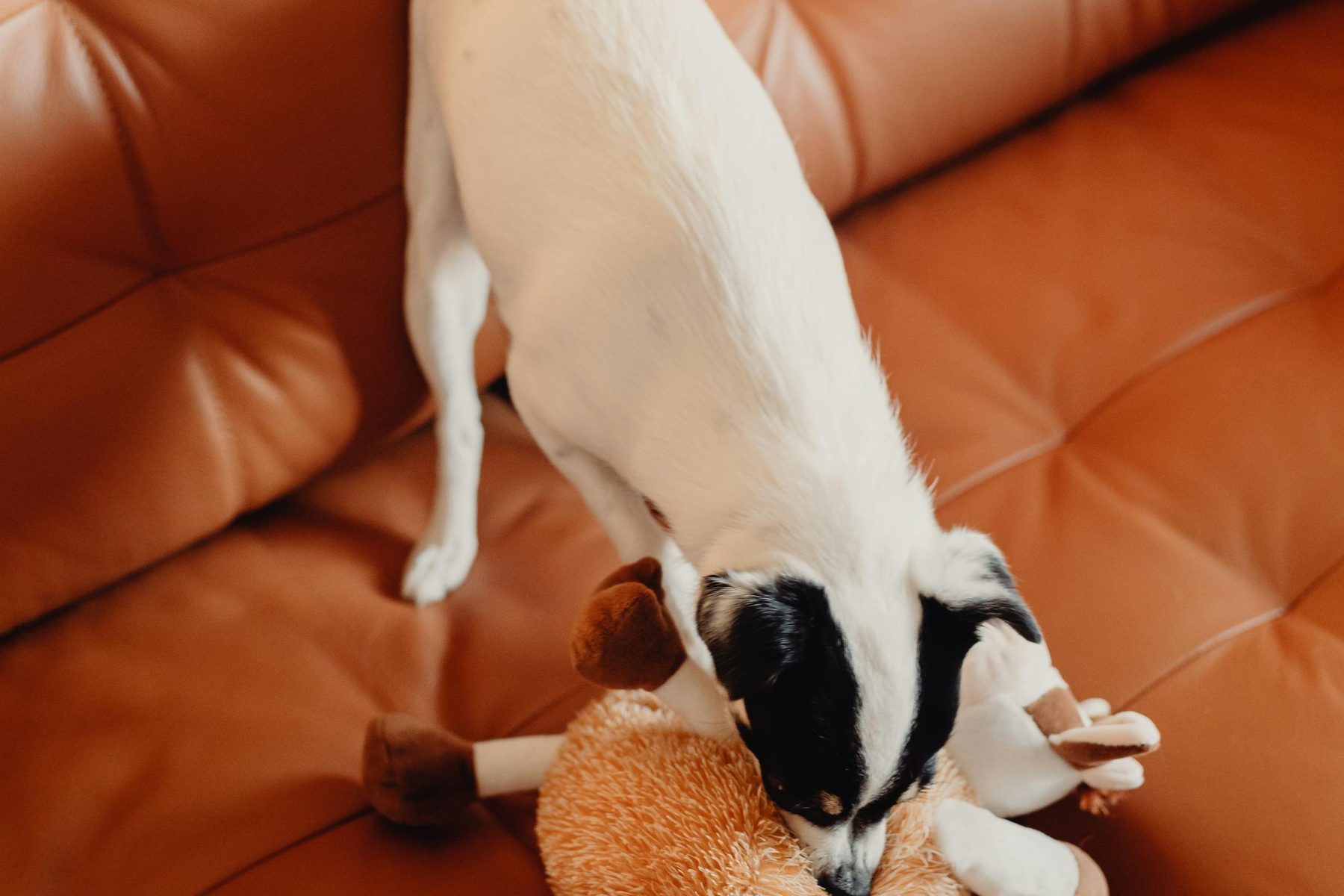
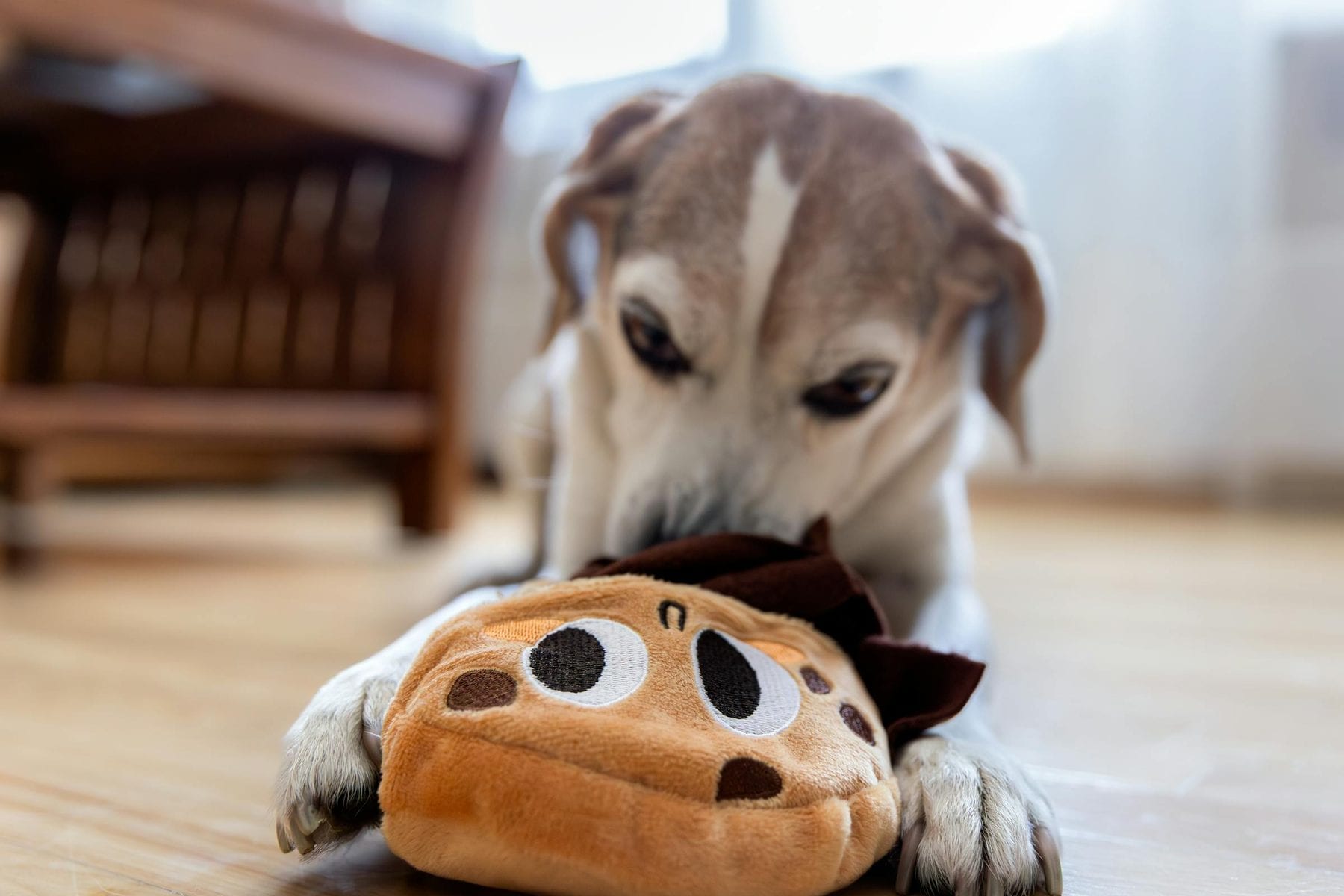
Quiet toy time, chewing, and licking can be more useful than trying to make every indoor activity exciting.
Five-Minute Training Games for Rainy Days
Training counts as enrichment when it is short, clear, and fair.
This is not the time to drill your dog until they are tired. Choose easy wins.
Try one of these for five minutes:
- hand target
- name response
- find it
- go to mat
- touch a target
- spin
- crawl under your leg
- step onto a low platform
- settle on a blanket
- leash on, treat, leash off
Keep the session light. If your dog makes two or three mistakes in a row, the task is too hard or the dog is too wound up. Go back to something easier.
For reactive dogs, indoor pattern games can support the same skills you need outside: orienting to you, moving away smoothly, taking food, and recovering after a surprise. If food only works at home but not on walks, read best treats for reactive dog training. Often the issue is not the treat alone. It is the difficulty of the environment.
Indoor Movement Without Winding Your Dog Up
Some dogs do need movement on rainy days. The mistake is using movement that makes them more frantic. Endless hallway fetch can turn a restless dog into a dog who cannot come down.
Try controlled movement instead:
- toss one treat away, then reward your dog for coming back
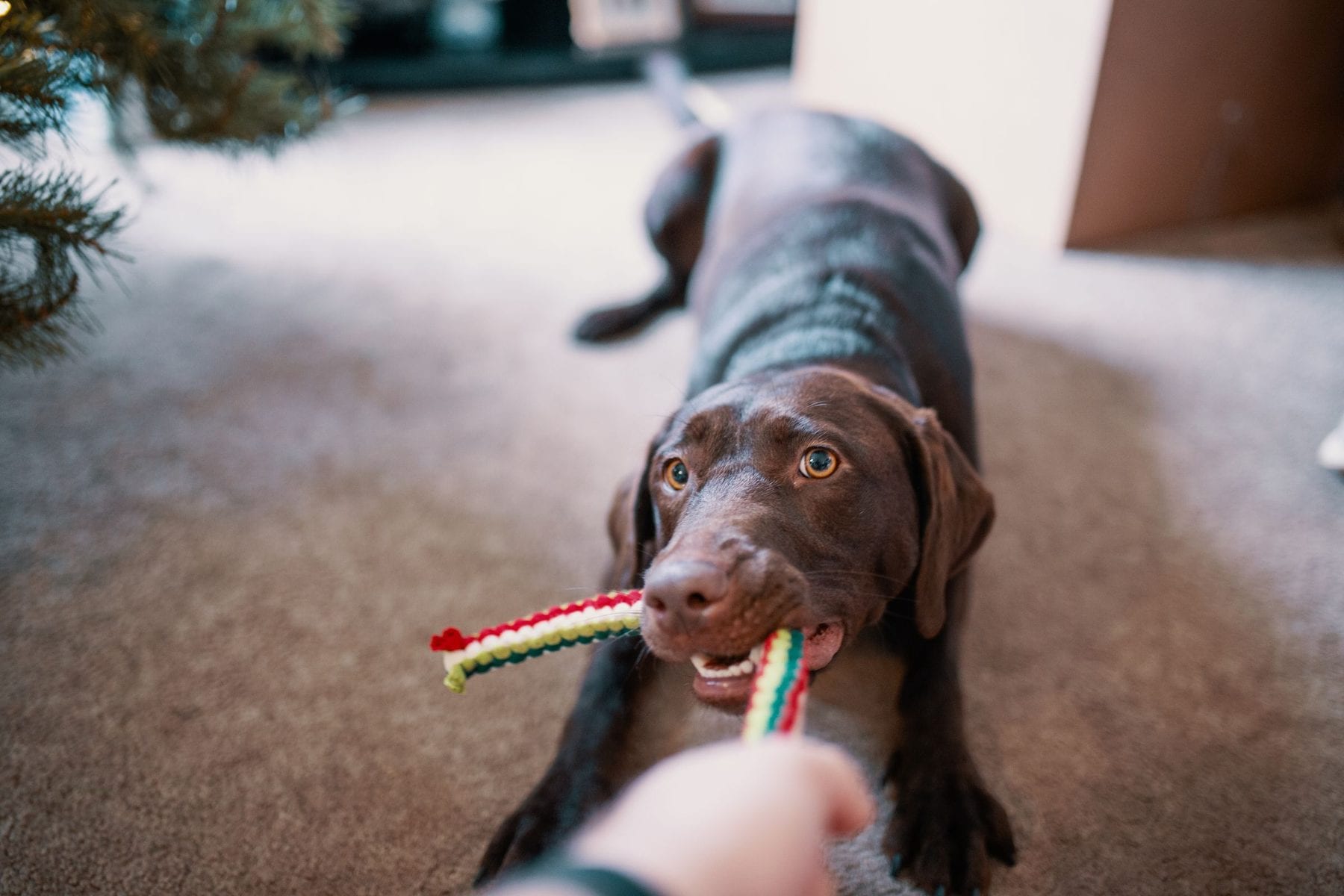
- play gentle tug with clear start and stop cues
- set up two stations and move between them slowly
- practice walking around chairs on leash
- do a few easy body-awareness exercises
- hide a toy in another room and release your dog to search
Watch the body language. If your dog gets hard-eyed, mouthy, barky, grabby, or unable to respond, take the intensity down.
Rainy day movement should feel like a pressure valve, not a match thrown into dry grass.
Apartment and Neighborhood Notes
Rainy days can be harder for apartment dogs because every outing runs through shared spaces.
Lobbies, stairwells, elevators, parking garages, and covered entrances can concentrate triggers. Dogs hear doors, umbrellas, carts, delivery workers, and other dogs before they have room to move away.
Use indoor enrichment before and after these outings, but do not use it to avoid all bathroom breaks.
A practical apartment plan:
- Do one calm sniff game before leaving, not a wild game.
- Keep the bathroom trip short and simple.
- Wait for the hallway or elevator to clear when possible.
- Use high-value food for unexpected triggers.
- Come back inside and offer a low-pressure decompression activity.
If your dog reacts in hallways or entrances, use the specific guide on how to walk a reactive dog in an apartment complex.
Breed Notes
Breed does not tell the whole story, but it can explain what kind of enrichment your dog may find satisfying.
Herding breeds often enjoy pattern games, movement with rules, and problem solving. Terriers may like searching, tug, approved cardboard shredding, and hidden toys. Retrievers often enjoy carrying, finding, and bringing items. Scent hounds and many mixed breeds usually love nose work.
Toy breeds and senior dogs may still need enrichment, just scaled down with smaller searches, softer surfaces, and shorter sessions.
The right question is not "what should this breed do?" It is "what does this dog finish looking calmer from?"
Common Rainy Day Enrichment Mistakes
The biggest mistake is trying to exhaust a dog instead of satisfying them.
Avoid these:
- playing fetch until your dog is frantic
- using puzzles that are too difficult
- giving rich foods all day and upsetting the stomach
- leaving new chews unsupervised
- letting children crowd the dog during food games
- forcing a nervous dog to play
- skipping rest because the dog still looks awake
- using yelling or punishment when the dog is restless
Restless behavior is information. Your dog may need a bathroom break, easier enrichment, more sleep, less noise, a calmer room, or medical help if the change is sudden.
If your dog is barking at every window sound during storms or wet street noise, use dog barks out the window and dog barks at the doorbell alongside enrichment. Food games will not fully fix a dog who is rehearsing alert barking all afternoon.
When to Call a Professional
Call your veterinarian, a certified trainer, or a qualified behavior consultant if your dog seems unable to settle even after appropriate enrichment and rest.
Get help sooner if you see:
- sudden behavior changes
- panic during storms
- destructive chewing that risks injury
- resource guarding around food toys
- snapping, growling, or biting
- compulsive pacing
- severe separation distress
- refusal to go outside for bathroom needs
- reactions that are getting worse
Pain, anxiety, noise sensitivity, gastrointestinal issues, and other health problems can all affect behavior. The IAABC is one place to search for behavior professionals with continuing education in humane behavior work, and your veterinarian can help decide whether a veterinary behaviorist is appropriate.
A Realistic Rainy Day Schedule
Here is a simple version for a healthy adult dog who is restless but not panicking: a quick bathroom break, breakfast scatter search, nap, five minutes of training, a stuffed food toy or lick mat, another rest period, a short bathroom walk if weather allows, then an evening chew or easy puzzle. During summer heat, check how hot is too hot to walk a dog before keeping that outdoor portion.
Adjust for your dog. Puppies need more bathroom breaks. Senior dogs may need shorter sessions. Reactive dogs may need recovery time after even a brief outing. High-drive dogs may need more structured movement, but they still need help coming down.
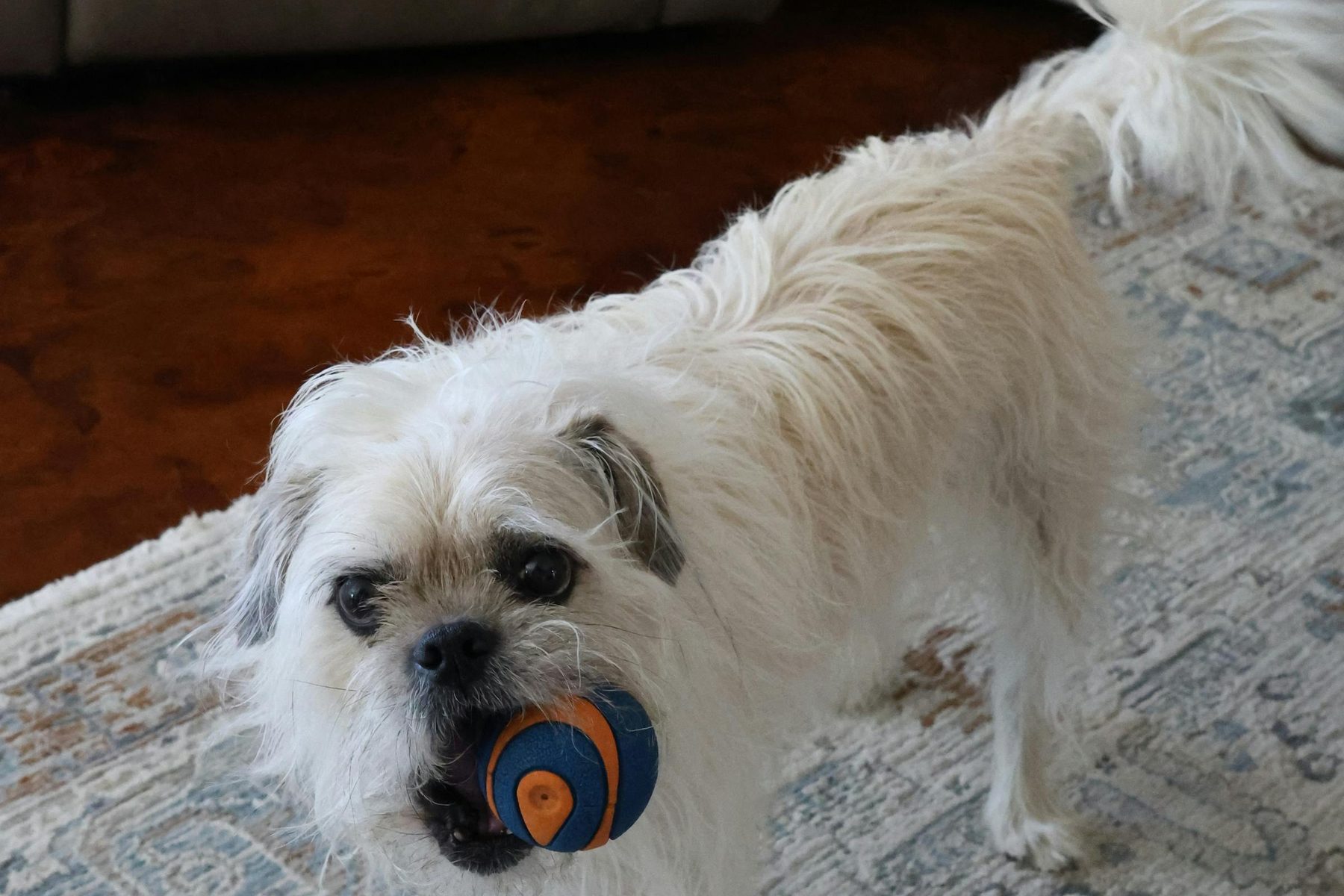
Short, successful indoor games can help restless dogs use their brains without turning the whole day into rough play.
FAQ
What is the best rainy day enrichment for dogs?
The best rainy day enrichment is usually a mix of sniffing, food searching, chewing, licking, easy training, and rest. Start with calm activities before adding movement.
How do I tire out my dog when it rains?
Use mental work instead of trying to physically exhaust your dog. Scatter feeding, find-it games, food puzzles, short training, and safe chewing can be more effective than nonstop indoor fetch.
Can indoor enrichment replace a walk?
Not completely. Indoor enrichment can help on bad-weather days, but most dogs still need bathroom breaks, movement, and outdoor sniffing when conditions are safe.
Why does my dog get wild on rainy days?
Your dog may be missing their normal walking, sniffing, and outdoor routine. Some dogs also react to thunder, wind, hallway noise, or the general change in household rhythm.
Are puzzle toys enough for rainy day enrichment?
Puzzle toys can help, but they are only one tool. Many dogs also need sniffing, chewing, licking, gentle movement, social contact, and sleep.
What if my dog gets frustrated with enrichment toys?
Make the toy easier or switch to a simpler activity. Scatter feeding, open-box searches, and loosely stuffed toys are often better starting points than hard puzzles.
Should reactive dogs do rainy day enrichment?
Yes, but keep it calm and predictable. Reactive dogs often benefit from sniffing, licking, chewing, and decompression-style activities that lower arousal instead of creating more excitement.